
Your guide to hiring a guide for trekking in Nepal
Before I even arrived in Nepal I was worried about both trekking and finding the right guide.

It's not easy to know what to expect when you arrive in Nepal, or even from home when planning a trek.
From online tour companies claiming the world to confusing forums there is a lot of information out there.
This page will help you with answers to the questions I had before arriving.
My problems were the following:
I was alone, where to start?
This was an issue as I had been told I would meet up with plenty of people in Nepal. Eventually I did, but at the start when I arrived in Pokhara there were few people around. So I was at the mercy of agencies, hotels and touts.
So I spent a week canvassing all the hotels, agencies and personal guides out there.
Here's what I found out; it might save you some time too:
Booking through a hotel or trekking agency
- Hotels charge commissions for guides. To do this they actually lower the guide's salary and you often end up with a not-so-great guide. Trekking agencies tend to pay guides fairly.
- The average cost was USD $30-45 per day for a trekking guide with local trekking agents.
- When I asked if I could join another group an agency had going I was told yes. But they did not know the numbers going until a day before they left, meaning I did not know whether I would be sharing the cost of a guide with 2 people or 15. Altogether, going trekking by joining another group was and is not a great experience.
- Most good agencies had a 1:5 guide-to-trekker ratio. 1:7 is allowed, but honestly not good for trekkers.
- All agencies claimed their guides were covered with insurance, but I still asked to see the certificate.
- Trekking permits were included in some prices online but not in others.
- Many agencies online tried to push all-inclusive packages including hotels and food, starting at a scary USD $1550 and up for the Annapurna Circuit (about the same for Everest Base Camp). Dealing with a local trekking agency was much better.
- Over the past 20 years I've trekked with dozens of local guides and companies across Nepal, and the very best are detailed in my guidebooks. To support on the ground locals, I only select fully registered, qualified and experienced local Nepali guides and trekking agents. As such, I've built trusted relationships with them over decades and I can also help point you toward a reliable local contact if you want to skip the hassle.

Hiring a guide independently
- Hiring a guide in person rather than through an online agency works out much better. Rates start at around USD $30-40 per day, with porter-guides also available. Some of this will depend on the time of year, and region you are trekking in. If you are traveling in a pair or group, daily costs can be split, though watch out for extra fees like the guides transport (something online agencies rarely offer). Sticking with local agencies on the ground is by far the best option. I can do all this for you with my find a trekking guide service.
- Package and all-inclusive treks were also much easier to arrange in person. Local offices provided clear, itemized lists of what was included (accommodation, meals, permits), whereas online offers felt like sifting through fine print to make sure one isn't being cheated, caught out with an extra expense, or bundled into a group.
- Locating a reliable trekking agency once you arrive in Kathmandu or Pokhara is straightforward. Finding a genuine local agency online beforehand is much harder, as search results are saturated with generic operator sites selling identical packages written by sales reps rather than local experts.
- Overall costs depend on the region, season, and route difficulty. Restricted regions like Upper Mustang, Manaslu, or Nar Phu carry higher daily rates than standard routes like the Annapurna Circuit or Everest Base Camp. Expect peak-season guide rates to be higher than off-peak.
Where to look: Pokhara or Kathmandu
Pokhara is a much better place than Kathmandu to find a trekking guide for the Annapurna region. Most treks in the Annapurnas start from Pokhara and not KTM. Similarly, for treks to Everest Base Camp and around the Langtang region, Kathmandu is better.
There's an important note here for Solukhumbu (Everest) based treks. Many people try to hire from Lukla to save costs. That is a huge risk. Most Lukla or Namche based guides are not registered with a trekking agency and are therefore uninsured. This didn't matter much 10 or so years ago, it does today. It's also highly likely they are not fully qualified. There have been a growing list of serious incidents with these Lukla based guides over the past number of years. Incidents included, theft, getting lost on the trek, deserting clients on high passes and during bad weather, and physical issues. Hiring a registered trekking guide from Kathmandu is safer, and quite frankly better.
Where to go on a trek in Nepal?
This was easier to decide once I got to Nepal. After one or two sit downs with agencies and asking them to suggest places based on my time frame I had a better idea but it was always geared towards their itineraries and packages. I found it better to read good trekking books to get a better idea of what to expect from a trek. Online, everyone made everything sound great (problem e.g. selling the dream). However, guidebooks showed and told me what to really expect. I chose the Annapurna Circuit (and have since been on many more treks).
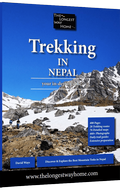
A good place to start looking at more treks is this list of treks in Nepal, or try my Trek Finder if you're still not sure which one fits your time frame and fitness level. With 29 detailed treks the best resource today is my Trekking in Nepal Guidebook.
Who to believe about trekking in Nepal?
I had so much advice from online articles and forums that I was a bit boggled with all the information. Doing an online search simply brought up bucketloads of online tours and trekking agents sales pages rather than actual advice from a human who had been trekking. Worse yet was advice from YouTube / TikTok / Instagram influencers or Facebook / TripAdvisor. Don't bother; it's neither realistic nor helpful when it comes to finding a trekking guide, as these accounts are often just looking for "likes" or trying to sell something (e.g., a guide posing as another trekker online sending you a DM with their details). Some forums are filled with armchair gurus who claim to have just done a trek this year (every year). Again, do be cautious.
To really get things moving and get the answers you want, knowing how many days you have for trekking is your best starting point. After that, pick a trek with the same or a slightly smaller number of days. Read about that specific trek from an impartial source (someone who is not trying to sell you a trek!). I will sound my own horn here and suggest you get a guidebook for this part, as that is what they are best at helping you with!

Then question a guide or agency about your chosen route, such as what you will see along the trail. Before you go, it also helps to ask about weather conditions and seasonality. Do ask for a guide's qualifications too: a licensed guide should hold a trekking guide license and training through NATHM or TAAN. Many cheaper guides simply don't have any recognized qualifications or insurance (they need to be with a trekking agency for that), hence why they are cheaper.
Don't fall for cheap guides or street guides, because if things go wrong on a trek, you really will need someone who is experienced and insured. Again, this is why you should avoid using online forums to find a guide. It's also why I list vetted, verified guides in my Nepal guidebooks, rather than leaving you to gamble on a DM from a stranger. Experienced guides explain a lot more about the surrounding mountains and landscapes than inexperienced guides. This is something I can't emphasize enough. It's a once-in-a-lifetime trip so try not to skimp!
I don't promote any companies here, so at least here you know it's my own personal experience. I don't accept sponsored treks, posts, meals, accommodation, or anything of the kind. Everything is paid for 100% by me. I've written guidebooks to Nepal for over 18 years, with clear, honest, and impartial advice. There are several vetted trekking agencies in my guidebooks: it takes on average 5 years of trekking with, and knowing an agency before they are considered. If that doesn't suit, then try my find a trekking guide service.
Likewise, don't believe websites or influencers you come across who are promoting one company. They've most likely received a free trek or are being paid to promote the business; such is the world we live in today.
It's also important to understand that online forums like TripAdvisor need to be read carefully, as many agencies pay for ratings, reviews, and shills to promote their business. There are profit-making spammers getting in the way of the truth.
The cost of hiring a guide in Nepal?
Let me start off by clearing up one pet peeve I have. Booking a guide/trek online or through an online tour/booking company is incredibly expensive compared to in person. Online offers also leave out a lot that local agents include without hesitation.

I know one person who was quoted $600+ for a 6 day Poon Hill trek. Included was a luxury tourist bus from Kathmandu to Pokhara. 3 Star Hotel in KTM and Pokhara. Expert guide fully insured, maps included, quality guest houses on the trek. (they sometimes throw in meals too).
Let me break that down to reality.
- Pokhara to KTM one way on a Luxury bus $24-26 including lunch and water.
- 3 Star hotel in KTM and Pokhara $10-20 USD (everyone's a 3 star by the way).
- Cost of guide, let's say USD $30-45 per day.
- Cost of trekking lodge (guesthouse) USD $5-10 tops, depending on the season. It can be as low as $4. Again, depending on the season.
- Meals Dhal Bhat $8-16 or Steaks etc. $20+.
- Map 250 rps.
Now you can do the math. For some, it's convenience that makes booking online better, and that's fine. For others, you might want to rethink due to costs. One important thing to note when booking online is that you don't get to choose your guide!
Those "too-good-to-be-true" online package deals also tend to bundle you into larger group treks. This often creates problems on the trail, as a larger group will inevitably dictate the itinerary and pace of your trek.
Fine print is another trap. Many budget operators leave out essential costs (for instance, covering breakfast only), while heavily discounted group tours frequently serve subpar meals from a restricted, budget menu.
While there are many outstanding trekking guides in Nepal, there are just as many questionable companies prioritizing profit over your personal safety. It really is a case of buyer beware. Do thorough research, and don't rely blindly on 5-star ratings on platforms where companies easily manufacture fake reviews.
Finally, don't skimp on guide rates. If this is your first trek in Nepal, hiring an experienced guide who speaks fluent English and knows the terrain inside out is essential. This is a once in a lifetime trip: make the most of it with the right professional trekking guide.
If you are stuck at this point most people are - costs look confusing because every trek prices differently by region, season and style.
Tell me your trek, dates, budget, and group size via my Find A Trekking Guide Service. I reply personally with a vetted, registered, private guide, full itinerary, and an all-in price breakdown.
Steps 1 to 3 are free. $50 only when you reserve.
Prefer to DIY? I keep qualified registered agencies in my guidebooks to Nepal. Budget planners: breakdown of trekking costs.
How to choose the right guide in Nepal?
Interview at least 3 guides or agencies, whether they be independents hired by an agency or guides who are full-time employees of an agency. Remember, you will be with this person anywhere between 3 and 25 days!
Suggested questions to ask and confirm:

- Agree on the route.
- Agree on the price.
- Agree on the need for porters and who's responsible for them beforehand.
- Agree that you will make the final decision on a guesthouse to stay at en route.
- Ask how many times the guide has done the trek?
- Do they have a family? What do they do aside from being a trekking guide, in other words try to get to know them a bit better personally.
- Agree about who pays for what en route?
- Confirm they are registered guides and that they are insured (they will have certificates to prove this).
- Ask them if they will be drinking alcohol or smoking on the trek (in other words find out if this could be an issue).
- Confirm that your guide will be paying for his own food and accommodation.
- Ask what happens in a medical emergency: how they coordinate evacuation and whether they carry a way to call for help at altitude.
- Confirm the deposit amount and cancellation policy before booking.
- Reconfirm the finances.
- Ask yourself if are you totally happy and comfortable with the guide?
Want to skip this 14-point vetting? The guides through my Find a Trekking Guide Service have already passed it - interviewed, licensed, insured, trekked with. Ask me to match you → Full list also in my guidebooks.
Get with the times and go virtual!
Thanks to the widespread internet and smartphone usage in Nepal, you can rest assured that you won't be paired with a mystery guide upon arrival. Reputable trekking agencies and guides are readily accessible via video chat platforms like WhatsApp, or Facebook Messenger, allowing you to meet and converse with your guide well in advance of your trek.
This pre-trip interaction not only confirms their fluency in your language but also provides an opportunity to assess their personality, mannerisms, and overall compatibility. It's not about finding a kindred spirit; rather, it's about being well-acquainted with the person you'll be entrusting with your safety and well-being during your trek.
This is something I've been recommending with my Find a trekking guide service for years now. If you are going trekking with someone for weeks, it's great to meet them face to face first!
Trekking guides are now mandatory in Nepal
In March 2023 the Nepal Tourism Board with the support of the TAAN enacted an old law that requires trekkers to have a mandatory trekking guide. This includes single people, couples, groups, mountain bikers etc. It's a legal requirement, though in practice enforcement on the ground is inconsistent, so don't assume you'll be stopped and checked. That doesn't mean it's worth risking: if you're caught without a guide, your permit can be invalidated and your trek ended with an on the spot fine.
The enactment of this law has been controversial. Local hotels, restaurants, and businesses are all losing out to big tour operator package tours. Moreover, local guides must now be registered with a trekking company; otherwise, they won't be insured, so no more independent freelance guides either. This is more important than it was 10 or so years ago. Trekking guides need to be insured just like trekkers: the only way they are covered is via a trekking agency's private insurance or through the Trekking Agencies' Association of Nepal (TAAN).
One genuine update worth knowing: as of March 2026, solo trekkers heading to restricted areas like Upper Mustang, Manaslu, Tsum Valley, and Nar Phu no longer need a second foreign national on the same permit application. You can now apply solo. The compulsory guide requirement itself hasn't changed, you still need one, and restricted areas do have checkpoints. However, you're no longer forced to find a stranger just to make up the numbers on paper.
Need help finding a trekking guide? Try my local trekking guide service.
Do I need a Guide or a Porter in Nepal?
You need a fully qualified and insured trekking guide or porter-guide that is registered with a trekking agency. A porter does not count as a guide and it is illegal to use a porter as a guide in Nepal.

First the difference:
- A guide should speak good English and be able to tell you about the places you pass though. They can arrange accommodation and negotiate with tea houses and eateries for you. A trekking guide does not carry your equipment.
- A porter carries your equipment for you and no more (20kg max). They don't often speak any English. Most can carry two backpacks that they will strap together or place in their own basket. But it's very important you do not take advantage of the porter. They are usually very proud people and will attempt to carry things that are just too heavy. Which is not good.
- Porter-guides are trainee guides. They may have been porters and have completed their guide training but may still be working on their English or building their hours up on the trekking routes for experience. They can carry some of your gear but not nearly as much as a full porter.
- Compulsory guides are needed for restricted trekking areas like Upper Mustang. They are the same as regular guides but are enforced by the Department of Immigration and the police or army have checkpoints for them. Basically, if trekking in a restricted area, you must have a guide.
(Note) I would recommend leaving heavy bags at your hotel rather than hiring a porter specifically for carrying things you will not need on the trek. That said if you plan on carrying camera equipment such as SLR's and tripods having a porter can be a great help to free you up.
As a woman, is it safe to trek alone in Nepal with a guide?
Many women go trekking in Nepal both in groups and solo. I've met many solo women trekkers in Nepal and the primary questions before trekking are about safety, trust, and if getting a female guide is better/possible.

For everyone it's important that you feel comfortable with your guide. The majority of guides are male. However there are some agencies with female only guides and porters that you might want to consider if you are not comfortable with a male guide. Female guides will only take on short treks. Mainly in the Annapurna Region.
However, these guides are much more expensive. In recent years many online trekking agencies are advertising female trekking guides and even when booked seem to be "unavailable" once you actually arrive in Nepal. Do take care.
If a female guide matters to you, my Find a Trekking Guide Service can check current availability before you commit to a trek, rather than finding out too late once you land. Moreover, male or female, you can chat with them before you arrive.
It's important for anyone trekking to know that on all treks there are National Park registration stops and your details are logged. However, you will need to do the initiation here, as some stops will not ask for your details. The reason for writing your details is that in the event of an accident or emergency, it can speed up trying to find your location. Again the best advice I can give is go with a recommended guide who has good references. You may also want to do the following for peace of mind:
- Let your friends and family know your itinerary
- Buy a sim card with data to stay in touch with people (it won't work everywhere, but it can help)
- Take a photo of your guide and his license and send it to your friends and family. Make sure the guide and or trekking agency know you've done this.
Nepal remains a safe place for solo trekkers. It's worth reading about solo female travel in Nepal.
When to hire a guide?
Early! If you want a good guide then understand they book out quickly, especially in peak season (spring and autumn).
Some people book a guide one year in advance. This is good in the sense that they are guaranteed a good guide and don't have to worry about it again. At the bare minimum I would advise booking a guide once you have your international flights booked: that way you'll know exactly how many days you will be in Nepal (don't forget to add days for domestic flight delays from places like Lukla: add 2 days back up if possible).
The biggest issues come about when trekkers leave it until the last minute. Not only are guides booked out, which raises the price of finding one, but the quality goes down too along with difficulty in securing local transport. All those advertisements or websites offering treks and guides don't tell you about this, but it's clear as day to everyone in Nepal.
Moral of the story? Book early, it will save you money and secure you a good guide for your trek. Leave it to the last minute and you run the risk of a less experienced guide at a higher price.
Need help finding a trekking guide? Try my local trekking guide service.
Things to know when trekking with a guide in Nepal
In relation to the guide's duties when on a trek, it depends what you agreed on at the start.
- They can help get you a trekking permit before you leave.
- Generally guides will not carry anything for you, but will usually carry a light coat if you get stuck.
- They pay much lower rates than you for accommodation and food. Considering the annual wage in Nepal, this is not much.
- The cost of food and water goes up the higher your altitude as it takes more effort to move things up there! Some trekkers don't realise this and think a guide is cheating them. Again, getting a guidebook and reading about trekking in Nepal helps.
- A trekking guide should be there for you in the morning, stay with you throughout the day explaining about the mountains, culture, wildlife, fauna, trekking routes and way of life in the mountains. They should be ready to help you order meals and get accommodation.
- If you would like "alone time" on the trek or want more personal space the trekking guide should understand this. While they should not let you trek off alone, they can stay back or forward enough to give you the space you wish. Likewise if you wish to meet up with others or avoid large groups, a trekking guide can help with this too.
- Tipping a guide was never customary until about 20 years ago (it's not part of traditional Nepali culture). However, it's now seen as normal when it comes to trekking. Depending on how you feel your guide did, around 10% of the treks total cost for the trek is the average. If taking a porter, make sure the guide splits some of this with them. Again, it's not mandatory to tip, it's based on if you felt the guide went above and beyond. You can read more about how much to tip your trekking guide.
- It's up to you to be sure you are prepared with adequate clothing, equipment and physical ability. While your guide can offer help it's still your trek!
- Important: There continues to be a shortage of good guides in Nepal, and fake or underqualified guides still approach trekkers online, in the streets, or through hotels. Be careful when choosing a guide and ask to see their qualifications.
My Find a Local Trekking Guide Service only uses guides and trekking companies that can provide these for you. It is highly advisable you take these additional precautions before planning your trip to Nepal as the authorities do have a habit of changing the regulations quite often.
Recommendations
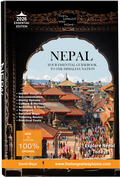
All trekking recommendations are in my guidebook because individual guides and agency staff frequently change. I keep my guidebooks continuously updated with reviews of reliable agencies and local guides in both my Trekking in Nepal guidebook and Nepal guidebook.
Keep in mind that communicating with local guides from overseas can be slow or unpolished. Their written English may be basic, but that is often a sign of an authentic local company. If a local agency sends back an overly polished or AI written sales pitch, that should actually raise far more red flags.
If you prefer to have everything arranged for you, my Find a Local Trekking Guide Service takes care of the entire vetting and booking process. I connect you directly with fully registered, highly qualified local guides native to the specific region you plan to trek. Check availability for your dates →
Take the Guesswork Out of Your Nepal Trek
These guidebooks are hands on trekking guidebooks that are better than the rest. Yes, really! The books contain day-by-day guides with accuracy using scalable maps, photographs and travel-tested up-to-date trekking information. Just like my other guidebooks these have been proven to be the best interactive, or paperback guidebooks to Nepal available anywhere today.
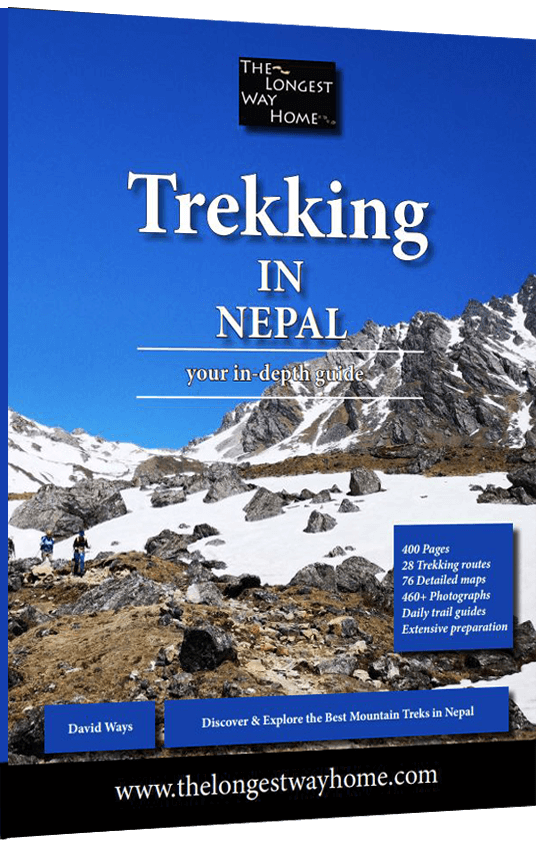
Trekking in Nepal Guidebook
- Choose Your Format: High-resolution Digital for your phone or a Print edition for your backpack.
- Scalable Trail Maps: Detailed views that don't require a data connection or GPS.
- Real-World Logistics: Accurate trekking costs and safety protocols updated for the current season.
Dedicated guidebook with 29+ treks for in-depth trekking.
See Guidebook & Print Options →
Full Nepal Guidebook
- Beyond the Trails: Complete coverage of Nepal's culture, cities, and travel logistics.
- Trekking Plus Travel: Everything you need for a full Nepal trip, not just the mountains.
- Updated for the Current Season: Permits, costs, and route information kept current.
Complete country guide that also includes First Time Trekking in Nepal.
See Full Nepal Guidebook →Was this page helpful to you? If so please tell others!