

About Godawari
The greenest part of the Kathmandu Valley is located to the south around the hills of Godawari (Godavari गोदावरी). Famed for its botanical gardens, the area is also home to important religious sites and several temple areas that are rarely visited by tourists. It is an unexplored corner for those looking to go where no tourists go. There are three main temple sites in Godawari, all within relatively close walking distance of each other. Unless you are very much into Newari and Hindu temples, they are probably not going to be of huge interest to you specifically. However, when combined with the botanical gardens and surrounding forests, Godawari can make for a fulfilling day out.
Godawari or Godavari? In typical Nepali style there are two spellings for the one location. It boils down to culture, caste, religion, and indeed English translations. These days the area is known as Godawari, however don't be surprised to hear some locals call it Godavari with an emphasis on the "V". In cultural appreciation as tourist, both are correct.
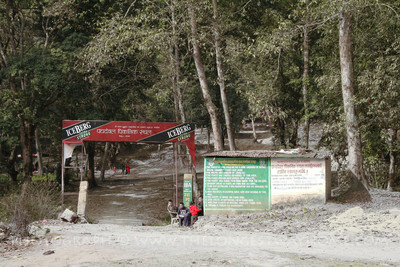
Godawari is an ideal location for nature lovers and those looking to get away from the bigger cities of Kathmandu or Patan. The area's serene forests, sacred ponds, and historic temples offer a peaceful escape, showcasing a pristine side of the Kathmandu Valley that few tourists explore.
On this page
Godawari: At a Glance
Kathmandu Valley's Greenest Corner
Forested hills, sacred ponds and botanical gardens south of the valley. An unexplored corner where few tourists ever venture.
Entrance Fees
Temples and ponds are mostly free. Unofficial 25 to 100 NPR at the forest and Kunda. Botanical Gardens: 500 NPR foreigners, 200 NPR SAARC, 50 NPR Nepali, plus camera and parking fees.
Temples & Monastery
Godawari Kunda pond, Shiva lingam shrines, Siddheshwar Temple (13th century, Licchavi), Naudhara Kunda pools, and the O Sal Choling Tibetan Monastery.
Botanical Gardens
Diverse collections including a cactus house, orchid house, Fern Garden, Rock Garden, Rose Garden and Coronation Pond. Open 9 AM to 5 PM. Saturdays are busy and noisy with locals and students.
How Long to Stay
A full day covers gardens, temples and the forest. Two to three hours of walking between sites. Picnic-friendly, and the area is fine as a day trip from Kathmandu or Patan.
Getting There
Taxi from Thamel is 2,000+ NPR, 45 to 60 minutes. Bus via Patan 100 NPR total (up to 2 hours with traffic). Micro-van from Lagankhel 25 NPR. Return transport is scarce, so arrange round-trip.
Information verified: January 2026
Visiting Godawari Today
Godawari is a quiet forested area with several sites to visit, from temples to a Buddhist monastery, the botanical gardens, and Godawari forest. For many visitors to Godawari, the hardest part will be getting there by public transport. It's not hard or especially difficult, but it can take up to two hours due to traffic in both Kathmandu and Patan. Though leaving from an overnight stay in Patan via bus can reduce travel time considerably. Taking private transport seems like the preferable way to go if you wish to have a relaxing day.
Once in Godawari, everything is walkable, though you will get some mileage done, so if you are not up for 2-3 hours of walking, then come with your own transport. Overall, a visit to Godawari can be richly rewarding, as you'll see a pristine side to the Kathmandu Valley view that few others ever get to visit.
Top Attractions in Godawari
Shiva Shrines by a Pond
Passing Godawari Kunda (a sacred spring) on your right, keep walking as the dusty road widens out and a pond appears to your left.
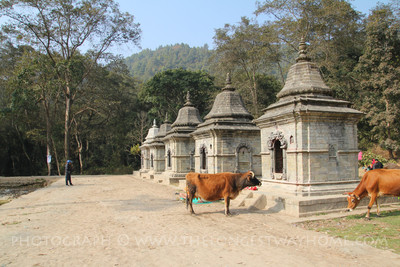
Across from the pond are five stone shrines. Each angular stone shrine houses a Shiva lingam, which is indeed dedicated to Shiva. The pond is said to be naturally forming, though there is a slow flow of water from a diverted stream. During the Godawari Mela (12-year festival), the area is teeming with devotees. Otherwise, it's usually a quiet area with an occasional few devotees nearby and the odd roaming cow!
Godawari Community Forest
Admission: 25-100 rupees*
To the rear of the Shiva shrines is a community-run part of Godawari forest spanning 30 hectares. The first section is a popular picnic area with a few concrete tables and stools. Inside the forest, there's a selection of wildlife and fauna, including over 300 varieties of birds and 259 types of butterfly. The area has relatively well-marked trails. Some non-Nepali visitors have reported that they have been asked to pay an ever-changing entrance fee of between 25 and 100 rupees.
Godawari Kunda (Sacred Pond)
Admission: Free
Cross over the road by the Shiva shrines and walk back down the main road. To your left, you'll come across an open area with several shrines and a big pool of water. Step inside the area known as Godawari Kunda. This is the area where Ganga is said to have made a water source for the cow herder. The area has several shrines dedicated to Narayan, Ganga, Ganesh, and Shiva. The central focus is the pond of water, which five stone spouts pour water into it. Here is where people wash in the belief that it will rid them of sin. Or, more commonly, to bathe in the holy waters that the goddess Ganga created. The actual water source created by Ganga is behind the stone spouts, which can also be visited via the metal gate to the side. If the gate is locked, do ask a local where the caretaker is, and they should, but not always, open it for you. Shoe removal inside is mandatory.
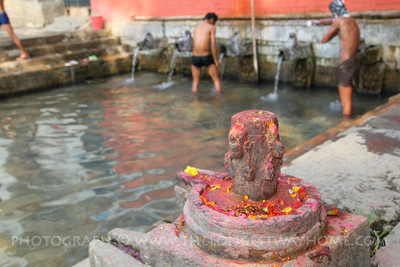
Inside is a fenced-off pool of crystal-clear water where little fish can be seen. This is the exact water source Ganga is said to have created. There are also many shrines in this area, with one to Shiva on the far left. To the right, in its own enclosure, is the sacred shrine of Ganga. Here her shrine is faded and covered in vermilion, but there is a naga (water serpent) beside it to the left, alongside a Narayan statue.
Siddheshwar Temple
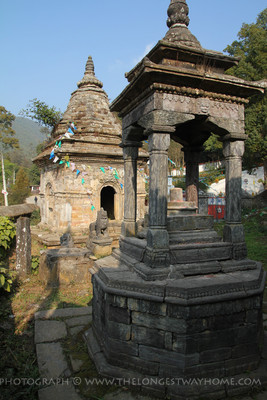
Across from the pool of water with the water spouts, you will notice a small stone temple. This is said to be a temple the cow herder from the legend of Godawari built and dedicated to Shiva. It's dated back to the 13th century CE, during the Licchavi period. Access to the temple is again permitted, but not that easy. The steps leading up to it end with a little locked gate and a low-lying wall. If you were to go back out onto the main road and walk around to the other side, there is another set of steps with no gate; however, they are currently damaged and not so safe to use. Many people seem to just hop over the low-lying wall near the first gate to enter the compound.
The little temple is guarded by two small stone lions, and inside is a Shiva lingam. Opposite the temple is a rather aesthetically pleasing shrine, with a roof covering another Shiva lingam. Nearby is the large O Sal Choling Godawari Tibetan monastery. Walk down the main road and then take a left up the steep hill.
Naudhara Kunda
Admission: Free*
Inside the walled compound are two large stone pools, a small shrine, and a temple. There is no official entrance charge into Naudhara, but much like the community forest earlier, there are some enterprising people from the Naudhara community forest who may try to charge a fee to enter. The stone pools within the compound are supplied with water through nine stone spouts in each and are known as Naudhara Kunda. The name comes from the nine streams that flow from Phulchowki Mountain above. The ponds were built during the Rana period by the royal family, as Godawari was a popular nearby retreat for them.
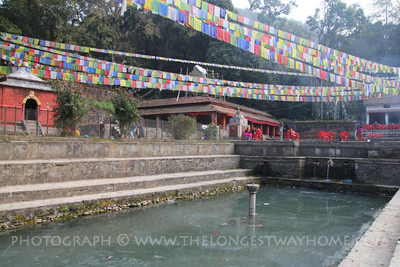
Behind the first pond is a small red brick shrine with a white roof dedicated to Shiva. Inside is a Shiva Lingam. The larger temple beside the second pool is the Phulchowki Mai temple, dedicated to the mother goddess of the forest. Follow the main road back past Xavier school.
Botanical Gardens
Admission: 500 rupees, SAARC 200 rupees, Nepali 50 rupees, 10am - 4pm/5pm
The botanical gardens in Godawari have some of the most diverse collections of fauna in Nepal. Some of these include the cactus house and the orchid house. Outside, the gardens are centered around the Coronation Pond. Other popular attractions include the Fern Garden, Rock Garden, Rose Garden, and some streams. Visitors should note that on Saturdays, the botanical garden can get swamped with students and locals, making it quite a noisy environment. The second point to note is that the pricing system to enter the gardens is quite convoluted and pricey for some. All prices are generally half for children under 10. There are additional charges for photographic cameras and video cameras, and if you are parking, there's a fee for your vehicle too. Walking back to Godawari bus stop is the only option from here.
O Sal Choling Godavari Tibetan Monastery
In Godavari's lush hills, the O Sal Choling Godavari Tibetan Monastery, founded by Sherab Tendar Rinpoche, is a serene Kagyu Buddhist retreat blending Tibetan heritage with Kathmandu Valley's tranquil greenery.
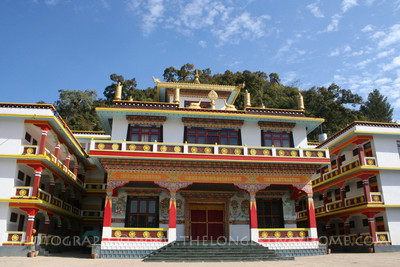
Its ornate prayer halls, vibrant thangkas, and golden Buddha statues offer a peaceful contrast to nearby Hindu shrines, inviting visitors to join morning pujas, turn prayer wheels, or meditate amid Phulchowki Mountain views. As a hub for Mahamudra teachings and community initiatives, this monastery near Godavari Kunda and the botanical gardens provides a profound spiritual escape, showcasing Nepal's interfaith harmony. https://www.facebook.com/osalcholing.monastery/
Accommodation in Godawari
Godawari is close enough to Patan and Kathmandu to easily allow you more comfort in staying there than in the small amount of local accommodation along the Godawari road. Accommodation here springs up occasionally and is very often only used for "brief stay" or "regular weekend" customers.
The one exception is the Godawari Village Resort, which is located quite some distance from Godawari itself. The established resort does offer a superior class of room, pool, and facilities for USD $100+. (977-1-5560675) www.Godawarivillageresort.com
Nearby, O Sal Choling Monastery has some local accommodation close to the monastery.
Restaurants
There are no tourist-specific restaurants in Godawari. You will find the odd local restaurants in Godawari itself near the bus stop. However, the choice will be limited. It's best to bring your own food and picnic at one of the sights. If you are planning to hike in the forest area, you should also come supplied with your own food and water, as there are no facilities there. It is also recommended that you take a guide, as there have been reports of theft along lone trails.
Getting There and Away
Take a taxi for about 2000+ rupees from Thamel to Godawari. Many taxis will try to bargain for a higher price, but hold your ground or offer a return fare with them. Likewise if using a ride sharing app. There are virtually no taxis in Godawari for the return journey. Taking a bus from Kathmandu's Ratna bus area is possible, though the buses do not leave regularly and cost 100+ rupees. An alternative, more regular route is to take a regular bus to Patan for 50 rupees from the Ratna bus area, and then from there another to Godawari for another 50 rupees. There are also plenty of micro-vans from Patan to Godawari. On the way back, simply catch a bus or microvan from Godawari to Patan and then the bus back to Kathmandu. In both cases, the entire journey could take up to 2 hours due to traffic. Leaving early in the morning to avoid traffic and shorten the journey is advisable.
Map to Godawari
Frequently Asked Questions about Godawari
Godawari Kunda is a sacred pond believed to have been created by the goddess Ganga for a cow herder. It features five stone spouts and shrines dedicated to Narayan, Ganga, Ganesh, and Shiva. Devotees bathe in its holy waters to cleanse sins, and the crystal-clear water source behind a metal gate is a key spiritual site, accessible with permission from a caretaker.
The Godawari Botanical Gardens feature diverse flora, including a cactus house, orchid house, Fern Garden, Rock Garden, Rose Garden, and the Coronation Pond. Admission costs 500 rupees for foreigners, 200 rupees for SAARC nationals, and 50 rupees for Nepalis, with additional fees for cameras and parking. It can be crowded and noisy on Saturdays due to local visitors.
Most attractions, like Godawari Kunda and Siddheshwar Temple, are free to visit. The Godawari Community Forest and Naudhara Kunda are also free, though some visitors report unofficial fees of 25-100 rupees. The Botanical Gardens have a structured fee: 500 rupees for foreigners, 200 rupees for SAARC nationals, and 50 rupees for Nepalis.
A taxi from Thamel to Godawari costs around 2000+ rupees, but negotiate or arrange a return trip, as taxis are scarce in Godawari. Buses from Kathmandu's Ratna bus area cost 100+ rupees, or take a bus to Patan (50 rupees) then another to Godawari (50 rupees). Micro-vans from Patan are also available. The journey may take up to 2 hours due to traffic.
About the Author
David Ways is an experienced travel writer and explorer who has spent years documenting the hidden gems of Nepal and beyond. With a passion for uncovering authentic cultural experiences, he provides detailed guides to help travelers navigate destinations like Godawari with ease and insight. Learn more about David.
Take the Guesswork Out of Your Nepal Trip
Articles are great, but 20 tabs open on the move isn't. My guidebooks put years of honest on-the-ground research into one place, updated every season so you've got the latest information.

- Complete Country Coverage: Kathmandu, Pokhara, Chitwan, heritage walks, and culture.
- Includes First Time Trekking: The entire beginner trekking guide is included right inside!
- Offline Interactive Maps: Zoomable maps and walking tours for seamless navigation.
Was this page helpful to you? If so please tell others!