
The "Road Free" Annapurna Circuit Guide
The Annapurna Circuit (APC) remains a global icon for a reason. Few trails on earth offer this level of diversity, moving from the subtropical green pastures of the lowlands through ancient pine forests and into the high-altitude, arid rain shadow of the Himalayas.
While the original route is still highly versatile and can be hiked in anywhere from 8 to 18 days, the biggest challenge for modern trekkers is the encroaching road. Many believe the circuit is "ruined" by jeep tracks, but that is simply not true if you know where to walk. I've trekked this route for many years, and will show you several 8-15 day options that claim to give you a road-free Annapurna Circuit route, and nearly do. Plus an incredible route that 100% does.

Crossing the Thorong La Pass: The high point of the road-free circuit
Instead of walking on hard black top, tarmac, or dusty gravel, this guide focuses on the three road-free options available to you: the short circuit route, the NATT (New Annapurna Trekking Trails or Natural Annapurna Trekking Trails), and the Nar Phu Annapurna Circuit.
However, I want to clear up something about two of these routes first that you won't find elsewhere. Two of these routes require you to trek on roads at the start! The short circuit and NATT need acclimatization days that are alongside the road at the start. Over the years both of these routes have acquired the "road free" status, which I'm not happy about. However, good news, the Nar Phu Annapurna Circuit has no roads at all! These are specific forest paths, ridge routes, and ancient village tracks that have zero roads nearby and bypass the road entirely.
By integrating the Nar Phu Valley Trek into the classic circuit, you'll have a route that is more remote, culturally immersive, and physically rewarding than the other standard jeep-track options. You get the grandeur of the high passes and the deep culture of the villages without the noise of traffic or large tour groups. We will be concentrating on this route, but I'll include the other two so you can use them as comparisons and see what works best for your trek.
Whether you are looking for a rugged 15-day wilderness experience via Nar Phu or a streamlined 8-day highlights trek that uses smart transport to skip the worst sections, the information here is based on current, on-the-ground trail conditions for 2026.
Let's look at how to hike the Annapurna Circuit the way it was meant to be experienced: on foot and off the road.
Note for Trekkers: I have provided the essential planning details in this article for free. If you would prefer to have all this plus 28 other major treks in a printable PDF or a durable paperback for the trail, you can find my full Trekking in Nepal Guidebook here. It is designed to work offline at high altitudes where you will not have a signal.
At a Glance
Difficulty
Moderate to Challenging. Long days at altitude with two major passes on the Nar Phu route. No technical climbing.
Duration
8–15 days depending on route. 8-day short circuit, 11-day NATT, 13-15 day Nar Phu Annapurna Circuit.
Total Distance
125–180 km (78–112 mi) depending on route. The full classic APC trek is the longest.
Max Altitude
5,416 m (17,769 ft) at Thorong La. The Nar Phu route also crosses Kang La (5,320 m).
Accommodation
Teahouses / Lodges. Well-established network on the main circuit. Basic in the Nar Phu restricted area.
First distance shown is a shorter route while the longer distance is the full classic APC trek. It does not take into account extra days taken etc. Acclimatization days should always be adhered to. You should assess your own fitness levels and assess each trek's difficulty level yourself before trekking. A fully detailed guide to the Annapurna Circuit with more details is below.
Where is the Road Free Annapurna Circuit?
The Annapurna Circuit (APC) trek is located within the Annapurna Conservation Area (ACAP) in central Nepal. The trail circles the Annapurna Massif, crossing through the Lamjung, Manang, and Mustang districts.
While popular treks like Poon Hill and Annapurna Base Camp sit to the south of the range, the Road-Free routes focused on here, including the remote Nar Phu Valley, venture further north and east to the border of Tibet.

At its highest the Annapurna Circuit reaches 5,416 meters (17,769 ft) at the Thorong La pass.
The average duration for the Annapurna Circuit is between 8 & 18 days. Though this can be extended by side treks or shortened by taking a flight or vehicle.
Maps of the Road Free Annapurna Circuit
This map shows you the most popular Annapurna trekking route.
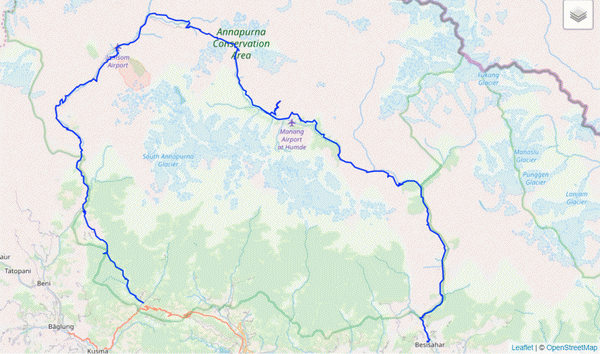
Please note this map should not be used as a practical trekking map. While the main Annapurna Circuit route remains the same there are variations depending on side trails, weather conditions, time of year, natural events and physical changes to the trek paths. No support is given for GPX files and they should only be used as rough trail routes. Do get my Trekking in Nepal guidebook for more detailed maps!
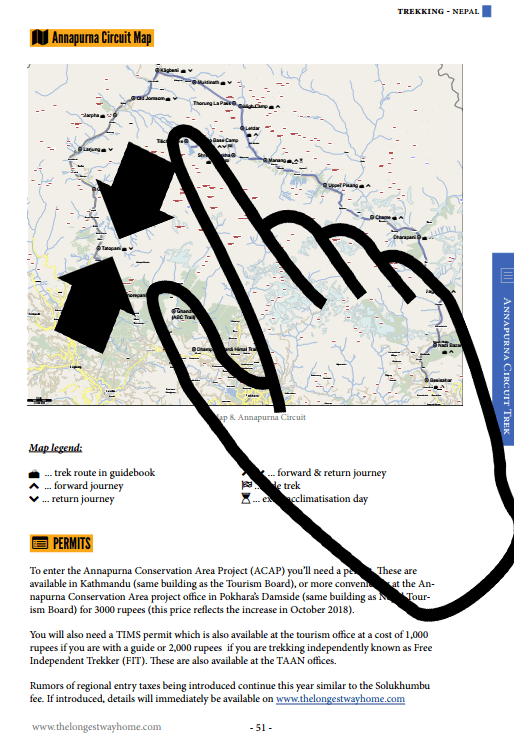
The above map is a sample from my Nepal guidebook - the only guidebook with trekking maps that can be zoomed right into - even for the smallest of trails!
Above is the road-free Nar Phu Annapurna Circuit - it looks completely different, because it has no roads!
Facts about the Road Free Annapurna Circuit
Highest point of the Annapurna Circuit trek
At 5,416 meters (17,769 ft), the Thorong La pass marks the highest point of the Annapurna Circuit. Most trekkers cross the pass after a night in High Camp or Thorong Phedi. However, if you take the 15-day Nar Phu Annapurna Circuit route, you will also cross the Kang La Pass (5,320 m) before reaching the Thorong La.
Highest sleeping point on the Annapurna Circuit
Thorong Phedi (4,450 m) is the base for the final ascent, often referred to as "Phedi" or Base Camp. For those well-acclimatized, High Camp (4,850 m) offers a higher alternative that shortens the pass-crossing day by about an hour.
How long have people been trekking the Annapurna Circuit?

The region has served as a vital trade route between Nepal and Tibet for centuries. It officially opened as a trekking route in the late 1970s. In the early 1980s, the full circuit took approximately 23 days on foot.
By 2026, the landscape has changed. While the old road-heavy loop is less popular, the modern road-free options like the Nar Phu route or to a lesser extent the NATT route allow for a pure trekking experience in 8 to 15 days.
What mountains can you see?
The massif features Annapurna I-IV, Machhapuchhre (Fishtail), Dhaulagiri, Manaslu, Gangapurna, and Tilicho Peak. These peaks range from 6,000 meters to over 8,000 meters, providing a constant Himalayan backdrop throughout the journey.
Do you never see the road?
It depends on what itinerary you choose. The 8 day itinerary and NATT will have road at the start, but it is essential you acclimatise properly. On the first and last day of all these treks you will need to drive there! This is the same for the vast majority of all treks. In terms of actual feet on the ground trekking, the Nar Phu Annapurna Circuit is virtually road free in terms of trekking. In 2026 they have begun building a new bridge past Koto for a power plant at Meta. It is highly likely in the coming years there will be a road on this stretch.
Read This Before You Trek
Every year trekkers die in the Himalayas from preventable causes: altitude sickness, bad advice, uninsured guides and rescue scams. Before you book any trek in Nepal, read my complete guide to safe trekking in Nepal.
Highlights of the Road Free Annapurna Circuit
Highlights of these modern routes include:

- Remote Exploration: The restricted Nar Phu Valley for a "wild" Nepal experience.
- High Altitude Challenges: Crossing the Thorong La and Kang La passes.
- Cultural Depth: Staying in traditional Manangi and Tibetan-influenced villages.
- Flexibility: Itineraries can be tailored from 8 to 15 days.
- Infrastructure: Excellent tea house accommodation and diverse local menus.
- Side Trips: Optional treks to Tilicho Lake or Ice Lake.
- Natural Wellness: Natural hot springs in Tatopani or staying at the Nar Phedi monastery.
How to arrange a Road Free Annapurna Circuit Trek
Arranging a Road-Free Trek
There are many options here ranging from package tours to hiring guides.
Your biggest obstacle will be that trekking agents and guides don't like it when you present them with your own itinerary. It means they have to work harder to recalculate prices and routes. This is why you'll see them sticking with generic itineraries online, often with inflated routes (to increase the duration and price). It's not a big thing, you just need to be firm in what you want, and understand that there are limits e.g. a trekking guide is not going to trek 10 hour days just to save you money. Trek day duration is nearly always dependent on the terrain that day, and altitude.
As per usual, booking online can be significantly more expensive than booking in person when in Nepal. If you are looking for the 15-day Nar Phu Annapurna Circuit or the 8-day road-free option, be aware that many online agencies use generic itineraries that may still include road sections. It is far better to deal directly with a local company or guide who understands the trails rather than a generic booking site.
Package tours bought online
Package tours bought online generally have a fixed itinerary that often follows the older, road-heavy routes. These can be confusing, filled with jargon and varying price points. If you want a road-free experience, you must explicitly confirm if it's a road-free route.
Pros include that everything is organized ahead of time, including the restricted area permits required for Nar Phu if choosing this option.
Cons include paying significantly more for a rigid schedule, and you may not know if your guide is truly experienced with the newer road-free bypasses. Hidden costs are often a problem with buying a trek online. Many "what's included" lists are written in ways that seem like everything is, but the reality is they are worded that way on purpose and you'll often have extras. Be aware of treks bought online who hide the fact that you'll be joining another group on the trek.
Package tours bought in Nepal

If you have a few days in Kathmandu or Pokhara, you can arrange a package trek yourself. Pokhara is best for Annapurna Circuit treks. This is the best way to ensure your itinerary includes the Nar Phu valley or specifically avoids the road on an 8-day trek. Do not be swayed by generic talk; ask for specific village stops like Nar and Phu or the NATT trail markers.
Ensure everyone understands what is included: restricted area permits (mandatory for Nar Phu), ACAP permits, TIMS, accommodation, and meals. Meeting your guide beforehand is essential to ensure they know the road-free alternatives. Many online package tours hide extra costs - in person is a better experience.
Pros here include meeting your guide in person to discuss the specific road-free route and it is much cheaper than booking online.
Cons include the time required to interview agencies and the potential for "information overload" from competing shops.

Hiring an Annapurna Guide yourself
To save on costs while maintaining flexibility, you can hire a trekking guide yourself - but they should be registered with an agency so they will be insured and licensed. It means you'll be paying the guide a daily rate, and then paying for your own accommodation, meals, transport etc yourself. This is highly effective for trekkers who have previously trekked in Nepal. For the 8-day road-free circuit or the 11-day NATT trail it's quite straightforward. For the 13-15-day Nar Phu Annapurna Circuit trek, your guide must be registered with an agency to secure the restricted area permits - meaning for this section of the road-free Annapurna circuit you must have a guide - it's up to you if after the restricted area you want to go without a guide - more on this later.
Pros include a lower budget and total control over your daily pace and route choices.
Cons include having to handle your own lodge bargaining and meal orders, though a good guide will usually assist with this.
Best time of year to go trekking the Road Free Annapurna Circuit
Weather along the Annapurna range is subject to change:
Due to the large and diverse area the Annapurna Circuit covers conditions will differ in certain regions. For example Nar Phu is more arid than lower sections. Likewise, the high altitude of both passes means the conditions will be far harsher than elsewhere.
Thorong La Weather by month
| Month | Temp (°C) | Temp (°F) | Rainfall (mm) | Trail Status |
|---|---|---|---|---|
| January | -6° | 21.2° | 9 | Possible snow / ice on passes |
| February | -7° | 19.4° | 26 | High passes often blocked |
| March | -5° | 23° | 9 | Good (some snow higher up) |
| April | 0° | 32° | 14 | Excellent |
| May | 5° | 41° | 22 | Very Good |
| June | 8° | 46.4° | 50 | Pre-monsoon (still doable) |
| July | 12° | 53.6° | 140 | Monsoon – Avoid |
| August | 11° | 51.8° | 140 | Monsoon – Avoid |
| September | 10° | 50° | 80 | Post-monsoon (improving) |
| October | 2° | 35.6° | 9 | Peak Trekking Season |
| November | -2° | 28.4° | 0 | Peak Trekking Season |
| December | -5° | 23° | 0 | Winter conditions from mid Dec onwards |
Best months: April–May, Mid-Sept -October & November-Mid
December
Avoid: Jul–Aug (monsoon) · Dec–Feb (snow)
Do note that altitude and mountainous terrain play a strong factor in the comparative weather temperatures along with the season. Wind-chill will drive temperatures down by -10+. With this in mind the following chart has high's and low's at Thorong La and add on wind-chill.
Annapurna Circuit Annual Temperature Index Chart
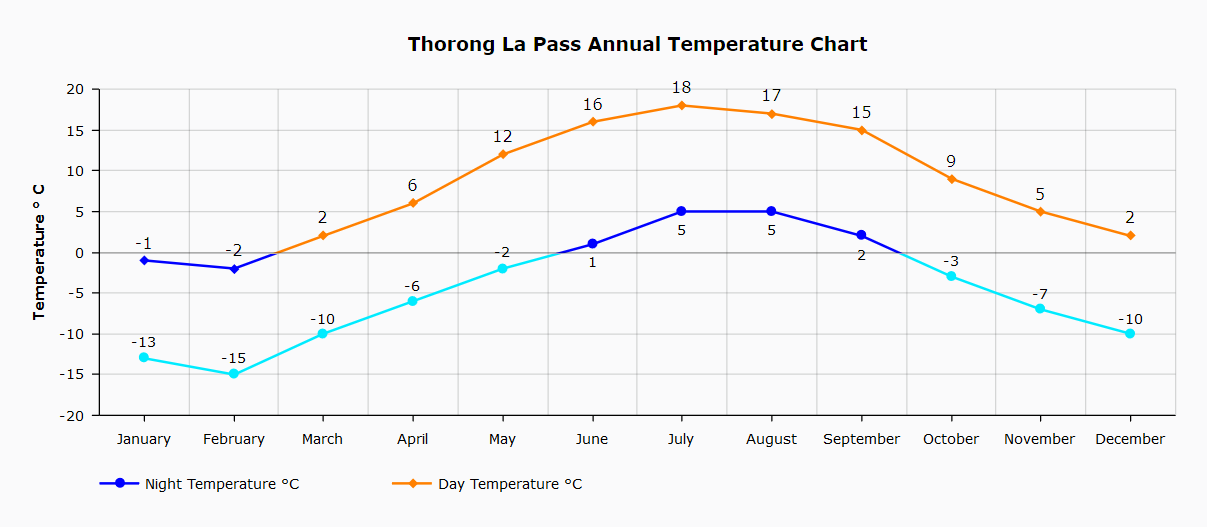
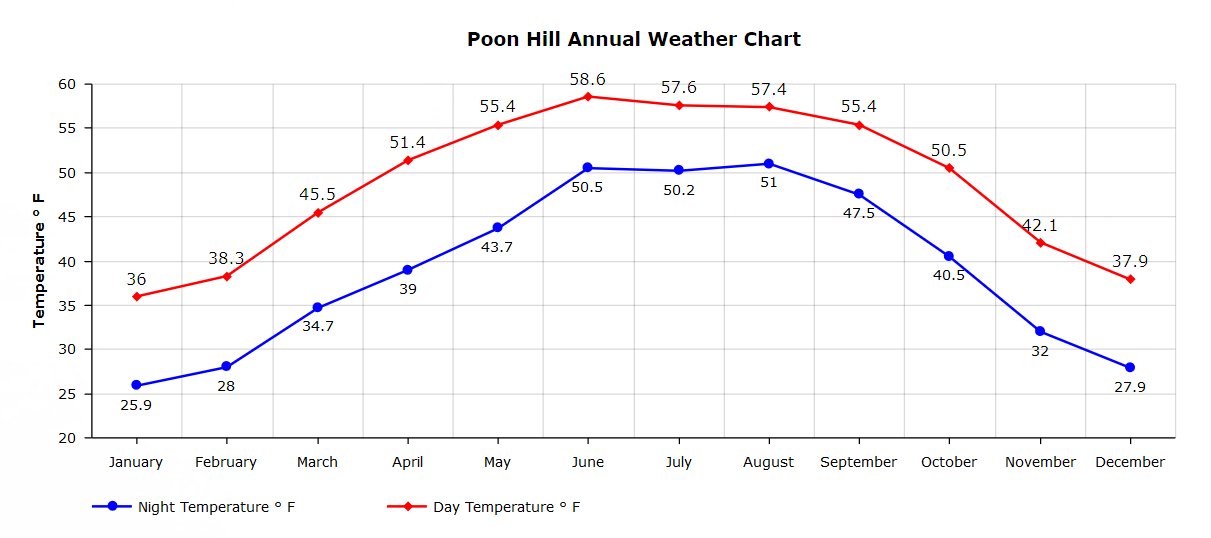
If all those temperatures above seem too cold then don't forget the above is about as cold as it gets from Thorong La Pass which is the highest pass on the trek. Temperatures on the rest of the trek are best looked at from the Poon Hill temperature chart below which will give you an indication of what to expect at lower altitudes.
Best weather months for a Road-Free Trek
Weather is the most critical factor when planning your route. For the 15-day Nar Phu circuit and the 8-day road-free trek, you are spending significant time at high altitudes, so clear skies are essential for both views and safety on the passes.
Mid-September-October - November / (early) December: This is Nepal's peak trekking season and the best time for the Nar Phu Annapurna Circuit. The monsoon dust has settled, providing the crispest views of the Annapurna massif and stable conditions for crossing the Thorong La and Kang La passes.
March - April - May: The second best time to trek. Temperatures are warming up, and the rhododendrons are in bloom in the lower forest trails. This is an excellent window for the 8-day circuit, though afternoon clouds are more common than in autumn. For the Nar Phu Annapurna Circuit you'll also have blooming greenery compared to the peak season which is more arid.
December to February: The skies are often brilliantly clear, but it is extremely cold at High Camp and in the Nar Phu valley. There is a high risk of the Thorong La pass and Kang La Pass being closed due to heavy snow. Only experienced winter trekkers should attempt the high passes during these months.
June - September: This is monsoon season. While the Nar Phu and Manang regions sit partially in the Himalayan rain shadow (receiving less rain than the south), the journey to reach them is often plagued by leeches, mudslides, and flight/bus delays. It is the least popular time for a full circuit. The weather usually breaks by mid-September to better trekking conditions.
For a more detailed breakdown of monthly conditions, see my guide on the best time of year to go trekking in Nepal.
What permits are needed for the Road Free Annapurna Circuit Trek?
If you are on a package trek or tour to the Annapurna Circuit then your guide or trekking agency will and should take care of all your permits for you. For independent trekkers, you'll need to coordinate with a registered agency to secure them. Since 2023, hiring a licensed guide is mandatory for all treks in this region. Though TIMS card checkpoints are not open. The exception here is the Nar Phu section whereby the police will be looking for the restricted area permit. In all cases, here is what permits you need and how to get them for the APC trek. If taking the Nar Phu Annapurna Circuit you'll need the trekking agency to arrange the restricted permit.
You need two permits for the 8-day and 11-day road-free routes, plus a Restricted Area Permit if you add the Nar Phu section
- Annapurna Conservation Area Project Permit (ACAP)
- Trekker Information Management System (TIMS Card)
If you're doing the Nar Phu Annapurna Circuit (13 or 15 day), you'll also need:
- Nar Phu Restricted Area Permit (RAP)
All of these permits can be bought in either Pokhara or Kathmandu at the Tourist Information Center. Pokhara is closer to the start of the trek. Both offices are open between 10am - 5pm however it is better to arrive an hour or so before closing time. In Pokhara getting the permits only takes about 30 minutes if you have everything you need.
Get the Annapurna Conservation Area Project Permit (ACAP)
An Annapurna Conservation Area (ACAP) covers all of the Annapurna National Park.

The permit is only valid for one entry and one exit. However, so long as you don't exit, you can use it for as many treks within the Park. You can also get one online via an e-permit https://epermit.ntnc.org.np (additional surcharge applicable) or via your trekking agency (cheapest and easiest). Guides can do this before you arrive. It is a mandatory permit.
- Fill out the ACAP form
- Hand over the completed form, your passport and 2 passport photos (do note the office takes photos for free at the moment)
- Pay the 3,000 rupees (only payable in Nepali Rupees)
- Get your ACAP permit
Failure to get an ACAP permit before your trek means you will be double charged at an ACAP checkpoint for a permit.
Get the Trekker Information Management System Card (TIMS)
The Trekkers Information Management System Card (TIMS) is meant to help protect trekkers through registration checkpoints along the trek. Fees also go towards guide and porter insurance along with their training.

Do note that the TIMS Card is now a flat 2,000 rupees and a trekking company is the only one that can apply for it.
Both the ACAP and TIMS card can be used for all applicable treks within the Annapurna Park until they receive an exit stamp. Once either permit has an exit stamp it cannot be used again. So if you do the Annapurna Circuit and then return to Pokhara and decide you want to do the Annapurna Base Camp trek you'll need to get new permits. However if you do the Annapurna Base Camp trek while on the Annapurna Circuit then you can use the same permits. If you get exit stamps and try to enter/leave again there is a hefty 6,000 rupee on the spot fine!
There are multiple checkpoints for the APC trek including Birethanti and Chomrong. Not all are open, but TAAN are planning to open all again soon.
If you are planning on the road-free Nar Phu Annapurna Circuit then you'll also need a restricted area permit for Nar Phu. From September to November (Peak) these cost USD $100 for 7 days. From December to August it will cost USD $75 for 7 days. 7 days will be enough in the restricted area. Note: As of March 2026, the Department of Immigration now allows solo foreign trekkers to obtain Restricted Area Permits for Nar Phu, provided you are accompanied by a licensed guide and apply through a registered agency.
What equipment do you need for a Road Free Circuit?
If you are on a package tour, your agency will provide a list, but remember that for the road-free versions, you are often further away from easy supply points. Whether you are doing the 15-day Nar Phu Annapurna Loop or the 8-day highlights, keeping your pack light is essential for the high passes unless you have a porter.
If taking a trip to the Annapurna Circuit in Nepal, the following items are generally needed:

- A good pair of hiking boots (broken in!)
- A windcheater style jacket (essential for Thorong La)
- Down jacket (for cold nights in Nar Phu or High Camp)
- Long sleeve base layers
- Trekking pants
- Shorts (for the lower valley sections)
- Underwear & Trekking socks
- Sunscreen, Sun glasses, & Lip balm
- Rubber sandals (for evening lodge wear)
- Washing powder
- Water bottles (heat resistant for hot water at night)
- Water purification system (Lifestraw or Steripen)
- A physical Map (NATT routes are better marked on paper)
People often ask me how many shirts or socks they should bring on a long trek. My rule is simple: bring three of each. I wash one pair every night and let them dry strapped to my backpack as I trek the next day. This strategy is perfect for the 15-day Nar Phu circuit where every gram counts when crossing the Kang La.
Please note the above is a basic list. For a full 2026 comprehensive list, please see my article on trekking equipment you need for Nepal.
How Difficult is the Road Free Annapurna Circuit?
Note for Trekkers: I have provided the essential planning details in this article for free. If you would prefer to have all this plus 28 other major treks in a printable PDF or a durable paperback for the trail, you can find my full Trekking in Nepal Guidebook here. It is designed to work offline at high altitudes where you will not have a signal.
It will depend on which of the routes you take. A solid level of fitness is required to complete any version of the road free Annapurna Circuit. The 15-day Nar Phu Annapurna Circuit requires crossing two high passes (Kang La and Thorong La), which adds significant strain. In all cases, preventing altitude sickness must be your primary safety concern.

The difficulty chart above is based on a typical classic trek. However, for 2026, it's best to categorize difficulty based on your chosen road-free route:
- 8-Day Circuit: Moderate. High intensity due to rapid altitude gain, but shorter duration.
- 11-Day NATT: Moderate+. Consistent trekking on natural, sometimes steep forest trails.
- 15-Day Nar Phu: Moderate+ to Challenging. Includes the remote Kang La pass (5,320m) which is steeper and more rugged than Thorong La.

The Early Stages (Acclimatization): On the road-free 8 and 11-day routes, you bypass the dusty lowlands. However, the rapid ascent toward Manang (approx. 3,500m) is where altitude catches people. It is vital that you spend two acclimatization nights in Manang before pushing higher. Likewise, do not drive further than Chame - trek from Chame.
The Nar Phu Factor: If doing the 15-day route, the difficulty spikes early but offers more gradual acclimatization. The trek into Nar Phu involves narrow canyons and a steep climb over the Kang La Pass. This pass is often considered more difficult than Thorong La because the trail is less "groomed" and the descent into Ngawal is a long day. The rewards are amazing views, remote villages, deep valleys, Tibetan plateau, and a serious lack of tourists.
The High Pass (Thorong La): This is one of the hardest days for all three routes. At 5,416m, oxygen is roughly 50% of sea level. The ascent from High Camp is a slow, cold grind, but the 1,600m descent to Muktinath is the final hurdle.
The Finish: For those on the 8-day route, the trek ends shortly after the pass with transport out of Muktinath or Jomsom.
Regardless of the route, the "hardest" day is always the one where you stop listening to your body. Take the acclimatization days seriously, and use trekking poles!
How fit do I need to be for the Road Free Annapurna Circuit Trek?
A level of fitness is certainly required. It is in your best interest to be in good cardiovascular shape before arriving in Nepal. While the road has changed the logistics, the road-free routes actually require more physical effort as you stay on higher, more rugged trails for longer periods.

I advise anyone trekking to see a doctor before they go for a check-up and to talk about dealing with altitude sickness.
To gauge your fitness, consider your chosen route:
- 8-Day Road-Free: You need high stamina. You are skipping the "warm-up" lowlands and jumping straight into high-altitude trekking.
- 11-Day NATT: Requires endurance for 5-7 hours of daily hiking on undulating forest and mountain trails.
- 15-Day Nar Phu: This is for those trekkers looking for a challenge. Crossing the Kang La is physically more demanding than Thorong La due to the steepness and remote nature of the terrain. But, you'll have ample preparation en-route which will make it easier in terms of acclimatization to the other two routes above. Thorong La may also feel easier due to your previous high pass.
The hardest point for many remains the push from Thorong Phedi to Thorong La pass. It is a grueling climb to high camp, followed by the pass itself. However, the steep 1,600m descent to Muktinath is what usually catches people out, putting immense strain on the knees. If you already crossed Kang La Pass, most trekkers manage the second with less effort so long as they are fit.
Altitude is the ultimate equalizer. Many gung-ho trekkers have failed all variations of the Annapurna Circuit trek simply because they rushed and skipped acclimatization days in Manang. Even if you feel good, your body needs time to adapt to the 5,000m+ environment.
If you find yourself over-extended or exhausted, head back down in altitude to rest up. This is where a good trekking guide comes in handy, they will advise you on your options depending on where you are. Ironically, you may not be too far from a road, if you want to call it a day.
People from all walks of life and ages have successfully completed the Circuit. The secret to success isn't being an elite athlete; it is trekking slowly, staying hydrated, and respecting the altitude.
What's the food like on the Road Free Annapurna Circuit?
The food is typical Nepali trekking food, but the Annapurna region is widely considered to have the best quality and variety in Nepal. You can find everything from yak steaks and pasta to pancakes and apple pie. In 2026, many teahouses along the NATT trails have improved their menus to include more organic, locally sourced vegetables. The Nar Phu route remains more basic, but wholesome in terms of variety.

A typical plate of Dal Bhat: the "24-hour power" meal of rice, lentils, curry, and spinach.
You will be burning a significant amount of calories, especially on the 15-day Nar Phu route where facilities are more basic. Dal Bhat remains the best option; it is healthy, filling, and you can always ask for a free refill of rice and lentils to ensure you are properly fueled.
Hydration and Costs: Beer, soda, and coffee are available, but prices rise significantly as you approach Thorong La. Once you cross the pass into the Mustang district (Kagbeni), prices drop as road access from the south makes supplies cheaper. For those on the 8-day route, expect prices to remain high for the duration of your short, high-altitude stay.
Typical Annapurna Circuit Menu
| Item | Price |
|---|---|
| Porridge with milk | 300-600 Rupees |
| Fried eggs (2) | 250-450 Rupees |
| Cheese Omelet | 400-450 Rupees |
| Apple Pancake | 350-400 Rupees |
| Dal Bhat (Meat) | 500-1000 Rupees |
| Dal Bhat (Veg) | 400-800 Rupees |
| Boiled Potatoes | 300-400 Rupees |
| Fried Noodles (Veg) | 300-400 Rupees |
| Fried Potatoes with Cheese | 450-600 Rupees |
| Macaroni with cheese | 400-600 Rupees |
| Tea / Coffee | 50-100 Rupees |
| 1 liter beer | 600+ Rupees |
| Soft Drinks (Coke, Sprite etc.) | 120-150 Rupees |
| 1 liter tap water (from underground spring or stream) | free |
| 1 liter boiled water (for filtering) | 50 Rupees |
| 1 liter bottled water (if available)* | 100-200 Rupees |
Bottled water is now officially banned in many parts of the Annapurna Conservation Area to reduce plastic waste. This has reversed a little over the past few years due to demand. You will not find mineral water for sale in most teahouses above Chame. Instead, most trekkers now use water filters or purification tablets to manage their budget and the environment. While there are Safe Water Stations dotted along the trail where you can buy UV-treated water, their availability in Nar Phu is doubtful. Bottled water is becoming more widespread again as recycling objectives take hold.

Apple pancakes are famous on the Annapurna Circuit as locally grown apples are plentiful, especially around Marpha and Kagbeni.
Treats like chocolate bars can be bought all along the trail, but the price can double once you pass Manang. Meat also tends to get harder to find (and riskier to eat) the higher you get. Carrying trekking or protein bars can be a lifesaver for adding protein to your diet during the long push over Thorong La!
What's accommodation like on the road free Annapurna Circuit?
From basic stone huts to premium "luxury" teahouses, the range of accommodation in 2026 is broader than ever. Even in peak season, there is rarely a shortage of beds, but the better lodges in Manang and Muktinath fill up fast. Note that for the 15-day Nar Phu route, accommodation remains very "authentic" and basic compared to the main circuit.

In 2026, room prices have stabilized slightly. While "free" rooms (contingent on eating at the lodge) still exist in lower, quieter villages, expect to pay between 500 to 1,000 rupees ($4–$8 USD) for a standard twin room at higher altitudes. In premium hubs like Manang, prices for rooms with attached bathrooms and solar-heated showers can go up to 2,500 rupees.
Heaters and Wi-Fi: Most teahouses now offer Wi-Fi for a small fee (approx. 200–500 NPR), often via more reliable local ISPs. During the colder months, communal dining rooms are heated with central stoves, though many trekkers still prefer the traditional "under-table" heaters on the coldest nights.
Read more and see photographs of what trekking accommodation and tea houses are like in Nepal.
How much does the Road Free Annapurna Circuit cost?
The cost of trekking the Annapurna Circuit without following the road depends heavily on which of the three modern routes you choose. The shorter 8-day trek has higher daily transport costs, while the 15-day Nar Phu route requires specialized restricted area permits.

Firstly, all road-free trekkers need the Annapurna Conservation Area Project (ACAP) permit which is 3,000 rupees and a TIMS Card which is 2,000 rupees per person. If you are choosing the 15-day Nar Phu option, you must also budget for a Restricted Area Permit, which costs USD $100 per week during peak season (you only need 1 week).
Budgeting for the 8-day, 11-day, and 15-day Road-Free routes
For 2026, keep in mind that package tours bought within Nepal or hiring a guide directly are the most practical options for road-free trekking. Because these routes use more remote trails (especially the NATT and Nar Phu sections).
The 8-Day Short Circuit generally costs between USD $750 to $900 pp. This includes the higher cost of private jeep transport to reach Chame quickly to maximize your mountain time.
The 11-Day NATT Trek usually averages $800 to $1000. This route follows red and white, and blue and white trails and requires more days of guide services and teahouse accommodation than the 8-day version.
The 15-Day Nar Phu Trek is the most expensive at $1,200 to $1,400. This is due to the restricted permit and the fact that you are paying for a guide and porter for a longer duration in a remote area where food prices are higher.
If you need help finding a specialist guide who knows the road-free NATT or Nar Phu trails, I recommend using my Find a Guide Service.
2026 Daily Expense Breakdown (Road-Free Focus)
| Expense Item | 2026 Cost (Approx.) |
| Standard ACAP & TIMS Permits | $40 USD |
| Nar Phu Restricted Permit (15-day route only) | $100 USD |
| Licensed Guide Daily Rate | $30 to $50 USD per day |
| Teahouse Room (Standard Road-Free Village) | 600 to 1,200 Rs |
| Three Meals per Day | 2,500 to 4,000 Rs |
| Filtered Water (4L daily) | 400 to 600 Rs |
Porter fees for these rugged trails are around USD $20 per day. If you are unsure of your fitness, a porter can dramatically make a trek easier.
- Rooms with private bathrooms in hubs like Manang or Muktinath cost 1,500 to 4,000 rupees.
- Filtered water is essential on all trails; it costs 60 to 120 rupees per liter depending on the altitude.
- Dal Bhat prices range from 600 rupees in the lowlands to 1,600 rupees at Thorong Phedi or High Camp.
Travel insurance is important for these routes. Ensure your policy covers "Trekking up to 6,000m" to account for both Thorong La and the Kang La pass. See my advice on travel insurance for Nepal.
Road-Free Transport Costs (Accessing the Trailheads)
| Route | Local Bus (Rs) | Private Jeep (Rs) |
| Kathmandu to Besisahar (Access for 11 & 15-day) | 1,200 | 15,000 |
| Besisahar to Chame (Access for 8-day start) | 1,500 | 2,500 (seat) |
| Besisahar to Koto (Nar Phu Entrance) | - | 2,500 (seat) |
| Muktinath to Jomsom (Post-Pass descent) | 500 | 2,500 (seat) |
| Muktinath to Pokhara (Exit) | 2,500 | 20,000 |
Note: Using private jeeps is the best way to save time on the 8-day route, while local buses help keep the Nar-Phu Annapurna Circuit and 11-day NATT budget low.
If you are flying out of Jomsom to Pokhara after crossing the pass, expect to pay approximately USD $125 to $165 for the flight.
The Road Free Annapurna Circuit routes & itineraries
We will now take a closer look at the three main road-free Annapurna Circuit routes. Keep in mind that many trekking companies or blogs will often try to put their own names on these routes to make them sound unique. The official names are as follows: Short Annapurna Circuit (8 days), Nar Phu Annapurna Circuit (13 to 15 days), and NATT (11 days).
1. The 8-Day Short Annapurna Circuit (Half Circuit)
This is the fastest way to see the high mountain highlights. It relies on a bus / jeep to bypass the lower dusty roads to reach the high-altitude trails quickly. However, acclimatisation issues can and do occur so do not drive past Chame!
| Day | Route | Distance (km) | Highest Altitude |
| 1 | Drive to Besisahar then change jeep to Chame | 18 km (5 hours avg) | 1,430 m |
| 2 | Chame to Pisang | 30 km (8 hours avg) | 3,400 m |
| 3 | Pisang to Manang | 12 km (4.5 hours avg) | 3,520 m |
| 4 | Acclimatization in Manang* | rest or local trek | 3,520 m |
| 5 | Manang to Yak Kharka | 9 km (4 hours) | 4,020 m |
| 6 | Yak Kharka to Thorong Phedi or High Camp | 8/9 km (3/4 hours) | 4,550m / 4,850 m |
| 7 | Thorong Phedi or High Camp crossing Thorong La pass to Muktinath | 13/12 km (8/7 hours) | 5,416 m |
| 8 | Drive to Jomsom then fly or bus or jeep to Pokhara | N/A | 2,800 m |
All in all this 8 day trek is achievable and is completed by many. However, the slow altitude gain is essential and there is road here at the start. You can add two days by including Tilicho Lake to add in road free days.
2. The 11-Day NATT Trek
The New Annapurna Trekking Trails (NATT) were specifically designed to avoid the road but again the start has road which is unavoidable due to acclimatisation. Their name was later confusingly changed to Natural Annapurna Trekking Trails. This 11-day itinerary focuses on the most scenic forest and ridge paths. Adding Tilicho Lake will give you two more road free days which you can exchange with Muktinath to Jomsom.
| Day | Route | NATT Highlight | Highest Altitude |
| 1 | Besisahar to Dharapani | Jeep to start of trails | 1,860 m |
| 2 | Dharapani to Chame | NATT trail character begins | 2,630 m |
| 3 | Chame to Upper Pisang | Traditional village views | 3,300 m |
| 4 | Upper Pisang to Ngawal | High Route panoramas | 3,730 m |
| 5 | Ngawal to Manang | Braga Gompa visit | 3,519 m |
| 6 | Acclimatization in Manang | Ice Lake or Gangapurna | 3,519 m |
| 7 | Manang to Yak Kharka | Alpine scrubland | 4,018 m |
| 8 | Yak Kharka to Thorong Phedi | Base of the pass | 4,540 m |
| 9 | Phedi to Thorong La to Muktinath | The High Pass | 5,416 m |
| 10 | Muktinath to Kagbeni | Mustang landscape | 2,800 m |
| 11 | Kagbeni to Jomsom (End) | Kali Gandaki valley | 2,720 m |
At the start, there will be road, which is essential for acclimatization. Kagbeni to Jomsom is also road. You could easily add Tilicho Lake to this itinerary, and then drive out from Muktinath to keep it as 11 days.
I should point out that there are other extended NATT itineraries leading from Muktinath down to Tatopani. They also cross over several dirt and black top roads. Again, for those looking for smoother trekking surfaces they may entice. If you want these itineraries, then just drop me an email and I'll include them here.
3. The 13-Day Nar Phu Annapurna Circuit
This version of the Nar Phu trek is designed for those who want the remote experience of the restricted valley but do not wish to add the extra days for Tilicho Lake. It keeps the entire road-free Annapurna trek under 2 weeks. It is road free from Koto to Muktinath with only Manang having road for a few hours.
| Day | Route | Distance | Highest Altitude |
| 1 | Pokhara or Kathmandu to Koto | 11+ hours (Jeep) | 2,513 m |
| 2 | Koto to Meta | 7+ hours | 3,560 m |
| 3 | Meta to Phu via Kyang | 7+ hours | 4,130 m |
| 4 | Phu acclimatization | 4+ hours | 4,730 m |
| 5 | Phu to Nar Phedi | 4 to 5 hours | 3,500 m |
| 6 | Nar Phedi to Nar | 3 to 4 hours | 4,110 m |
| 7 | Nar acclimatization day | 3+ hours | 4,250 m |
| 8 | Nar to Kang La Pass to Ngawal | 7 to 9 hours | 5,320 m |
| 9 | Ngawal to Manang | 5 hours | 3,519 m |
| 10 | Manang to Letdar | 5 to 6 hours | 4,200 m |
| 11 | Letdar to High Camp | 4 to 5 hours | 4,880 m |
| 12 | High Camp to Thorong La to Muktinath | 7 to 9 hours | 5,416 m |
| 13 | Muktinath to Pokhara or Kathmandu | 6 to 11+ hours | 3,760 m |
4. The 15-Day Nar Phu Annapurna Circuit (With Tilicho Lake)
The ultimate road-free experience. This route includes the restricted Nar Phu valley plus the side trek to the highest lake in the world, Tilicho Lake. Again, Manang is the only part of this trek with a road which you'll be on for a few hours.
| Day | Route | Duration | Highest Altitude |
| 1 | Pokhara or Kathmandu to Koto | 11+ hours (Jeep) | 2,513 m |
| 2 | Koto to Meta | 7+ hours | 3,560 m |
| 3 | Meta to Phu via Kyang | 7+ hours | 4,130 m |
| 4 | Phu acclimatization | 4+ hours | 4,730 m |
| 5 | Phu to Nar Phedi | 4 to 5 hours | 3,500 m |
| 6 | Nar Phedi to Nar | 3 to 4 hours | 4,110 m |
| 7 | Nar acclimatization day | 3+ hours | 4,250 m |
| 8 | Nar to Kang La Pass to Ngawal | 7 to 9 hours | 5,320 m |
| 9 | Ngawal to Manang | 5 hours | 3,519 m |
| 10 | Manang to Tilicho Base Camp | 7 hours | 4,150 m |
| 11 | Tilicho Lake to Shree Kharka | 7 to 8 hours | 4,950 m |
| 12 | Shree Kharka to Letdar | 4 to 5 hours | 4,200 m |
| 13 | Letdar to High Camp | 4 to 5 hours | 4,880 m |
| 14 | Thorong La Pass to Muktinath | 7 to 9 hours | 5,416 m |
| 15 | Muktinath to Pokhara or KTM | 6 to 11+ hours | 3,760 m |
Every trekking agent or guide will mention different villages or stop overs on any Annapurna Circuit trek. They all pass through one another. Don't worry, you won't be missing out on anything. The above itineraries are very solid though.
Read more about altitude sickness.
Extending the Annapurna Circuit
I'll avoid repeating myself here, and refer you to my main Annapurna Circuit Page and the section on extending the Annapurna Circuit.
If you are looking for an alternative to the Annapurna Circuit then both the Nar Phu Trek and Manaslu Circuit are good options.
It essentially means linking other Annapurna treks to the main Annapurna Circuit - this can include the Annapurna Base Camp Trek, Poon Hill, Mardi Himal etc. A great option for those looking for long treks. Full details on linking treks are in my Trekking in Nepal Guidebook.
Frequently Asked Questions about Road Free Annapurna Circuit
The Road-Free Annapurna Circuit Trek can take between 8-15 days depending on the itinerary you choose.
The trek is moderate to challenging, with the toughest section being the climb to Thorong La Pass (5,416 m). It requires good fitness due to long trekking days (8 hours) and high altitude.
You need the Annapurna Conservation Area Permit (ACAP, NPR 3,000) and the Trekkers' Information Management System (TIMS) card (NPR 2,000). If you are adding the Nar Phu section you'll also need a Nar Phu Restricted Area Permit (USD $100 for 7 days in peak season, USD $75 off-peak).
The best times are October to early December and February to April, offering clear skies and stable weather.
Take the Guesswork Out of Your Nepal Trek
This article covers the essentials, but the trail is always changing. For the most reliable experience, I've compiled my years of on-the-ground research into the Trekking in Nepal Guidebook.
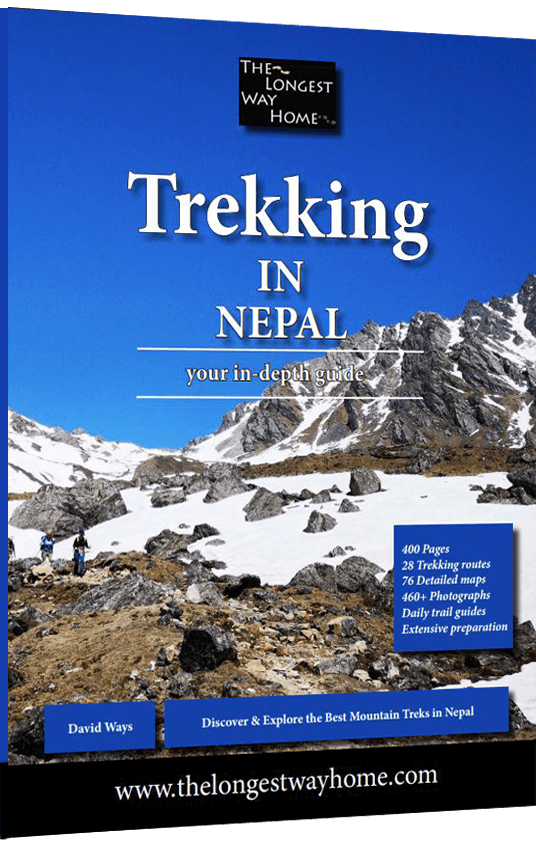
Trekking in Nepal Guidebook
- Choose Your Format: High-resolution Digital for your phone or a Print edition for your backpack.
- Scalable Trail Maps: Detailed views that don't require a data connection or GPS.
- Real-World Logistics: Accurate trekking costs and safety protocols updated for the current season.
Includes this trek plus 28 other routes across Nepal.
See Trekking in Nepal Guidebook →
Full Nepal Guidebook
- Complete Country Guide: Everything you need for Nepal beyond the trek.
- Includes Trekking: Also covers First Time Trekking in Nepal.
- Updated for the Season: Practical, travel-tested information throughout.
Includes everything from culture and food to logistics and more.
See Full Nepal Guidebook →Was this page helpful to you? If so please tell others!