
Table of Contents
About Janakpur
Janakpur, also known as Janakpurdham, is one of Nepal’s most revered pilgrimage destinations, nestled in the Dhanusha District at 70 meters above sea level. Known as the birthplace of Sita and the site of her marriage to Lord Rama in the Ramayana, it’s a sacred "dham" for Hindus. Despite its spiritual significance, Janakpur remains less frequented by tourists due to misconceptions about cleanliness. Post-2015 earthquake restoration has revitalized the city, blending ancient Hindu traditions with vibrant Indian-Nepalese culture.

Janakpur’s history traces back to the Kingdom of Videha (900–500 BCE), with textual references in the Shatapatha Brahmana crediting King Janaka, a philosopher-king, for founding the city. He raised Sita, found abandoned, and challenged suitors to lift Shiva’s bow, a feat only Rama achieved. Recognized as a pilgrimage site since 1805 CE, Janakpur also holds Buddhist significance, with legends of Gautama Buddha’s residence. Its 2025 UNESCO World Heritage nomination candidacy underscores its global cultural value. The city’s colorful temples and ponds make it a unique destination, distinct from remote spiritual sites like Haleshi Mahadev.

Janakpur’s charm lies in its eclectic mix of ancient temples, sacred ponds, and modern developments like the Janakpurdham Railway. The 2015 earthquake damaged key sites, but restorations have preserved attractions like Janaki Mandir and Ram Mandir. With a population of over 200,000, mostly Hindu, the city thrives on pilgrimage tourism, especially during festivals like Sita Bibaha Panchami. Its distance from Kathmandu (225 km) and summer heat deter some, but cooler months (October–March) offer an authentic cultural experience.
Quick Look to See If You Would Like Janakpur
Interests: Hindu pilgrimage, Ramayana history, cultural exploration, temple architecture |
Accommodation: Hotel Citystar, Navrang Hotel, Hotel Welcome |
Nearby: Danush Sagar, Ram Mandir, Shiva Mandir |
Time Needed: 1-2 days (half-day for main sites, additional time for travel and festivals) |
Visiting Janakpur Today

Janakpur, or Janakpurdham, is a vibrant pilgrimage hub with a distinct Indian-Nepalese cultural blend. Centered around the majestic Janaki Mandir, the city offers a spiritual journey through its Ramayana heritage. Sacred ponds like Danush Sagar and colorful festivals create an immersive experience. Recent upgrades have improved cleanliness, countering outdated perceptions. The annual Sita Bibaha Panchami festival (November–December) draws pilgrims, so book early.
Janakpur’s authenticity shines through its temples, markets, and railway station, offering a taste of India within Nepal. Ideal for cultural adventurers or those seeking Hindu heritage, it’s best visited in cooler months (October–March). Pair it with an extended journey to serene destinations like Ilam for a truely diverse Nepal experience.
Janaki Mandir
Janaki Mandir, built in 1910 by Queen Vrisha Bhanu, is Janakpur’s crown jewel, marking where Sita was found. This stunning whitewashed temple, blending Mughal and Koiri styles, spans three floors with 60 rooms. Admission is free (museum: 15 rupees). Remove shoes at the main gate, where a free shoe-minder service is available. The silver shrine, revealed twice daily, is a focal point for rituals. The adjacent museum features Ramayana artwork, though it’s crowded on Saturdays. For another sacred site, visit Haleshi Mahadev.
Ram Sita Bibaha Mandap

Adjacent to Janaki Mandir, Ram Sita Bibaha Mandap commemorates Rama and Sita’s marriage. This modern pagoda-style structure features glass walls displaying statues of the couple reciting vows, offering a serene setting for reflection.
It is a place you'll often find Nepali couples gathering to pay respect to Sita and Ram.
Ram Mandir

A 5-minute walk southeast of Janaki Mandir, Ram Mandir is Janakpur’s oldest temple, built in 1792. Its pagoda design, with an extended roof and nearby Shiva shrine, houses statues of Ganesh, Sita, and Shiva Lingams. The vibrant exterior adds to its charm.
Danush Sagar
Opposite abd a short walk from Ram Mandir, Danush Sagar is a large ceremonial pond used for dawn ablutions. Stalls sell dyes and ritual gifts, enhancing the spiritual ambiance. It’s a key site for Hindu rituals in Janakpur. For visitors it's a good place to sit back at sunset to watch local rites, and life go by in Janakpur.
Shiva Mandir
Northwest of Danush Sagar is Shiva Mandir. A cluster of brightly painted shrines with Shiva Lingams and statues. While not a stand out on its own, the sitting area offers a peaceful retreat for visitors.
Janakpurdham Railway
Rebuilt in 2019, Janakpurdham Railway connects Janakpur to India via broad-gauge tracks. Don't get too excited, Its passenger service to Kurtha-Inarwa and Khajuri (India) is a unique attraction for railway enthusiasts, reflecting Janakpur’s modern development though as a non-Nepali you can't get a ticket just yet. It's a chance to visit Nepal's only running railway - not exactly a stand out attraction, but if you visit some Nepali families later on they'll be curious at your findings!
Activities & Tips
1. Temple Exploration: Visit Janaki Mandir (free) and Ram Mandir for Hindu rituals and architecture; hire a local guide for Ramayana insights
otherwise my
Nepal: The Comprehensive Edition guidebook will be more than
enough.

3. Museum Visit: Explore Janaki Museum for Ramayana
artwork; it's not the greatest museum but for the sake of a visit
worth a look.
4. Ritual Observation: Observe dawn ablutions at Danush Sagar or chhewar ceremonies at Janaki Mandir, respecting worshippers.
5. Responsible Tourism: Remove shoes, avoid flash photography during rituals, and support local vendors with ritual gifts or sweets.
Accommodation in Janakpur
Janakpur’s accommodation caters mainly to pilgrims, with basic facilities and inconsistent cleanliness. Air-conditioning is essential in warmer months. Book early for festivals like Sita Bibaha Panchami or Rama Navami. Always inspect rooms before checking in.
Full details in my Nepal Guidebook: The Comprehensive Edition.
Restaurants in Janakpur
Janakpur lacks tourist-oriented restaurants, with most dining in hotels or guesthouses. Street vendors (samosas, alu chop) pose hygiene risks due to reused oil. Stick to hotel restaurants for safer meals, with dal bhat as a reliable choice when fresh.
Getting There
Janakpur is 225 km from Kathmandu, and is accessible by air or road. For comparison, see my Ilam transport guide for eastern Nepal travel. Or consider a visit from Chitwan which is relatively close by.
By Plane: Buddha Air and Yeti Airlines offer daily 20-minute flights to Janakpur Airport (USD $80 one-way). From the airport, take a rickshaw or taxi 2.5 km to the center.

By Bus: By far the more popular method of transport. From Kathmandu’s Gongabu or Kalanki bus stops, day/night buses (1500–1800 rupees, 10–12 hours) reach Janakpur’s bus park. Book early for better seats. Bring snacks due to questionable food stop hygiene. From Pokhara, night buses (5 p.m., 12 hours) or day buses via Narayangarh (Bharatpur) are available. Chitwan buses (5 hours) depart from Narayangarh/Bharatpur.
By Train: Janakpurdham Railway offers a passenger service to Kurtha-Inarwa and Khajuri (India). Non-Nepali/Indian travelers face restrictions at Bhittamore.
Travel Tip: Book return tickets via your hotel to avoid bus park hassles. Avoid monsoon season (June–September) due to road issues.
Map to Janakpur
Frequently Asked Questions about Janakpur
Janakpur, or Janakpurdham, is a sacred Hindu site tied to the Ramayana, where Sita was born and married Rama. Its Janaki Mandir, vibrant festivals, and Indian-Nepalese cultural blend make it unique.
Key attractions include Janaki Mandir (free, museum 15 rupees), Ram Sita Bibaha Mandap (10 rupees), Ram Mandir, Danush Sagar, Shiva Mandir, and Janakpurdham Railway.
Take a 20-minute flight (USD $80) to Janakpur Airport, followed by a rickshaw (400 rupees) or taxi (1500–2000 rupees). Alternatively, day/night buses from Gongabu/Kalanki (1500–1800 rupees, 10–12 hours) are available.
Visit in cooler months (October–March) to avoid summer heat. Festivals like Sita Bibaha Panchami (November–December) and Rama Navami (April–May) are vibrant but require early booking.
About the Author
David Ways is an experienced travel writer and explorer who has spent years documenting the hidden gems of Nepal and beyond. With a passion for uncovering authentic cultural and spiritual experiences, he provides detailed guides to help travelers navigate destinations like Janakpur with ease and insight. Learn more about David.
Download my guidebooks to (Nepal)
Liked this page? You'll love my books!
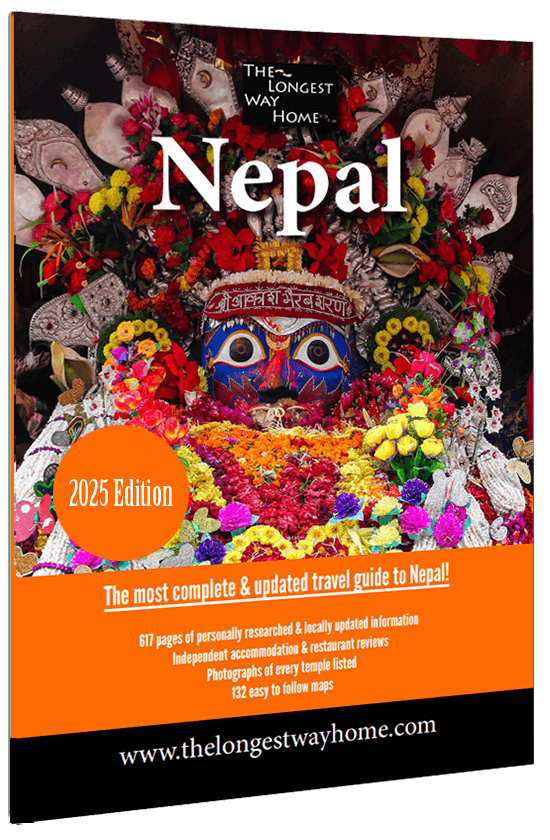
100% independent guidebooks, with no sponsored trips or ads. Designed to help travelers get the most out their trip to Nepal with premium detailed guides, insider information, impartial hotel and restaurant reviews, complete trekking routes, dedicated heritage walks & much more ...
Available in print or digital editions - the best guidebooks for visiting Nepal.
 |
 |
Full Nepal Guidebook
|
Kathmandu Valley Heritage Walks
|
 |
Trekking in Nepal |
Was this page helpful to you? If so please tell others!