
About the Nar Phu Trek
The two remote valleys of Nar and Phu sit tucked away north of the famous Annapurna Circuit, waiting to be explored by the few who venture beyond the main trails. Opened in 2002, both valleys remain restricted areas, seeing far fewer trekkers than the Annapurna Circuit. In 2026 the two person minimum rule was dropped, opening up more possibilities. Those who enter are rewarded with isolated stone villages, a high mountain pass, and a culture deeply rooted in Tibetan tradition. If you truly want an uncovered corner of the world to explore, this is it.
Trekking here feels like a time warp. The landscape is a spectacular blend of soaring peaks, ancient gompas, deep canyons, and lush forests. While it is possible to visit only one valley, most travelers choose to experience both to fully appreciate the pristine, undiscovered nature of the region. It is the ideal choice for those looking to relive the glory days of Himalayan exploration on a route that remains raw and remarkably quiet.

The ancient stone village of Phu
The Nar Phu trek should have been the "new Annapurna Circuit" with no road instead of Manaslu. In 2026 with the restricted area permits dropping some of the criteria it now offers the flexibility to integrate with the Annapurna Circuit, by continuing over the Thorong La Pass. However, due to the rugged terrain, and limited facilities the region is best treated as a true adventure. With its own challenging high pass at Kang La (5,320m), Nar Phu stands alone as a premier destination for vivid scenery and cultural immersion.
At a Glance
Difficulty
Moderate to Challenging. Long days at altitude and a 5,320 m pass crossing. No technical climbing. Restricted area permit and licensed guide required.
Duration
9 days for the classic Koto to Ngawal loop. Extend to 13-15 days by adding the Annapurna Circuit and Thorong La.
Total Distance
65 km (40 mi) for the core Koto-Ngawal loop via Kang La. Distance varies with side treks.
Max Altitude
5,320 m (17,454 ft) at Kang La Pass. Higher than Thorong La. Optional side trip to Himlung Base Camp.
Accommodation
Teahouse. Basic lodges in Nar and Phu. Some monasteries offer rooms. Facilities are simpler than on the main Annapurna Circuit.
Note: This trek requires a restricted area permit and a registered guide. Distance shown is the core loop. Final distance depends on side treks, entry and exit points, and extra days taken.
Where is the Nar Phu Trek?
The Nar Phu Trek is located in the Manang District of Nepal, nestled in the rugged highlands north of the main Annapurna Circuit. These "hidden valleys" are tucked between the massive Annapurna range to the south and the remote Damodar Himal bordering Tibet to the north.
Note for Trekkers: I have provided the essential planning details in this article for free. If you would prefer to have all this plus 28 other major treks in a printable PDF or a durable paperback for the trail, you can find my full Trekking in Nepal Guidebook here. It is designed to work offline at high altitudes where you will not have a signal.
To reach this area, trekkers follow the first few days of the classic Annapurna route starting from Besisahar with Koto being the official starting point (near Chame). From Koto, the trail leaves the main circuit behind (APC trekkers go to Pisang), crossing a suspension bridge to enter a narrow forested gorge that leads into the restricted area.


Originally, these valleys were only accessible to salt traders and yak herders. Today, the trek is typically done as a loop that starts at Koto and exits back onto the Annapurna Circuit via the high Kang La Pass (5,320m), which drops you down into the popular village of Ngawal.
You can do the Nar Phu trek on its own, or for those looking for a longer trek adding Nar Phu to the top side of the Annapurna Circuit route is highly recommended for a road free experience and a second high pass at Thorong La. In either case, Nar Phu offers a stark, high-altitude landscape that contrasts beautifully with the lush forests found earlier in the trek. Because it requires a special restricted area permit and a compulsory guide, the trails remain quiet, making it the perfect "off-the-beaten-path" alternative to the more crowded sections of the main circuit below it.
Map of the Nar Phu Trek
This map shows you the Nar Phu Trek starting from Koto and ending at Ngawal.
Please note this map should not be used as a practical trekking map. See my Trekking in Nepal guidebook for more.
The above map should give you a clear indication of the different trekking routes for Nar Phu. You essentially start on the APC trek near Chame at Koto, then quickly break away to the restricted area for 7+ days. You then reappear near Humde. The choice is then yours to extend the trek for 5 days to cross Thorong La and depart from Muktinath, or simply dive back to Pokhara or Kathmandu.
Facts about the Nar Phu Trek
The Nar Phu trek is an exceptional high-altitude adventure for those looking to escape the crowds of the Annapurna Circuit and discover "hidden" valleys with a distinct Tibetan culture.
Highest point on the Nar Phu Trek
At 5,320 m (17,454 ft) this is the highest point on the Nar Phu trek: the Kang La Pass. While many trekkers also choose to cross the Thorong La Pass (5,416m) if they continue onto the Annapurna Circuit, the Kang La remains the definitive gateway and literal high point of the Nar Phu loop itself.

Pangri Glacier on a side trek from Phu in Nepal
Highest sleeping point on the Nar Phu Trek
The highest sleeping point on the Nar Phu Trek is generally at Phu Village, which sits at approximately 4,250 m (13,943 ft), or Nar later on.
Total distance of the Nar Phu Trek
The total distance varies based on your entry point, but the core loop from Koto to Ngawal via the Kang La Pass covers roughly 65 km (40 mi), excluding the journey required to reach the trailhead at Koto.
How long have people been trekking to Nar Phu?

For decades, Nar and Phu were entirely closed to outsiders. The valleys were only officially opened to foreign trekkers in 2002. Before this, the region was primarily used by salt traders and nomadic herders moving between Manang and Tibet.
Because of its proximity to the Tibetan border, the area remains a "Restricted Area," meaning you cannot trek here independently; a registered guide and a special permit are compulsory. This restriction has helped preserve the medieval feel of the villages, which remain far more authentic and less commercialized than the neighboring sections of the Annapurna Circuit.
Is there any wildlife to see on the Nar Phu Trek?
Nar Phu is one of the best places in Nepal to spot the elusive Blue Sheep (Bharal). Because of the low human traffic and protected status, you are also more likely to see Himalayan Griffons, golden eagles, and if you are incredibly lucky, signs of the Snow Leopard.
What do you know about the history of Nar Phu?
The history of these valleys is deeply intertwined with Tibet. The inhabitants, known as Nar-Pa, speak a dialect closer to Tibetan than Nepali. For centuries, the villages were self-sufficient, relying on yak herding and high-altitude agriculture. The stone forts (dzongs) found in the area suggest a history of protecting these trade routes from northern incursions. Khampa settlements near Kyang reinforce this.
Who is the most famous person to have hiked Nar Phu?
Unlike the Everest region, Nar Phu does not have a single famous "pioneer" like Hillary. In the 1950s the area became a Khampa stronghold with Tibetan refugees escaping events in Tibet. Instead, it was popularized in the early 2000s by exploratory trekkers and photographers looking for the "Last Shangri-La." It remains a favorite for seasoned Himalayan guides who prefer the quiet solitude of the high desert over the busier main circuits.
What is the best way to explore Nar Phu?
The best way is a 9 day loop starting from Koto. Most trekkers head to Phu first to acclimatize, then move to Nar before crossing the Kang La Pass. This allows for the best safety margin before hitting the 5,320m pass.
What mountains can you see on the Nar Phu Trek?
The views are dominated by the Annapurna massif. You can see Annapurna II, Annapurna IV, Gangapurna, and Tilicho Peak. To the north, the massive Kang Guru (6,981m) and Himlung Himal (7,126m) frame the skyline, offering a perspective of the range rarely seen from the main circuit.
Highlights of the Nar Phu Trek
Highlights of the Nar Phu Trek include:

- Crossing the dramatic Kang La Pass (5,320m)
- Exploring the medieval stone village of Phu
- Staying at the Nar Phedi Monastery
- Spotting herds of Blue Sheep
- Authentic Tibetan-Buddhist culture and ancient gompas
- Staying in the historic terraced village of Nar
- Stark, canyon-like landscapes and high-altitude desert
How to arrange a Nar Phu Trek
Is arranging a Nar Phu Trek easy?
Arranging a Nar Phu trek requires only one extra permit than the standard Annapurna or Everest routes. Because the valleys are "Restricted Areas," you cannot simply show up and start trekking. You are legally required to have a special Restricted Area Permit (RAP), which can only be issued through a registered Nepali trekking agency, and you must be accompanied by a licensed guide. With the new permit system in 2026, all this has become quite easy.
While the Annapurna Circuit is heavily trafficked, Nar Phu remains a niche destination. This means many generic trekking agents may lack specific knowledge about the logistics, such as the best acclimatization spots in Meta or the specific days needed to safely cross the Kang La Pass. Beware of agencies that offer "shortcut" itineraries; skipping the necessary days in Phu or Nar often leads to altitude issues at the 5,320m pass.
Arranging a Nar Phu Trek
The key to a successful Nar Phu trek is understanding the permit and guide requirements. When trekking agencies say you can trek solo, they mean solo with a compulsory guide. There used to be a two person minimum requirement, but that ended in 2026. All you need is a restricted area permit, an ACAP permit, and a compulsory trekking guide.
Most treks begin with a drive to Besisahar and then a shared or private jeep to Koto. This jeep ride is a major expense. Agencies often push private jeeps which can cost USD $200, whereas a shared jeep is significantly cheaper ($25). There is also a bus option, but it's rarely in working condition and it's better to aim for one of the jeep options. Knowing these transport options allows you to stay in control of your budget. Always verify that your guide has experience specifically in the Nar Phu region, as the teahouses are fewer and more basic than the main circuit.
Don't let agencies rush you through the valleys. The "profit" for many companies is in shorter trips, but for Nar Phu, the experience is in the slow exploration of the ancient stone villages and then the high pass. Taking an extra day in Phu to visit the Tibetan border or Himlung Base Camp is highly recommended both in terms of views, and for acclimatisation.
Finally, I encourage you to read this page carefully. In a restricted area, you are at the mercy of your agency's paperwork. If your permit dates are wrong or your guide isn't properly registered, you will be turned back at the Koto checkpoint. It's different to other checkpoints as it is run by the police or army. So, go prepared!
Package treks & tours for the Nar Phu Trek bought online
Package treks & tours to Nar Phu are common online. These packages are generally comprehensive because they must include the Restricted Area Permit (RAP) and a guide by law. Prices typically range from USD $900 to $1,300 per person depending on the group size and duration. Solo travelers will face higher costs.
For 2026, the Nar Phu RAP costs USD $100 per week (7 days) during the peak season (Sept–Nov) and USD $75 per week during the rest of the year. This is in addition to the ACAP permit (NPR 3,000). So one has to question standard trekking agent websites with set fees throughout the year.
Pros of a package trek include the agency handling the complex permit paperwork and ensuring your guide is legally registered before you arrive. All accommodation, and meals are part of the package. It's very important to ensure your guide has been to Nar Phu - many online trekking websites make it look like they have, but the reality is different.
Cons include less flexibility to change your route once the permit is issued and potential "hidden" costs for extra jeep transport if not clearly stated. Likewise, many online agents will have "fixed" days for the trek e.g. 14 days or 12 days, making it difficult to find the ideal package for your exact number of days.
Package treks bought in Nepal for the Nar Phu Trek
Pricing a Nar Phu trek in person in Kathmandu or Pokhara allows you to meet your guide and negotiate transport. A RAP takes only a few hours to process these days and can only be done by a licensed trekking company. A better choice is a trekking agency in Pokhara which usually handles this region.

Use the information on this page and in my Trekking in Nepal Guidebook to ensure the agency isn't overcharging for the "Restricted" status of the trek! There's no extra charge other than the permit itself. If anyone is charging "processing fees", walk away.
Pros of buying locally include the ability to check the guide's license and confirm they have actually been to Nar Phu recently.
Cons include the time it takes to go through everything with multiple trekking agents and the risk of being "bundled" with a larger group to save the agency transport costs.
If you'd like to take the hard work out of finding a guide or package trek with experienced guides for the Nar Phu trek before you arrive then do try my Find a Trekking Guide Service.
Hiring a local Guide for the Nar Phu Trek
Because Nar Phu is a restricted area, your guide is more than a companion; they are a legal requirement. As such, the trekking guide must belong to a trekking agency. Further: a good guide for this region is essential for navigating the high Kang La Pass and for communicating with the Nar-Pa people, who have their own distinct culture. Unfortunately in today's world trekking agents all advertise online as if they have all this. The reality is they don't. Many will have a last minute scramble to locate another agency who does have an experienced guide and then re-route you through their own.
Avoid "street guides" at all costs for this trek. The Koto checkpoint is strict; if your guide does not have a valid license and a matching agency-issued RAP, you will be barred from entry. You must hire through a registered company to ensure the paperwork is valid.
Keep in mind that by just hiring a guide, you will be responsible for your own accommodation, meals, and transport. You'll also need to pay for the guide's transport.
Pros of hiring a guide through an agency include legal compliance and safety on the high passes. You pay a daily rate (roughly USD $30-50) which covers their salary, food, and insurance. Nar Phu trekking guides are a little more expensive than Annapurna Guides due to the rarer trek.
Cons include making sure the guide is legitimate via the trekking agency, and having to carry enough cash for the entire trek yourself.
If you are looking for a local registered trekking guide for the Nar Phu Trek I recommend you read my article on How to find a trekking guide in Nepal.
In my guidebook to Nepal there are several well-vetted trekking agencies that are experienced in restricted area logistics.
You can also save some time by using my Find a Guide Trekking Service to get a local guide.
Trekking Nar Phu without a guide
Trekking Nar Phu without a guide is currently impossible and illegal. Unlike the main Annapurna Circuit or other non-restricted area treks, Nar Phu is a restricted area that requires a compulsory licensed guide or porter-guide. Checkpoints at Koto and other locations along the trail strictly enforce this rule via the army and police.
The trail from Koto through the gorge can be prone to rockfall, and the route over the Kang La is often obscured by snow. For this trek, focus on finding the right experienced guide rather than trying to go without one. The "restricted" status ensures the trails remain quiet and the culture authentic, which is exactly why you are going!
If you are looking for a guide for the Nar Phu Trek I recommend you read my article on How to find a trekking guide in Nepal.
You may also use my Find a Guide Trekking Service.
Best time of the year to trek the Nar Phu Trek
Attention should be given to the unique weather patterns of the Manang region. While Nar Phu is in a rain-shadow area similar to Upper Mustang, it actually sees a higher level of rainfall throughout the year. This creates greener, flower-filled valleys, but also increases the risk of cloud cover over the peaks.
Nar Phu is best visited during Nepal's main peak seasons (Autumn) with April / May being alternative months. Caution should be taken during the winter off-peak seasons due to winter snow, ice, and monsoon rains, which can effectively close the restricted area. Between mid-September and mid-December is the ideal window. Anyone trekking in December should prepare for heavy snowfall which can shut the Kang La Pass and cut off the villages.
The March to May season is the second-best window, but note that in Phu, the snow often lingers much longer than on the main circuit. In March, trails to Phu may still be blocked by snow, and the Kang La Pass can remain impassable until late April. Always have your trekking agency check local conditions in Koto before heading up.
Finally, it is possible to trek during the monsoon season in Nar Phu. However, do be prepared for heavy afternoon downpours. Nar Phu during the Monsoon season means lush greenery throughout the valleys.
If you are looking for rare cultural insights and fewer trekkers, the shoulder months are great, but have a backup plan (like the main Annapurna Circuit) just in case late snow or early monsoon rains arrive.
Temperature and precipitation table for Nar Phu (Phu Village / Kang La)
| Month | Day Temp °C | Night Temp °C | Avg Day Temp °F | Trail Status |
|---|---|---|---|---|
| January | -6°C | -12°C | 21.2°F | Closed / Heavy Snow |
| February | -4°C | -9°C | 24.8°F | High Passes Blocked |
| March | -2°C | -8°C | 28.4°F | Snow likely in Phu |
| April | -1°C | -6°C | 30.2°F | Good – Clearer skies |
| May | 5°C | 0°C | 41°F | Very Good – Blooming |
| June | 7°C | 1°C | 44.6°F | Rainy / Cloudy |
| July | 12°C | 4°C | 53.6°F | Avoid – Monsoon |
| August | 14°C | 7°C | 57.2°F | Avoid – Landslides |
| September | 14°C | 7°C | 57.2°F | Improving skies |
| October | 10°C | 2°C | 50°F | BEST – Crystal clear |
| November | 2°C | -5°C | 35.6°F | Excellent – Cold / Clear |
| December | -6°C | -12°C | 21.2°F | Very Cold / Possible closures |
Best months for Nar Phu Trek:
mid-September to mid-December and April to May
Note: High passes like Kang La (5,320m) are extremely sensitive to wind-chill and late snow. Expect nights at Phu Village to drop below -12°C in late Autumn/Winter.
The above weather chart provides an estimate of conditions in the high valleys of Nar and Phu. Because of the rugged terrain, conditions at the Kang La Pass will be significantly colder and windier than in the villages.
Temperature Chart for the Nar Phu Trek

The temperature chart above shows the highs and lows you can expect at high altitude on the Nar Phu Trek. Since there is no dedicated weather station in Phu, this data is interpolated from the nearby Thorong La and Manang readings. Wind-chill is a major factor here; a calm day at -5°C can feel like -20°C once the afternoon winds pick up in the narrow canyons.
Months with the best weather to trek the Nar Phu Trek
Because of the "Restricted" nature of the trek and the remote trails, timing is everything. Unlike the more developed Annapurna Circuit, getting caught in bad weather here can mean being stranded in local villages with limited supplies.
Mid October - November: The Gold Standard for Nar Phu. The skies are at their clearest, and the Kang La Pass is usually free of deep, fresh snow. This is the best time for photography and high-pass safety.
April - May: The Spring Season is beautiful as the lower valleys toward Koto and Nar bloom. However, you must be prepared for leftover winter snow blocking the trail to Phu or making the descent from Kang La slippery.
December to February: Winter is not recommended. Many villagers migrate to lower altitudes (Besisahar or Pokhara) to escape the cold, and teahouses may close. Snow depth often makes the restricted area inaccessible.
June - Mid September: The Monsoon Season is a mixed bag. While the valleys are lush, the villages of Nar and Phu will have bright greens around them, there might be cloud cover over the Kang La Pass or, you could get lucky with a clear break. Rain gear is certainly going to be needed with afternoon downpours.
For more details please see my guide on the best time of year to go trekking in Nepal.
What permits do I need for the Nar Phu Valley Trek?
Because the Nar Phu Valley is a restricted area near the border with Tibet, the permit requirements are stricter than for most other treks in Nepal. You must be accompanied by a licensed trekking guide from a registered trekking agency. This is the most important requirement.
You need three permits for the Nar Phu Valley Trek
- Nar Phu Restricted Area Permit (RAP)
- Annapurna Conservation Area Project Permit (ACAP)
- Trekkers Information Management System (TIMS Card)
The Restricted Area Permit (RAP) can only be obtained through a registered trekking agency in Nepal. It is processed at the Department of Immigration in Kathmandu and since 2026 by trekking agents online. Unlike the ACAP, you cannot get this permit yourself as an independent trekker.
The ACAP permit can be purchased at the Tourist Information Centers in either Kathmandu or Pokhara. However, since you are required to have a guide and agency for this trek, they will typically handle the entire permit bundle for you.
The TIMS Card is legally required for group trekking and fees go towards guide and porter insurance. However, since 2023 TAAN and NTB have not implemented checkpoints. Technically you need one, but many trekking agents no longer bother with TIMS cards.
How much do Nar Phu permits cost?
The cost of the Restricted Area Permit varies depending on the season you are trekking:
| Permit Type | Season / Detail | Cost (Approx) |
|---|---|---|
| Restricted Area Permit (RAP) | September to November (Peak) | USD 100 (first 7 days) |
| December to August | USD 75 (first 7 days) | |
| ACAP Permit | Year-round | 3,000 Rupees |
| TIMS Card | Required for group trekking | 2,000 Rupees |

How to get your Nar Phu Valley permits
Since a guide is compulsory, your trekking agency will manage the application process. You will need to provide them with the following:
- Original Passport with a valid Nepal Visa
- A copy of your travel insurance policy
- The specific dates for your entry and exit from the restricted zone (Koto to Kang La) - your trekking agency will advise on this
Note: The RAP is date-specific. If you are delayed and enter the restricted area later than the date on your permit, it may cause issues at the checkpoints in Koto. Always ensure your trekking agency builds in a day or two of "buffer" if you are driving from Pokhara.
Do note that you will need a valid Nepali tourist visa before your trekking agent can apply. While you can get a Nepali tourist visa at an embassy, or online, it can be more expensive and difficult than the normal on arrival visa. Since the application process was improved in 2026 it's just as easy to send your travel agency a photo of your passport and visa details once you arrive in Nepal - it only takes an hour for them to apply. The exception here is if you are arriving during extended Nepali festivals - do check.
Get the Annapurna Conservation Area Project Permit (ACAP)
An Annapurna Conservation Area (ACAP) covers all of the Annapurna National Park which includes Nar Phu.

The permit is only valid for one entry and one exit. However, so long as you don't exit, you can use it for as many treks within the Park. You can also get one online via an e-permit https://epermit.ntnc.org.np (additional surcharge applicable) or via your trekking agency (cheapest and easiest). Guides can do this before you arrive. It is a mandatory permit. To do it yourself in person at the ACAP office in Pokhara or at Nepal Tourism Board in Kathmandu you will need the following.
- Fill out the ACAP form
- Hand over the completed form, your passport and 2 passport photos (do note the office takes photos for free at the moment)
- Pay the 3,000 rupees (only payable in Nepali Rupees)
- Get your ACAP permit
Failure to get an ACAP permit before your trek means you will be double charged at an ACAP checkpoint for a permit.
As Nar Phu requires a restricted area permit which means a trekking agency must apply for you, it makes more sense to have them get your ACAP permit as well.
Get the Trekker Information Management System Card (TIMS)
The Trekkers Information Management System Card (TIMS) is meant to help protect trekkers through registration checkpoints along the trek. Fees also go towards guide and porter insurance along with their training.

Do note that the TIMS Card is now a flat 2,000 rupees and a trekking company is the only one that can apply for it.
Since 2023 TAAN and NTB have failed to implement checkpoints. Though legally required, many trekking agents no longer bother with TIMS cards. While this can change, it remains up to you if you want a TIMS card.
For the most current details on all fees, you can check this list of National Park entry permits and TIMS fees in Nepal.
What equipment do I need for the Nar Phu Valley Trek?
The Nar Phu Valley trek is significantly more demanding than lower-altitude routes. You will be crossing a 5,300m pass and staying in remote high-altitude villages where temperatures drop well below freezing, even in the autumn.

Core Trekking Gear:
- Sturdy Trekking Boots: Must be waterproof and well broken-in for rocky terrain.
- Sleeping Bag: Rated to at least -15°C (5°F). Many teahouses in Phu are basic and very cold but have blankets.
- Down Jacket: Essential for evenings and the early morning pass crossing.
- Trekking Poles: Highly recommended for the steep descent from Kang La.
- Hard Shell Jacket: Windproof and waterproof (Gore-Tex or similar).
Clothing & Layers:
- Thermal Base Layers (top and bottom)
- Mid-weight Fleece
- Moisture-wicking T-shirts (Avoid cotton)
- Convertible Trekking Pants
- Warm Woolen Hat (Beanie) and Sun Hat
- Gloves (Inner liners + insulated waterproof outer pair)
- Trekking Socks (4 to 5 pairs)
Essentials & Health:
- Water Purification: Tablets or a filter (bottled water is scarce and expensive past Koto).
- Headlamp: With extra batteries (electricity is unreliable in Nar/Phu).
- High Capacity Power Bank: Charging fees are high and solar-dependent.
- Sun Protection: UV Sunglasses, SPF 50+ Sunblock, and Chapstick.
- First Aid Kit: Must include Diamox (for altitude), blister tape, and rehydration salts.
The Nar Phu region is wild and remote. Unlike the main Annapurna Circuit, you cannot easily buy replacement gear once you leave Chame or Koto. Ensure your equipment is in good condition before you start.
For a full comprehensive trekking list, please see my article on trekking equipment you need for Nepal.
How difficult is the Nar Phu Valley Trek?
The Nar Phu Valley Trek is considered challenging. While it is no longer a camping-only trek, it remains far more demanding than popular routes like Poon Hill or Annapurna Base Camp. It's on par with the standard Annapurna Circuit's tougher days. And, Kang La pass is higher than Thorong La Pass.
Note for Trekkers: I have provided the essential planning details in this article for free. If you would prefer to have all this plus 28 other major treks in a printable PDF or a durable paperback for the trail, you can find my full Trekking in Nepal Guidebook here. It is designed to work offline at high altitudes where you will not have a signal.
The Kang La Pass (5,320m) can be seriously tough, as can the route up to Phu. Although trails have been widened recently, making those once-famous narrow ledges more passable, caution is still needed. Acclimatization and long days are the primary challenges here, especially if you are traveling all the way from Pokhara to Koto on day one.

High Altitude Views from Nar Phu are among the best in the world
The 7-day restricted permit often creates a sense of urgency. It's all doable, just don't rush. You simply pay extra per day at Nar if you overstay, so there's no panic. Setting aside 9 days, with 7 in the restricted area, is usually enough for all trekkers.
However, if you have never trekked at high altitudes before, do not underestimate this route. The descent from Kang La to Ngawal is particularly steep and requires steady knees and reliable trekking poles. However, for those prepared for the physical demand, it is one of the most culturally authentic and visually stunning "hidden" treks in Nepal.
If you have trekked the Annapurna Circuit previously, then you should manage Nar Phu. If you've not trekked the Annapurna Circuit then Nar Phu would be a half grade more difficult.
How fit do I need to be for the Nar Phu Valley Trek?
A good level of physical fitness is required for the Nar Phu Valley. This trek involves sustained trekking at high altitudes (above 4,000m) and the crossing of a major Himalayan pass. If you've done the Annapurna Circuit previously, then Nar Phu has similar vibes.

I strongly advise anyone planning this trek to see a doctor for a check-up and to discuss acclimatization and altitude sickness before leaving.
For the Nar Phu Valley, you should expect 5 to 8 hours of hiking per day. The terrain is often rugged, with steep stone steps and narrow, winding canyon trails. The hardest day is the crossing of the Kang La Pass (5,320m), which involves a pre-dawn start and a very long, knee-jarring descent to Ngawal.
Ask yourself: can you currently walk for 7 hours uphill with a weighted pack? If the answer is no, you should begin a cardio and strength training regimen at least two months before your trip.
However, altitude is the most significant factor on this trek. Even the fittest athletes can succumb to altitude sickness if they rush. Because of the 7-day restricted permit, many trekkers feel pressured to move too fast. It is essential to listen to your body and your mandatory guide, who will ensure you are maintaining a safe pace.
If you have concerns about the load, hiring a porter is highly recommended. Since you are already required to trek with a guide, sharing a porter is a cost-effective way to ensure you can focus on your breathing and the spectacular scenery rather than the weight on your back.
As with most high-altitude treks, the rule is simple: the slower you go, the more likely you are to succeed.
What's the food like on the Nar Phu Valley Trek?
Food in the Nar Phu Valley is more basic than on the main Annapurna Circuit. Because of the region's remoteness, menus are limited, and variety is sparse. In places like Nar Phedi, the views are world-class, but the kitchen offerings are quite simple. That said, it's still better than some Solukhumbu treks (Everest region).
Dal Bhat remains the undisputed king of the trail here. It is the most reliable source of nutrition and, importantly, the only meal that comes with free refills, essential for the high-calorie demands of the Kang La Pass. Other staples include basic pasta, noodles, and Thukpa (Tibetan noodle soup). It is generally best to stick to these local favorites rather than attempting more "complex" western dishes in such remote kitchens.

Simple, high-energy meals are the standard in the Nar Phu Valley.
Supplements: Since protein options can be limited in the high villages of Nar and Phu, bringing your own stash of tuna cans, nuts, or protein bars is highly recommended. These will help break the monotony and provide much-needed fuel for the pass crossing.
Water & Sanitation: Access to clean water is a major consideration. While there are plenty of springs, you must treat all water yourself. Do not rely on filtered water stations, as they are non-existent in the restricted area. Boiling your water or using a high-quality filtration system (like a Steripen or Lifestraw) combined with purification tablets is the safest approach.
Typical Nar Phu Valley Menu Prices
| Item | Price |
|---|---|
| Porridge with milk | 300-800 Rupees |
| Fried eggs (2) | 250-600 Rupees |
| Cheese Omelet | 400-650 Rupees |
| Tibetan Bread | 350-600 Rupees |
| Dal Bhat (Meat) | 500-1600 Rupees |
| Dal Bhat (Veg) | 400-1000 Rupees |
| Boiled Potatoes | 300-650 Rupees |
| Fried Noodles (Veg) | 300-600 Rupees |
| Fried Potatoes with Cheese | 550-750 Rupees |
| Macaroni with cheese | 500-800 Rupees |
| Tea/Coffee | 50/300 Rupees |
| 1 liter beer | 600-1500+ Rupees |
| Soft Drinks (Coke, Sprite etc.) | 300-500 Rupees | 1 liter tap water (from underground spring or stream) | free |
| 1 liter boiled water (for filtering) | 50-300 Rupees | 1 liter bottled water (if available)* | 100-500 rupees |
*Prices increase as you get higher and more remote. Expect to pay the higher end of these ranges in Phu and Nar Phedi.
What's accommodation like on the Nar Phu Valley Trek?
As little as ten years ago, trekkers to Nar Phu were expected to camp. This has changed recently as teahouses and lodges have opened up along the entire route.
Accommodation here is a notch down from the "luxury" teahouses found on the main Annapurna Circuit, but that is part of the charm of a true crowd free trek like Nar Phu. In some areas, the lodges are relatively new and in good condition, while in others, they are basic stone structures. In Nar Phedi, the monastery often provides accommodation; it is simple, but the views and the atmosphere are world-class.

Costs and Facilities:
A standard room will typically cost between 500 and 1,000 rupees per night. However, expect to pay for extras that are standard in this remote region:
- Hot Showers: Usually bucket showers, costing between 200 and 500 rupees.
- Charging: Electricity is largely solar. You will likely be charged 200 to 300 rupees per device. Note: USB-style charging is more reliable here than two-prong plugs.
- WiFi: Extremely limited and often non-existent once you leave Koto. Do not count on having a signal in Nar or Phu.
Unlike lower altitude treks, a high-quality sleeping bag is recommended here. While lodges provide blankets, they are often well-used, and the stone rooms in Phu (4,080m) get exceptionally cold at night. Having your own 4-season bag ensures you stay warm and hygienic.
Do note that in 2026 the tea house in Singenge Dharmasala only serves light meals in the peak season, and has no accommodation. You will need to choose to stay either in Chhongche Cave or trek on to Meta.
As always across Nepal you should sleep where you eat, otherwise you are likely to get charged double or more for accommodation.
Read more and see what trekking accommodation is like in Nepal.
How much does the Nar Phu Valley Trek cost?
Budgeting for Nar Phu requires factoring in permit fees and the non-negotiable cost of a professional guide. While some online prices seem steep, they usually reflect the logistical hurdles of securing restricted permits and shared/private transport to the remote trailhead at Koto. Much of that has changed in 2026, so be aware of some price gouging for the Nar Phu trek.
Working out your trekking budget
The standard itinerary for Nar Phu is around 9 days. The primary "price pillars" for this trek are the Restricted Area Permit (RAP), the compulsory guide, and private transport (optional).
1. The Permit Cost: The RAP is seasonal. From September to November, it costs USD $100 per person for the first 7 days. During the rest of the year (December to August), it drops to USD $75. You also need the Annapurna Conservation Area Permit (ACAP), which is USD $30. There's also the question of NPR 2,000 (~$16) for a TIMS card.
2. Transport: Most trekkers take a long 9-10 hour drive from Pokhara to Koto by first taking a bus to Besisahar then a shared jeep to Koto. A seat in a shared jeep costs roughly USD $25 to $40, while a private jeep can cost upwards of USD $200. Be wary of packages that promise "private transport" but switch you to a shared vehicle at the last minute.

Online package tours typically range from USD $900 to $1,800 per person for a 9 to 12-day trek. These usually include your guide, all permits, teahouse meals, accommodation, and transport. Prices for solo travelers are higher when buying online. The itineraries are usually inflated.
Package tours bought in Nepal typically range from USD $860 to $1,600 per person for a 9 to 12-day trek. These usually include your guide, all permits, basic teahouse meals, and transport. There's usually no extras for a solo trekker, but if you were two people it would work out a little cheaper (not much). Again, watch out for stretched out itineraries.
In-country "Guide-Only" services are the most transparent way to trek if you want to manage your own food and lodge costs. You will still need to go through a registered agency to get your restricted permit. A qualified guide for this region costs between USD $30 and $45 per day, which includes their own food, insurance, and accommodation. You'll also need to pay for their transport. Do not hire a guide who is not from a trekking agency - all guides for this trek need to come from a trekking agency due to the restricted area permit.
My Find A Guide Service can connect you with licensed professionals specifically experienced with the Kang La Pass and the Nar Phu restricted area. All guides are licensed, registered to a trekking agency, and have experience taking trekkers on Nar Phu treks.
Average 9-day Nar Phu trek cost (Guide only)
| Item | Cost USD $ |
| Restricted Area Permit (RAP) - Peak Season | 100 |
| ACAP Permit | 30 |
| TIMS Card | 16 |
| Guide x 9 days ($30/day) | 270 |
| Accommodation (9 nights) | 60 |
| Meals (3 per day at teahouse rates) | 250 |
| Transport (Shared Jeep/Bus Return) x2 (you and the guide) | 130 |
| Total (Per Person) | 856 |
Budget Notes:
- Permit Strategy: The $100 RAP covers your first week in the restricted zone. If you end up staying longer than 7 days past the Koto checkpoint, there is typically an additional daily fee (usually $10-15).
- Splitting Costs: If you are trekking with a partner, the $270 guide fee and $130 transport costs are shared, which significantly brings down the per-person total.
- TIMS Card: USD $16 (NPR 2,000).
- Water - bottled water is available, but it's expensive (200 rupees a liter at times).
As always, keep some extra cash for those extras like hot showers and solar charging, which aren't included in the standard room rates.
As you can see, the base cost for this trek starts around $856 (it will cost more than this when you include bottled water etc). If you are trekking as a pair, you can split the guide and transport costs, bringing the individual total down.
Travel insurance is mandatory for restricted area treks and must cover emergency helicopter evacuation up to 6,000m. Check my recommendations for trekking insurance here.
Nar Phu Valley Trek Journal
You can read my entire trek journal about Nar Phu below. Some things to keep in mind. We are all individuals with different limits. I make a point of this throughout the trek. While I can trek from Koto to Meta, others may want to break the journey in two.
I deal with this in my Trekking in Nepal Guidebooks which gives you the two options in a breakdown.
Likewise, ignore online YouTube or social posts for Nar Phu. You need more information than what they offer. The time of year you go is important on this trek. Spring equals lush greens with a chance of cloud, while Autumn is for dry arid terrain.
As an example: a second visit during the monsoon revealed that while the valley sits in a rain shadow, it is still possible to trek throughout it. However, avoid driving during active heavy rainfall. I still recommend this as a peak season trek for the best experience (March-May / September-Early December), but again do read the caveats. It is one of the few places where the ancient Tibetan-style culture remains largely untouched by the modern world.
I write guidebooks about Nepal that are written for everyone in mind. Meanwhile, here's a handwritten account of this trek. It should give you an honest account of what the trek is like and what to expect.
Nar Phu Valley 9-day trek (the blog posts)
- Day One: Pokhara or Kathmandu to Koto by jeep
- Day Two: Koto to Meta via Chhongche cave or Singenge Dharmasala
- Day Three: Meta to Phu via Kyang
- Day Four: Phu side treks for acclimatisation
- Day Five: Phu to Nar Phedi
- Day Six: Nar Phedi to Nar
- Day Seven: Nar acclimatisation day
- Day Eight: Nar to Kang La Pass to Ngawal
- Day Nine: Ngawal to Pokhara, Kathmandu or Manang
The above is my own journal for the 9-day Nar Phu Valley Trek. I did a bit more on it, including the Nar Phu Annapurna Circuit but it's easy to figure out. Both are in my Trekking in Nepal Guidebook Nar Phu Chapter.
Below are more itineraries that offer a different number of days from 9 to 7.
Nar Phu Trek itineraries
This section covers the main itineraries for the Nar Phu Trek. Read through each one carefully before deciding which suits you best. The differences matter here more than on most treks in Nepal, primarily because of the restricted area permit and the current state of teahouses along the route (Dharmasala).
A word of caution before you look at older guidebooks or online itineraries for Nar Phu. Many either mention camping or suggest Singenge Dharmasala. Singenge Dharmasala's teahouse is closed for anything other than light meals, only in peak season it seems. It means you must continue on to Meta or return back. If acclimatization is an issue and you want to stop off somewhere before Meta there are two small teahouses near Chhongche Cave. There's also a small teahouse by the waterfalls with 2-3 beds only. Again, all explained in my Trekking in Nepal guidebook.
The 7-day permit is also tight with no leeway for a backup day - but don't let that worry you. If you overstay, there is a USD $10 per day per person fine. At the time of writing, there were no checkpoints in Ngawal to collect this fine - but that can change. There is a checkpoint in Nar. Factor it into your planning. Avoiding a $10 fine or getting your trekking company to extend your restricted permit should not be a concern, getting your acclimatization days in is the main concern.
9 Day Nar Phu Trek Itinerary (exploration)
This alternative adds two acclimatization days to the itinerary but this is where you get to explore more. It does not resolve the Koto to Meta issue on day 2, but it gives your body time to adjust before the demanding sections later in the trek - particularly Kang La Pass.
| Day | Route | Distance | Highest Altitude |
| 1 | Pokhara or Kathmandu by bus to Besisahar then jeep to Koto | 11 hours | 2,513 m |
| 2 | Koto to Meta | 7+ hours | 3,253 m |
| 3 | Meta to Phu | 7+ hours | 4,070 m |
| 4 | Phu - exploration and acclimatization day * | Rest day | 4,070+ m |
| 5 | Phu to Nar Phedi | 6+ hours | 3,550 m |
| 6 | Nar Phedi to Nar | 3-4+ hours | 4,010 m |
| 7 | Nar - exploration and acclimatization day ** | Rest day | 4,010 m |
| 8 | Nar to Kang La Pass to Ngawal | 10+ hours | 5,320 m / 3,615 m |
| 9 | Ngawal to Pokhara, Kathmandu or Manang | 4-12+ hours | 1,400 m / 1,200 m / 3,519 m |
* Acclimatization at Phu is essential for most trekkers before tackling Kang La Pass. Skipping it increases the risk significantly.
** The rest day in Nar is also worth taking for acclimatization and to explore the village and surroundings (details in my book).
9 Day Nar Phu Trek Itinerary (slower ascent)
| Day | Route | Distance | Highest Altitude |
| 1 | Pokhara or Kathmandu by bus to Besisahar then jeep to Koto | 11 hours | 2,513 m |
| 2 | Koto to Chhongche Cave * | 3+ hours | 2,990 m |
| 3 | Chhongche Cave to Meta | 3+ hours | 3,625 m |
| 4 | Meta to Kyang | 4+ hours | 3,840 m |
| 5 | Kyang to Phu | 4+ hours | 4,070 m |
| 6 | Phu to Nar Phedi | 6+ hours | 3,550 m |
| 7 | Nar Phedi to Nar | 3-4+ hours | 4,010 m |
| 8 | Nar to Kang La Pass to Ngawal | 10+ hours | 5,320 m / 3,615 m |
| 9 | Ngawal to Pokhara, Kathmandu or Manang | 4-12+ hours | 1,400 m / 1,200 m / 3,519 m |
* Singenge Dharmasala teahouses are only open for meals or snacks in peak season. The nearest teahouse is by the waterfalls which only has 2-3 beds. Most trekkers head to Meta and do the itinerary above - but be aware of altitude sickness and come back down if you are feeling ill. The alternative is to stay at Chhongche Cave for the night. More details in my Trekking in Nepal Guidebooks on how to reclaim this day later in the trek.
7 Day Nar Phu Trek Itinerary (challenging - not recommended)
This is the itinerary you'll find in older guidebooks and on many websites. It is possible - some experienced and well-acclimatized trekkers have completed it - but it leaves no room for error, no backup day, and pushes altitude gains to uncomfortable levels.
| Day | Route | Distance | Highest Altitude |
| 1 | Pokhara or Kathmandu by bus to Besisahar then jeep to Koto | 11 hours | 2,513 m |
| 2 | Koto to Meta | 7+ hours | 3,253 m |
| 3 | Meta to Phu | 7+ hours | 4,070 m |
| 4 | Phu to Nar Phedi | 6+ hours | 3,550 m |
| 5 | Nar Phedi to Nar | 3-4+ hours | 4,010 m |
| 6 | Nar to Kang La Pass to Ngawal | 10+ hours | 5,320 m / 3,615 m |
| 7 | Ngawal to Pokhara, Kathmandu or Manang | 4-12+ hours | 1,400 m / 1,200 m / 3,519 m |
This itinerary has little enjoyment or exploration along the way, and acclimatization may cause issues. Only consider this if you have been recently and previously at altitude, such as on the Manaslu Circuit.
What's the best Nar Phu itinerary?
It comes down to two things: a slower ascent, or more exploring. If you have trekked before, then you'll know what to expect by going Koto to Meta. If you have not trekked at altitude before, then staying a night in Chhongche Cave may be a better option.
Of the itineraries listed here, both the 9-day options are written in detail in my book.
It is however, important to keep a back up itinerary in case the teahouse by the waterfalls is full or closed and you were relying on it. It means back tracking and staying in Chhongche Cave. It also means you lose a day in Nar, or you push ahead from Phu and skip Nar Phedi enroute to Nar. The alternative is to buy an extra day on your permit in Nar. Both itineraries have their own merits - so it's really up to you which is better for your style of trekking.
It's worth noting that in older guidebooks camping is mentioned a lot. Few if any trekkers have camped the Nar Phu trek in recent years. There are now plenty of teahouses open (aside from Singenge Dharmasala), so there's no need to camp unless you really want to stay in Dharmasala and then carry a tent for the rest of the trek. Budget trekkers should remember that camping is pretty much the same or more expensive in Nepal than teahouse trekking.
Why is Singenge Dharmasala such an issue?
Older out of date guidebooks have listed Dharmasala as a place to stay for years. As of 2026 the teahouse in Dharmasala has been rebuilt and its owners come down from Meta with water. Not enough trekkers pass through to make it a profitable business. Some have tried over the years. It takes an investment to set up a teahouse with accommodation, and it takes trekkers passing through to maintain it. Nepal's only got two peak seasons so there's all of winter and the monsoon to get through with no income. The rest of Nar Phu used to be the same until a decade ago when it was very much only a camping trek. Today, Singenge Dharmasala remains the only area with no accommodation. That may change as the trek becomes more popular. Many trekkers opt to go straight from Koto to Meta and stop at Chhongche Cave for lunch which puts more strain on Singenge Dharmasala. Likewise, a new teahouse near the waterfalls has opened up with 2-3 rooms. With no running water, the Dharmasala location is in a tough spot. Last year it was closed. They are trying. So it remains in flux until more trekkers trek the Nar Phu trek.
Nar Phu & The Road Free Annapurna Circuit Trek
Yes, you read that correctly. In 2026 the Nar Phu restricted area permit allowed solo trekkers with a guide and in doing so it accidently changed options for trekkers looking for a new road free Annapurna circuit. It's something I took on, and there are two options based on your time or what you want to do. In all cases, it's road free.
Nar Phu Annapurna Circuit (13 Days - No road)
| Day | Route | Distance | Highest Altitude |
| 1 | Pokhara or Kathmandu by bus to Besisahar then shared jeep to Koto | 11+ hours | 2,513 m |
| 2 | Koto to Meta via Chhauchha and Singenge Dharmasala | 7+ hours | 3,560 m |
| 3 | Meta to Phu via Kyang | 7+ hours | 4,130 m |
| 4 | Phu acclimatization - Guru Sangbo viewpoint and Tashi Lhakhang Gompa | 4+ hours | 4,730 m |
| 5 | Phu to Nar Phedi | 4-5 hours | 3,500 m |
| 6 | Nar Phedi to Nar | 3-4 hours | 4,110 m |
| 7 | Nar acclimatization and exploration day | 3+ hours | 4,250 m |
| 8 | Nar to Kang La Pass to Ngawal | 7-9 hours | 5,320 m / 3,615 m |
| 9 | Ngawal to Manang via Humde and Braga Gompa | 5 hours | 3,519 m |
| 10 | Manang to Letdar via Yak Kharka | 5-6 hours | 4,200 m |
| 11 | Letdar to Thorong Phedi to High Camp | 4-5 hours | 4,880 m |
| 12 | High Camp to Thorong La Pass to Muktinath | 7-9 hours | 5,416 m / 3,760 m |
| 13 | Muktinath to Pokhara or Kathmandu by bus | 6-11+ hours | 822 m / 1,400 m |
Nar Phu Annapurna Circuit (15 days via Nar Phu & Tilicho Lake)
| Day | Route | Distance | Highest Altitude |
| 1 | Pokhara or Kathmandu by bus to Besisahar then shared jeep to Koto | 11+ hours | 2,513 m |
| 2 | Koto to Meta via Chhauchha and Singenge Dharmasala | 7+ hours | 3,560 m |
| 3 | Meta to Phu via Kyang | 7+ hours | 4,130 m |
| 4 | Phu acclimatization - Guru Sangbo viewpoint and Tashi Lhakhang Gompa | 4+ hours | 4,730 m |
| 5 | Phu to Nar Phedi | 4-5 hours | 3,500 m |
| 6 | Nar Phedi to Nar | 3-4 hours | 4,110 m |
| 7 | Nar acclimatization and exploration day | 3+ hours | 4,250 m |
| 8 | Nar to Kang La Pass to Ngawal | 7-9 hours | 5,320 m / 3,615 m |
| 9 | Ngawal to Manang via Humde and Braga Gompa | 5 hours | 3,519 m |
| 10 | Manang to Tilicho Base Camp via Khangsar * | 7 hours | 4,150 m |
| 11 | Tilicho Base Camp to Tilicho Lake and descend to Shree Kharka * | 7-8 hours | 4,950 m / 4,050 m |
| 12 | Shree Kharka to Letdar via Yak Kharka | 4-5 hours | 4,200 m |
| 13 | Letdar to Thorong Phedi to High Camp | 4-5 hours | 4,880 m |
| 14 | High Camp to Thorong La Pass to Muktinath | 7-9 hours | 5,416 m / 3,760 m |
| 15 | Muktinath to Pokhara or Kathmandu by bus | 6-11+ hours | 822 m / 1,400 m |
* The trek becomes 13 days if you remove Tilicho Base Camp
Both of the above itineraries can be shortened by a day if you reduce one day in either Nar or Phu. I would not recommend shortening anything on the APC route. If this interests you, then do read more in my Road Free Annapurna Circuit Guide page and in my Trekking in Nepal Guidebook.
Frequently Asked Questions about Nar Phu Valley Trek
The Nar Phu Valley Trek typically takes 9 days for the classic Koto to Ngawal loop, starting and ending in Pokhara. It can be extended to 13-15 days by combining it with the Annapurna Circuit and Thorong La Pass.
The trek is considered challenging. It involves adapting to acclimatization, steep ascents, and crossing the Kang La Pass at 5,320m. A good level of fitness and previous high-altitude trekking experience are recommended but not requirements. It's on par with the Annapurna Circuit for many. If you went from Nar back to Koto and left out the Kang La pass then it drops to a moderate trek.
You need three permits: the Nar Phu Restricted Area Permit (USD $100 for 7 days during peak season), the Annapurna Conservation Area Permit (ACAP, NPR 3,000), and a TIMS Card (NPR 2,000). A registered guide is compulsory for this trek.
The best months are September to November or early December and March to May.
More information on Trekking in Nepal
For alternative treks do read my list of treks in Nepal which is continually being added to based on popularity or request.
If looking for a trekking guide I recommend you read my article on How to find a trekking guide in Nepal or you can use the Find a Guide Service.
Take the Guesswork Out of Your Nepal Trek
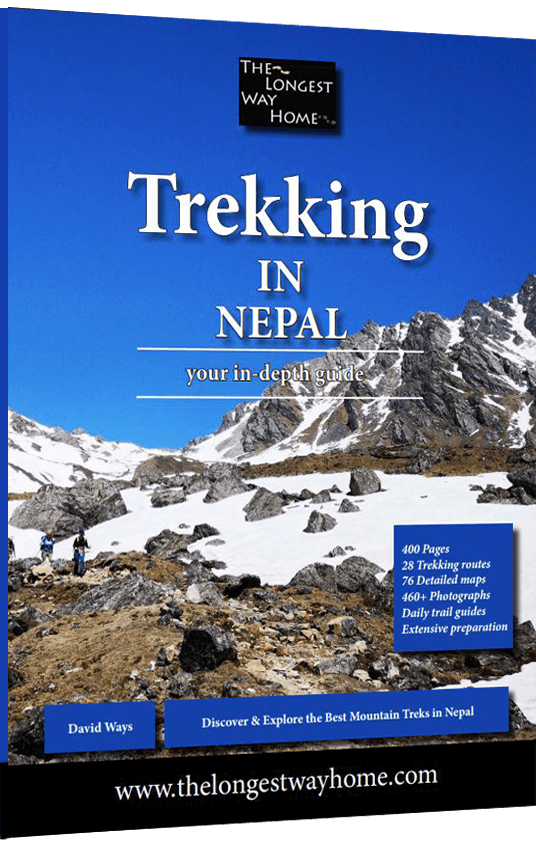
This article covers the essentials, but the trail is always changing. For the most reliable experience, I've compiled my years of on-the-ground research into the Trekking in Nepal Guidebook.
Trekking in Nepal Guidebook
- Choose Your Format: High-resolution Digital for your phone or a Print edition for your backpack.
- Scalable Trail Maps: Detailed views that don't require a data connection or GPS.
- Real-World Logistics: Accurate trekking costs and safety protocols updated for the current season.
Includes this trek plus 28 other routes across Nepal.
See Trekking in Nepal Guidebook →
Full Nepal Guidebook
- Complete Country Guide: Everything you need for Nepal beyond the trek.
- Includes Trekking: Also covers First Time Trekking in Nepal.
- Updated for the Season: Practical, travel-tested information throughout.
Includes everything from culture and food to logistics and more.
See Full Nepal Guidebook →Was this page helpful to you? If so please tell others!