
Flying Drones in Nepal: a reality check
After two decades of writing about Nepal's mountains, I've watched drone photography evolve over the past 10 years from prohibited novelty to heavily regulated reality. This guide cuts through the bureaucracy to answer the question every drone pilot asks: Should you actually bring a drone to Nepal?
There's a lot on this page, and I do encourage anyone taking a drone to read it all. Those tempted to skip sections and just get CAAN approval do, and can have drones confiscated (not returned), fined, told to leave, and in some cases there have been altercations with other trekkers. So, read. Get the knowledge, and understand before taking a drone to Nepal!Flying a drone legally in Nepal requires multiple government permits, costs are based on the drone specification, location, usage etc. $200-500 USD in fees is not unusual. On the ground it takes 2-4 weeks to arrange, and even with permits, you risk confiscation if trekkers complain about noise disturbance. Most adventure travelers find the hassle outweighs the reward.
While CAAN provide a web-portal to register, there are still more departments before you can be officially approved.
Quick Facts
| Registration Cost: NPR 10,000-15,000 ($75-115) | Flight Permit Cost: $200-500+ (foreign nationals) |
| Processing Time: 2-4 weeks minimum | Permit Validity: 3 months |
| Max Altitude: 120m above ground | Max Distance: 500m from pilot |
| Total Budget: $500-800+ | Airport Exclusion: 5km radius |
Contents
- Portal Issues
- Required Documents
- For Foreign Nationals
- For Nepali Citizens
- High-Altitude Performance
- Best Seasons
- Working with Agencies
The Reality Check: Should You Bring a Drone?
Before diving into regulations, understand what you're signing up for. In 20+ years writing Nepal guidebooks, I've seen countless trekkers arrive with drones and face these realities:

- The CAAN drone registration portal frequently crashes or goes offline for weeks – you cannot begin to register without it functioning
- Social reality matters more than legal permits – fellow trekkers who traveled to Nepal for peace and nature can (and do) complain to local police about drone noise, leading to confiscation even when you have proper permits
- Environmental issues: both wild and domestic animals can be scared by drones which can result in breeding, hunting, and resource danger for the animals, farmers, and locals
- Environmental dangers: Yaks, donkeys, mountain goats, dogs or other animals who use trails or rural areas may become startled by drones which can result in death of the animal or a person e.g. yak bolting on a narrow ledge
- Altitude limits drone performance – thin air at 4,000-5,000m reduces flight time and stability; not all consumer drones function reliably
- Permits expire and are location-specific – your 3-month permit only covers the coordinates you specified; changing plans means re-applying
- Total costs: USD $200-500+ in permit fees alone, plus 2-4 weeks advance preparation - trekking companies are reluctant to apply due to the above penalties and technical requirements
Honest Assessment: If you're a casual adventure traveler wanting "some aerial shots," honestly consider whether the complexity, expense, and social friction are worth it. If you're a professional videographer or committed to the footage, read on.
Can You Legally Fly a Drone in Nepal?
Yes, but only with proper authorization. Nepal's Civil Aviation Authority (CAAN) regulates all unmanned aerial vehicles. Foreign nationals need permits from multiple ministries; Nepali citizens need registration plus location permits (though many get away without them outside of trekking areas). No exemptions exist for recreational use or small drones under 250g – all drones require registration.
Governing Bodies
- Civil Aviation Authority of Nepal (CAAN) – drone registration and flight permits
- Ministry of Home Affairs – security clearance for foreign nationals
- Department of National Parks and Wildlife Conservation – permits for Everest, Annapurna, Langtang, Manaslu regions
- District Administration Offices – local security approval
There is also a possibility you will be asked to get permission or a letter from Nepal Tourism Board, though that is not always required.
Drone Weight Categories and Risk Classification
CAAN classifies drones by weight, with each category requiring different registration and permit complexity:
| Category | Weight | Risk Level | Examples | Est. Reg. Fee |
|---|---|---|---|---|
| Category A | Under 250g | Very Low-Risk | DJI Mini 3, Mini 4 Pro | NPR 10,000 ($75) |
| Category B | 250g - 2kg | Low-Risk | DJI Mavic Air 2 | NPR 12,000 ($90) |
| Category C | 2kg - 25kg | Regulated Low-Risk | DJI Inspire 2, Matrice | NPR 15,000+ ($115+) |
| Category D | Over 25kg | Regulated High-Risk | Heavy professional drones | Custom approval |
How to Register Your Drone with CAAN
All drones must be registered before applying for flight permits. Registration certificates are valid for one year and cost approximately NPR 10,000-15,000 (USD $75-115) depending on category.

CAAN's web portal for drone registration does not always work
Critical Issue: CAAN Portal Reliability
The CAAN online registration portal (https://caanepal.gov.np/drone) frequently experiences technical problems – going offline for days or weeks, or timing out during submission. As of February 2025, multiple reports confirm the portal has been non-functional for extended periods.
Backup Plan: If the portal is down, you must submit paper applications in person at CAAN's Flight Safety Standards Department in Sinamangal, Kathmandu. Request offline forms at the CAAN office or download them if available on their website.
Required Registration Documents
Submit to CAAN Flight Safety Standards Department, Sinamangal, Kathmandu:
- Completed registration form (online or paper)
- Copy of valid passport (foreign nationals) or citizenship certificate (Nepali nationals)
- Drone manufacturer specifications and user manual (PDF acceptable)
- Clear photograph of your drone showing brand, model, color, and visible serial number
- Intended use description (recreational, trekking photography, videography)
- Customs clearance certificate (if importing drone into Nepal)
- Retailer VAT receipt (if purchased in Nepal)
Processing time: 2-3 business days if all documents are in order. You'll receive a registration certificate with a Unique Identification Number (UIN).
Download the Drone Registration Documents for CAAN
If the CAAN online portal is down or not working, you can also download and fill out the forms.
- Required Documents for UAV/ Drone Online Registration(For Nepalese)
- Required Documents for UAV/ Drone Registration(For Foreigners)
Application/ Forms
- RPA/Form/001- Application for RPA/DRONE Registration & Unique Identification Number (UIN)
- RPA/Form/002- Purpose of Operation and Commitment Letter
- RPA/Drone/Paragliding Flight Permission Application
The above forms for drone application are from CAAN, as with their portal, they often change them or they go offline.
How to Obtain Flight Permits
After CAAN registration, you need location-specific flight authorization. Permit requirements differ dramatically between Nepali citizens and foreign nationals.
For Foreign Nationals (Non-Nepali Passport Holders)
Foreign drone operators face significantly more complex requirements. You must work through a registered Nepali trekking agency – individual applications are not accepted.
Required Authorization Letters From:
- Ministry of Home Affairs (security clearance)
- Ministry of Tourism
- Ministry of Foreign Affairs
- Ministry of Defense (for border and sensitive areas)
- Ministry of Federal Affairs and General Administration
- Department of National Parks and Wildlife Conservation (for trekking regions)
Additional Required Documents:
- Letter from registered trekking agency arranging your trek
- Pilot biodata and qualifications (if you have drone pilot certification, include it)
- Detailed flight plan including exact GPS coordinates, dates, and altitudes
- Map showing intended flight routes
- Written commitment letter to comply with all regulations
- Copy of valid Nepal visa and passport
Costs: USD $200-500+ in permit fees, plus trekking agency service charges (typically USD $100-300). Your agency coordinates inter-ministry approvals – expect 2-4 weeks minimum.
Permit validity: 3 months, with possible one-time 3-month extension if you have justifiable reasons.
For Nepali Citizens
Nepali passport holders face simpler requirements:
- Drones under 2kg: Obtain permission from District Administration Office for your flight area
- Drones over 2kg: Contact Ministry of Home Affairs and Information Department Office
Special Permits for Trekking Regions
Flying drones in Nepal's national parks and conservation areas requires separate authorization beyond standard CAAN permits.
Everest Base Camp and Sagarmatha National Park
The Everest region receives the most drone permit requests. You'll need:
- Sagarmatha National Park entry permit
- Solukhumbu Rural Municipality Permit (TREK CARD)
- Nepal Mountaineering Association (NMA) approval
Annapurna, Langtang, and Manaslu Regions
These conservation areas require permits from the Department of National Parks and Wildlife Conservation plus local conservation area authorities (ACAP for Annapurna, MCAP for Manaslu). Same multi-ministry process applies for foreign nationals.
Popular Trekking Routes Comparison
| Trek Route | Key Challenge | Social Friction Risk |
|---|---|---|
| Everest Base Camp | 5km airport exclusion zone around Lukla; high altitude affects battery life | Very High – crowded route |
| Annapurna Circuit | Multiple restricted zones; proximity to Tibetan border | High – popular teahouse route |
| Annapurna Base Camp | Narrow valleys limit line of sight; weather changes rapidly | High – concentrated trekker areas |
| Upper Mustang | Special restricted area permit required; sensitive Tibet border zone | High – remote, fewer trekkers - however army & police presence is high + local rejection of drone usage |
| Langtang Valley | Close to Tibet border; requires border-area clearance | Medium – fewer trekkers |
| Manaslu Circuit | Restricted area permit adds complexity; border proximity | Medium – less crowded |
| Poon Hill | Popular route, many trekkers, local police, local municipality patrols | Low – busy area, local Nepali may be using drones |
Mandatory Flight Rules and Restrictions
Even with valid permits, you must follow these operational requirements:
Altitude and Distance Limits
- Maximum altitude: 120 meters (394 feet) above ground level
- Maximum distance: 500 meters (1,640 feet) from pilot
- Visual line of sight: Mandatory at all times – no FPV-only flying
Absolute No-Fly Zones
Drone operations are strictly forbidden in these areas regardless of permits:
- 5 kilometers from any airport (includes Lukla, Jomsom, and other small airstrips)
- 5 kilometers from international borders (relevant near Tibet/China border in Everest and Mustang regions) or in the Terrai region bordering India
- 1 kilometer radius around government buildings: President/Vice-President residences, Prime Minister office, Singha Durbar
- 1 kilometer radius around religious/heritage sites: Pashupatinath, Swayambhunath, Boudhanath, all Durbar Squares (Kathmandu, Bhaktapur, Patan), Lumbini
- 1 kilometer around military installations, 500 meters around police/security facilities
- Within 50 meters of any structure, vehicle, or person
General Operating Rules
- No night flying – daylight hours only
- No flying over crowds or gatherings
- No operating from moving vehicles, boats, or aircraft
- Respect privacy – no filming private property without owner consent
- Pilot assumes full liability for any damages or injuries
- No harassing wildlife or livestock
The Unwritten Rule: Social License and Complaints
Fellow trekkers or travelers who traveled halfway around the world for peace, silence, and natural beauty can – and do – complain to local police about drone noise. Village police have authority to confiscate drones based on disturbance complaints, even when you possess valid permits.
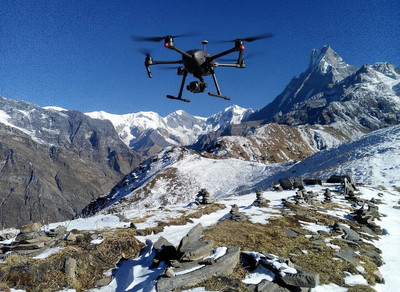
I've personally witnessed this happen multiple times along popular routes like Everest Base Camp and Annapurna Circuit. The legal paperwork doesn't matter if locals or other tourists feel you're disrupting their experience.
I've also witnessed a tourists get extremely upset with another tourists who was flying a drone nearby. They asked the drone operator to stop. They did not. What followed was a physical altercation with the drone being broken. No charges were upheld against the person who broke the drone as the drone operator did not cease when asked.
How to Minimize Conflict:
- Fly early morning or late afternoon when fewer trekkers or tourists are around
- Ask permission from nearby trekkers or tourists before launching – a simple courtesy goes far
- Avoid popular viewpoints during sunrise/sunset – these are peak times when people specifically seek silence
- Keep flights brief – 5-10 minutes maximum, then pack up
- Be prepared to abandon a flight if someone objects – defending your "right" to fly creates lasting negative impressions of drone users
Practical Considerations for Trekkers
High-Altitude Performance
Nepal's thin air significantly impacts drone capabilities. At 4,000-5,500 meters elevation (typical for Everest Base Camp or Annapurna Circuit high passes):
- Reduced air density means propellers work harder, draining batteries 30-50% faster
- Consumer drones like DJI Mavic series struggle above 5,000m – expect reduced responsiveness and shorter flight times
- Cold temperatures compound battery drain – keep spare batteries warm inside your jacket
Best Seasons for Drone Photography
Spring (March-May) and Autumn (September-November) offer the most reliable flying conditions:
- Clear skies and stable weather
- Better visibility of mountain peaks
- Spring bonus: rhododendron blooms add color to Annapurna region footage
Winter (December-February): Clear skies but extreme cold severely reduces battery life.
Monsoon (June-August): Heavy rain, clouds obscure mountains, high wind – not recommended.
Read more about the best trekking seasons in Nepal (clear weather for drones).
Traveling to Nepal with Your Drone
- Check your airline's drone and battery policies – most allow drones in carry-on but restrict battery quantity and watt-hours
- Declare your drone at customs – have your CAAN registration certificate ready
- Bring multiple spare batteries – high-altitude flight drains them quickly
- Pack propeller guards – helpful when launching from uneven terrain
Working with Trekking Agencies for Permits
Foreign nationals cannot obtain drone permits independently (aside from the initial CAAN request) - you must use a registered Nepali trekking agency. Choose carefully:
- Verify agency registration with Nepal Tourism Board and Trekking Agencies' Association of Nepal (TAAN)
- Ask about specific drone permit experience – not all agencies handle these regularly
- Start early: Contact agencies 8-12 weeks before your trek departure date
- Budget USD $300-800 total for all permits plus agency service fees
- Get written confirmation of all permit types included before paying deposits
There are many scam trekking agencies who will say that they will apply for you, ask for deposits, and then disappear - or say the application was denied (they keep the money). On top of that, many good trekking agencies and travel agencies in Nepal will be reluctant to help due to the sheer time, locations, and application processes involved.
The reality once again is that if you want to legally fly a drone in Nepal, you'll have to pay good rates to a trekking agency or travel agency to do the applications for you. It won't come cheap. When costing for their fees keep in mind the paperwork, the transport costs to the various offices they must attend, and the amount of time they have to send in those offices.
What happens if I don't have the right permits to fly a drone? (can I get away with it?)
Ever since CAAN opened their online drone registration portal in 2025 there's been a misnomer that filling out the CAAN registration is all you need. Many tourists in Nepal have tried flying drones with just that registration complete and with no home ministry registration or local permit etc.
Some have gotten away with it. Most have run into serious problems. Just filling out the CAAN registration form is only a small part of the process. Heading out with that complete and nothing else to fly your drone means taking a huge chance nobody will spot you. If they do, they know there will be a fixed penalty from the police, and a drone confiscation which can earn them money. So, there's an incentive.
Similarly there are many other bodies not happy with drones and potential issues.
- Centuries old monuments if they are hit by a drone could sustain damage
- Rare, or endangered wildlife can be scared by drones
- Domestic wildlife can be scared by drones
- Life threatening issues like a yak on a mountain pass being startled by a drone or the noise may bolt and knock a trekker or person off a narrow ledge
Furthermore, fellow tourists generally don't like drones. Noise, privacy, and all else that comes with drones. They are likely to complain to either their guide, teahouse, or ask the local police.
While some people have gotten away with it, the risks outweigh the rewards. While the local police may just fine you and confiscate your drone - it can escalate quickly with all other departments you did not apply to getting involved. The fines increase dramatically.
While the CAAN registration is a step forward, the reality is that it's a quick cash money grab for the first of many registration permits you need. All of whom make it difficult for a reason. Local drone operators have a market, and Nepal does not like giving video footage away. The small print of many entrances include huge fees for regular filming (excluding drones). It's essentially reserved for Nepali, local commercial flights, or large international film studios.
Penalties for Violations
Flying without proper registration or permits, or violating operational rules, carries serious consequences:
- Fines: NPR 2,000 - NPR 5,000 (USD $15-40) for minor violations, escalating based on severity
- Additional Permit Fines: If you have a CAAN permit, but are missing the others, each department may fine you individually and also escalate the issue
- Drone confiscation - permanent seizure possible for serious violations or operating without permits
- Detention and legal proceedings - particularly if flying in sensitive security areas or restricted zones
- Additional damages: You're liable for any property damage or injuries caused by your drone
Commercial operators face higher penalties. Intent matters - authorities distinguish between recreational use and commercial filming.
Alternatives to Consider
If the permit complexity or social friction concerns you, consider these alternatives for capturing Nepal's landscape:
- Hire a local helicopter tour operator – they handle all permits and you get aerial footage without the hassle (USD $300-1,500 depending on route)
- Use professional agencies offering drone footage services – some trekking companies include aerial filming as an add-on
- Long lens ground photography – 70-200mm or 100-400mm telephoto lenses can capture dramatic compressed mountain perspectives without altitude
- GoPro on extended selfie stick or monopod – gets elevated perspective without drone regulations
Final Recommendations: Should You Fly a Drone in Nepal?
After 20+ years guiding tourists and trekkers through Nepal's bureaucracy and culture, here's my honest assessment:
You Should Bring a Drone If:
- You're a professional videographer/photographer with paid clients expecting aerial footage
- You have 8-12 weeks lead time for permit applications
- You can budget USD $500-800 for permits and agency fees
- You're comfortable navigating social friction with fellow trekkers
Skip the Drone If:
- This is your first trek to Nepal – focus on the experience, not equipment
- You're traveling independently without a trekking agency already arranged
- You want "some aerial shots" but aren't committed to the full permit process
- Your timeline is under 6 weeks before departure
The Honest Truth: Most adventure travelers find the bureaucratic complexity, expense, and potential social friction outweigh the value of personal drone footage. Nepal's landscapes are so dramatic that ground-level photography often delivers equally compelling images without the hassle.
Frequently Asked Questions about Flying Drones in Nepal
Yes, but only with proper permits from CAAN and multiple government ministries. All drones require registration regardless of weight. Foreign nationals must work through registered trekking agencies and expect 2-4 weeks processing time and USD $500-800 in total costs.
Registration costs NPR 10,000-15,000 (USD $75-115). Foreign nationals need additional flight permits costing USD $200-500+, plus trekking agency service fees of USD $100-300. Total budget: USD $500-800+.
Yes, with permits from CAAN, Department of National Parks, NMA, plus all standard foreign national permits. However, you must avoid the 5km exclusion zone around Lukla airport, and be aware that fellow trekkers may complain about noise, potentially leading to confiscation even with valid permits.
Yes. All drones regardless of weight require CAAN registration in Nepal. There are no exemptions for lightweight drones under 250g (Category A). They still need full registration and flight permits.
Penalties include fines of NPR 2,000-5,000 (USD $15-40+), plus further fines from individual departments you did not get permits from, drone confiscation, possible detention, and legal proceedings. You're also liable for any damages. Local police can confiscate drones based on noise complaints from other trekkers, even if you have permits.
Minimum 2-4 weeks for foreign nationals due to multi-ministry approval process. Experienced guidebook authors recommend starting 6-8 weeks before your trek. The CAAN registration portal frequently goes offline, which can add additional delays.
Upper Mustang and Manaslu Circuit offer lower social friction due to fewer trekkers, though they require additional restricted area permits. Everest Base Camp and Annapurna routes face high social conflict despite having spectacular views. Always consider whether your footage justifies potentially disrupting others' experience.
No. As of February 2025, the CAAN online portal frequently crashes or goes offline for weeks. Always have a backup plan to submit paper applications in person at CAAN's Flight Safety Standards Department in Sinamangal, Kathmandu. Request offline forms before your trip.
Yes, foreign nationals cannot obtain drone permits independently. You must work through a registered Nepali trekking agency that coordinates multi-ministry approvals. Verify the agency is registered with Nepal Tourism Board and TAAN before proceeding.
Legal maximum is 120 meters (394 feet) above ground level. However, high-altitude environments (4,000-5,500m) significantly impact drone performance - batteries drain 30-50% faster and consumer drones may struggle with responsiveness. Verify your drone model's altitude ceiling before trekking.
Get my Guidebooks to make the most out of your time in Nepal!
Liked this page? You'll love my books!
100% independent guidebooks, with no sponsored trips or ads. Designed to help travelers get the most out their trip to Nepal with premium detailed guides, insider information, impartial hotel and restaurant reviews, complete trekking routes, dedicated heritage walks & much more ...
Available in print or digital editions - the best guidebooks for visiting Nepal.
 |
 |
Full Nepal Guidebook
|
Kathmandu Valley Heritage Walks
|
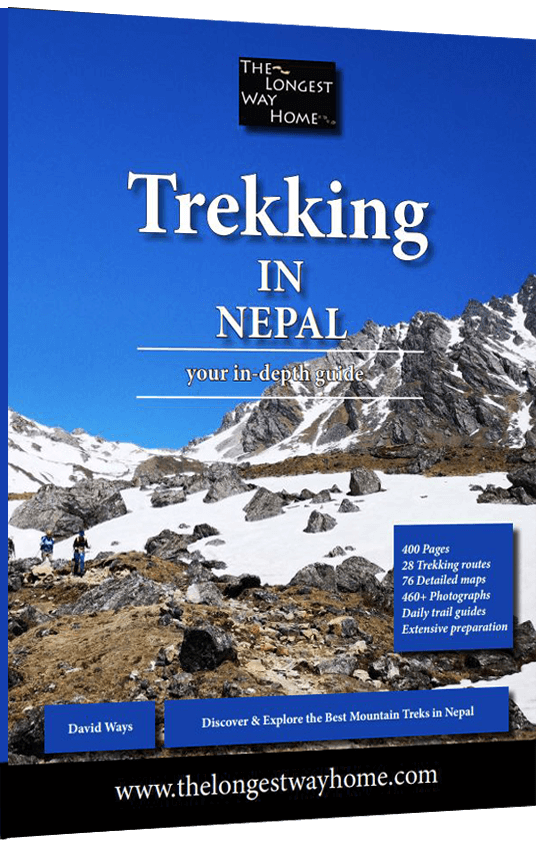 |
Trekking in Nepal |