As you have probably discovered before coming to this page, there is a lot of confusing, sales-oriented information about treks and choosing the right trek out there. I have seen it, and it is getting even more confusing as the years go on. Most of it is written by trekking agencies trying to make a sale, or "influencers" trying to make a sponsorship or sale. Rest assured there is no "buy or book this trek" here. I have written this information myself based on my own 20 years experience in helping people via my guidebooks. What you will get here is an easy to follow, no-frills, honest approach on how to choose a trek for yourself.
If you are looking for a quick answer to What Trek Should I do in Nepal? Then use my free Nepal Trek Finder tool below. If you want to read more and make a good educated decision, read on!
The 2026 Nepal Trek Finder
Choose your preferences and it will show you the two best options for your trek.

How to Choose a Trek in Nepal: table of contents
20+ years of boots-on-the-ground trekking research
How to choose what trek to do in Nepal?
Five steps. Work through them in order and the choice will become more clear.
|
STEP 1 |
Which Nepal trek suits the number of days I have? → Work backwards from your flight home. Subtract travel days to and from the trailhead. A day on a bus still counts as a trekking day in terms of your guide, budget and itinerary. The number left is your actual trekking window. Be honest about it before anything else. |
|
STEP 2 |
How much does it cost to trek in Nepal? → Know your total figure before you start comparing treks. The Everest Base Camp Trek costs $450 USD in domestic flights alone before you reach the trailhead. Other treks start from a bus fare. Budget shapes everything: guide fees, permits, accommodation, food. Read the full breakdown on the trekking costs in Nepal page once you have your number. |
|
STEP 3 |
When are you going trekking in Nepal? → The weather dictates which trails are safe or even open. Peak seasons (October to November and March to April) offer clear mountain views but busy trails. If you are trekking in the winter freeze or the summer monsoon, you will need to choose specific rain-shadow or lower-altitude regions to avoid disappointment or dangerous pass closures. |
|
STEP 4 |
What do you actually want from the trek? → Pick one or two objectives. Do you want to stand in front of Everest? Walk through remote villages with no other tourists around? Avoid crowds entirely? See the highest mountain views possible? Your answer eliminates whole regions at once and makes your filtering steps much faster. |
|
STEP 5 |
What fitness level do you actually need to trek in Nepal? → Difficulty ratings depend on the route taken, the season, and your own fitness. The Pikey Peak Trek is rated moderate on its traditional 8-day route but becomes easier on the shorter Dhap approach. If a trek looks too hard, adding days or hiring a porter changes the equation. Read the trekking fitness guide for an honest assessment. |
|
CHOOSE |
Most people start here, which is why they end up confused. Having worked through Steps 1 to 5, you now have a personalized filter. Use the Trek Matchmaker tool above for a quick recommendation, browse the specific regional sections below for a deeper look, or dive into a comprehensive guidebook to build your exact itinerary. |
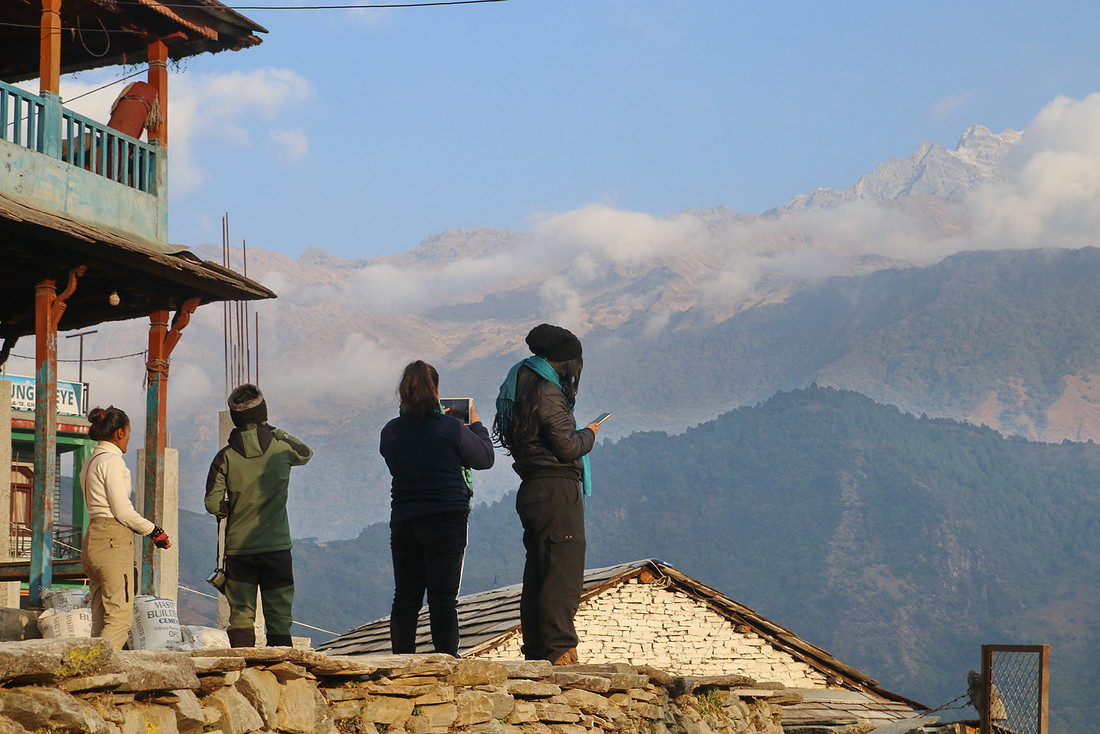
Trying to make up your mind about what trek is best for you? Problem solved right here.
Which Nepal trek suits the number of days I have?
Once you know your available trekking days, the list of realistic options shortens fast. Remember to subtract your travel days to and from the trailhead before you count. Here is a straightforward breakdown by time available.
(difficulty ratings are relative, subject to an itinerary, time of year, and more. Proper difficulty by day charts are in my Trekking in Nepal Guidebook)3 to 5 trekking days
| Trek | Days | Views | Difficulty | Best For |
|---|---|---|---|---|
| Mardi Himal | 4-6 | Views & photos | ||
| Ghorepani Poon Hill | 3-5 | First timers | ||
| Muldai Trek | 4-5 | Off the beaten track | ||
| Australian Camp + Dhampus | 2-3 | Short on time | ||
| Panchase Trek | 2-3 | Nature & forests | ||
| Shivapuri Hike | 1 | Based in Kathmandu |
6 to 9 trekking days
| Trek | Days | Views | Difficulty | Best For |
|---|---|---|---|---|
| Nar Phu Valley Trek | 9 | Epic & remote | ||
| Annapurna Base Camp | 7-9 | First big trek | ||
| Langtang Valley Trek | 7-8 | Closest to Kathmandu | ||
| Pikey Peak Trek | 7-8 | Budget Everest views | ||
| Khopra Danda Trek | 5-6 | Off the beaten track | ||
| Mohare Danda Trek | 5-6 | Quietest trails |
10 to 14 trekking days
| Trek | Days | Views | Difficulty | Best For |
|---|---|---|---|---|
| Everest Base Camp | 12-14 | Iconic high altitude | ||
| Road Free Annapurna Circuit | 12-16 | Diverse scenery loop | ||
| Manaslu Circuit Trek | 12-16 | Untouched mountain wilderness | ||
| Annapurna Circuit (Short) | 8-12 | Highlights via transport | ||
| Gokyo Ri Trek | 11-14 | Glacial lakes alternative | ||
| Upper Mustang Trek | 10-14 | Ancient kingdom & caves | ||
| Langtang Gosainkunda | 12-14 | Valleys & sacred lakes |
Restricted Area Treks
I'll add in restricted area treks here as many fall into the above number of days. The Nar Phu Valley Trek, Upper Mustang Trek, and the The Manaslu Circuit can all now be trekked by solo trekkers. However, guides for restricted treks are compulsory, they are check by army checkpoints and there's no getting around it. Budget also comes into play here as restricted area permits add more to the cost of trek though the treks themeselves are wilder and often more remote.
15 days or more
| Trek | Days | Views | Difficulty | Best For |
|---|---|---|---|---|
| Three High Passes | 17-20 | Ultimate Everest loop | ||
| Nar Phu Annapurna Circuit | 16-19 | Wilder restricted combo | ||
| Manaslu with Tsum Valley | 16-22 | Deep cultural immersion | ||
| Dhaulagiri Circuit | 15-20 | Toughest expedition trail | ||
| Ganja La Pass Trek | 14-16 | Challenging Langtang extension | ||
| Original Annapurna Circuit | 14-18 | Classic first-timer long route |
We are entering an ever extendable number of days here. So let's stick with the main treks. Three High Passes on the Everest side is perhaps one of the "ultimate treks" for any trekker with Everest Base Camp, Gokyo and three high passes all on offer. The Nar Phu Annapurna Circuit is worthy of a mention here, it pretty much replaces the original Annapurna Circuit, which enters both a restricted area, a high pass, and then the APC with another high pass. It is wilder than the Annapurna Circuit, far less visited, and widely regarded by trekkers who have done both as the better experience. Manaslu with Tsum Valley adds the restricted Tsum Valley to the trek which adds to its cultural diversity and remote feeling. The Dhaulagiri Circuit falls into the 15 to 20 day bracket and offers one of the tougher treks in Nepal. Likewise the Ganja La Pass for those who like the Langtang Valley, but again, it's a tough trek. None of these are routes for first-time trekkers in Nepal. Build up to them.
For first time trekkers in Nepal, there's the original Annapurna circuit which still exists despite the road network. Finally for those looking for even longer treks there's nothing stopping you linking treks together. The most popular links for long treks would be Manaslu, Nar Phu, Annapurna Circuit, Mardi Himal. That's just an example that will keep you trekking for a month. There are also shorter trek links like Khopra Danda - Poon Hill. All these trek links are in my Trekking in Nepal Guidebook.
How much does it cost to trek in Nepal?
Nepal is no longer the bargain destination it was a decade ago. Costs have risen steadily and anyone still planning on $15-a-day figures found online via forums is going to get a shock on the trail.
The mistake many people make when choosing a trek is thinking it's simply about typing it in and going to a booking site. That is where your money and plans go down the toilet. These are for-profit sites, including trekking agents. They make offers online, and try to draw people in. Some are too-good-to-be-true prices that basically scam people into joining large groups led by porters, others are over-inflated treks charging more than they should. Let the buyer (trekker) beware.
The two main types of trek you can pay for are package treks (everything is included) and guide-only treks (you just pay the guide and look after everything else yourself). I have a dedicated page about the costs of trekking in Nepal, it's well worth reading before you finally confirm. Here, we'll stick to the basics to get you going.
Before you choose a trek, know the real numbers. Here is an honest breakdown of what you are actually paying for. These are the costs that make up any trek be it a package or guide-only trek.
|
Food and accommodation: $25 to $45 per day This is your baseline on-trail cost. Teahouse rooms are cheap but meals are where costs accumulate. Three meals a day plus hot drinks adds up quickly, particularly at higher altitudes where prices rise with the elevation. Budget the higher end of this range for Everest region teahouses, the lower end for Langtang and Annapurna. |
|
|
Guide fees: $28 to $35+ per day A licensed guide is now mandatory under Nepal's 2023 regulations, though enforcement varies. A good guide is worth every rupee regardless of the law. If there are two or more of you, you split this cost between you, which changes the budget equation significantly. A porter is separate: roughly $20 per day and carries your bag but does not navigate or advise. |
|
|
Permits: NPR 2,000 to $550+ depending on the route Standard treks in the Annapurna region require an ACAP permit (NPR 3,000) and a TIMS card (NPR 2,000). The Everest region uses a TREK CARD (NPR 3,000) plus a Sagarmatha National Park entry fee. Restricted area treks are a different matter entirely: Upper Mustang costs $50 USD per day on top of standard permits, Nar Phu and Manaslu carry fixed restricted area premiums. Always check current permit costs before budgeting as these change. |
|
|
Getting to the trailhead: $5 to $450+ This is the cost most first-timers overlook. Most Annapurna and Langtang treks start from a bus or jeep ride costing a few dollars. The Everest Base Camp Trek requires a return flight to Lukla costing around $450 USD, and that is before a single day on the trail. If your budget is tight, this single factor may be reason enough to choose a different region. It's also more nuanced: taking private jeeps instead of a bus may be more comfortable, but the price skyrockets. |
|
|
The extras that catch people out Hot showers, battery charging, wi-fi, boiled or filtered water, and the odd chocolate bar all carry a charge in teahouses. None are expensive individually but across 10 days they add $3 to $8 per day to your bill. Budget for them rather than discovering them as surprises on your tab each evening. |
For a full cost breakdown by trek, season, and group size, use the dedicated trekking cost guide and calculator for Nepal. It covers package treks versus guide-only costs, porter rates, and gives you a realistic total figure to plan against rather than a per-day average that excludes half the real costs.
When are you going trekking in Nepal?
When you go determines which treks are available, how busy the trails are, and what you will actually see. The table below covers all four seasons at a glance. For a detailed look at any specific month, use the monthly links inside each row.
| Season | Crowds | Trail Conditions | Best Routes & Monthly Guides |
|---|---|---|---|
|
Autumn Mid-Sep to Mid-Dec |
Peak | The best overall window. Sharp air, clearest mountain views of the year. All high passes open. Book guides and accommodation well in advance. | All routes fully open including high-altitude circuits and passes. Monthly guides: Sep Oct Nov Dec |
|
Spring Mar to May |
High | Warm temperatures and rhododendrons in bloom on lower trails. Slight haze builds by late April and May. All major routes and passes accessible. | All trails open. Particularly good for lower and mid-altitude forest routes. Monthly guides: Mar Apr May |
|
Winter Dec to Feb |
Low | Severe cold at altitude. High passes including Thorong La regularly blocked by snow. Lower trails doable with the right gear. Quieter and cheaper across the board. | Stick to lower trails:
Ghorepani Poon Hill and
Langtang Valley are reliable choices. Monthly guides: Dec Jan Feb |
|
Monsoon Jun to Mid-Sep |
Minimal | Lower trails wet, slippery, and leech-prone. Mountain views frequently obscured. Rain shadow areas north of the main Himalayan range stay largely dry. | Rain shadow routes only:
Upper Mustang and
Nar Phu Valley remain dry and are genuinely good choices in this window. Monthly guides: Jun Jul Aug Sep |
For a full month-by-month breakdown see the main guide on the best time of year to go trekking in Nepal.
What do you actually want from the trek?
This is an early first look at some of the treks in Nepal - it's not where you make your final choice. It is however a good way to narrow down your personal trek goals. one or two from the list below. Your answer eliminates whole regions at once and makes Step 5 (choosing your actual trek) much faster.
I want to see Everest up close → Everest Base Camp Trek
I want the best mountain views → Mardi Himal or Gokyo Ri
I want to avoid other trekkers → Langtang Valley or Manaslu Circuit
I want remote wilderness and culture → Upper Mustang or Nar Phu Valley
I want the best value for money → Annapurna region or Langtang
I have limited time → Ghorepani Poon Hill or Mardi Himal
I am older or less experienced → Trekking in Nepal for over 60s
I want photography opportunities → Mardi Himal or Annapurna Base Camp
Again, the above is just a taster. There's no need to make a choice yet!
What fitness level do you actually need to trek in Nepal?
Do not rely on generic difficulty labels you find online. "Moderate" means something very different on a Nepal mountain trail to what it means on a weekend park walk. The honest test is simple: can you put on a 5 to 7 kilogram daypack and walk uphill for 6 hours today? That is what trekking in Nepal actually asks of you. For a full preparation plan, see the dedicated trekking fitness guide for Nepal.
For each trek in my guidebook Trekking in Nepal there is a difficulty chart so you can actually see which days are more demanding compared to others.
|
Trail Ready (Easy) |
3 to 5 hours walking per day, under 3,200m Routes like Ghorepani Poon Hill and Dhampus fall here. Well-worn stone trails, good teahouse infrastructure, no extreme altitude. If you can walk up several flights of stairs without stopping and manage a few hours on your feet without issue, these treks are within reach without a specialist training programme. Some general fitness preparation still helps. |
|
Regular Hiker (moderate) |
5 to 7 hours walking per day, 3,200m to 4,500m Annapurna Base Camp, Langtang Valley, Mardi Himal, and similar routes sit here. Longer daily stages, steeper ascents, and higher sleeping altitudes. You need solid cardiovascular endurance and to have done some consistent training beforehand. Altitude sickness becomes a real consideration at this level. Slow, disciplined acclimatisation matters more than fitness alone. Read the altitude sickness guide before you go. |
|
Experienced Trekker (DEMANDING) |
7 to 9 hours walking per day, above 4,500m Everest Base Camp, Annapurna Circuit with Thorong La, Three Passes, Nar Phu, and remote restricted routes. Long days on technical terrain at serious altitude. Strong aerobic fitness is a baseline requirement, not a bonus. Ignoring your limits at this level carries genuine risk. Do not attempt these routes without months of specific preparation and a full read of the Nepal trekking safety guide. |
Every trek listed on this site includes its own difficulty breakdown and daily altitude profile. For detailed day-by-day preparation specific to your chosen route, the Trekking in Nepal guidebook covers charts showing which days are hardest compared to others, gear lists, and altitude schedules for 29 routes.
It's also important to note that different itineraries will have different demands, so again read over the trek you are choosing well.
Pick your trek
You made it. Most people start here, which is why they end up confused. Having worked through Steps 1 to 4 you now have a real step-up on choosing a trek. You can look at any route and know whether it suits you or not. Use that knowledge one of three ways:
Quick answer → Jump back to the Trek Matchmaker and plug in your numbers
Browse all treks → See the full list of Nepal treks in the sidebar
Day-by-day detail → Trekking in Nepal Guidebook covers 29 routes with full itineraries, altitude profiles, and current costs
The steps above should have made choosing a trek considerably easier. Below are more questions people regularly ask when trying to decide. Read on, or use the sidebar to start looking at individual treks.
Which region of Nepal should I trek in?
While you may have chosen your trek already, or are comparing a couple it's only natural, and good to get an idea of where the trekking regions in Nepal are, as they exactly.

The main trekking regions of Nepal
Nepal has four main trekking regions, each with a different character, crowd level, cost, and range of routes. Knowing which region suits you narrows the field considerably.
Annapurna Region
The most accessible and most varied region in Nepal for trekking. It starts
from Pokhara, which is a short flight or an 8-hour bus ride from Kathmandu.
No domestic flights to remote airstrips, no sky-high Khumbu prices. The
range of treks here is broader than anywhere else in the country, from the
4-day Ghorepani Poon Hill Trek to the full
Annapurna Circuit, with quieter
alternatives like Mardi Himal,
Khopra Danda,
Mohare Danda, and
Annapurna Base Camp
in between. If this is your first trek and you are unsure where to start,
start here.
Everest Region (Solukhumbu)
The most famous region in Nepal and the most expensive to reach. A return
flight to Lukla costs around $450 USD and that is before you have set foot
on the trail. Food and accommodation in the Khumbu are noticeably more
expensive than other regions. That said, if seeing Everest up close is the
reason you came to Nepal, then the
Everest Base Camp Trek delivers
exactly that. Alternatives in the same region include
Gokyo Ri and the
Three Passes Trek.
If you are going, read up on
trekking safely in the Everest region
before you go. Budget-conscious trekkers should look elsewhere.
| Trekking Region | Logistics & Cost | Landscape & Vibe | Key Route Options |
|---|---|---|---|
| Annapurna Region | Highly accessible via Pokhara. Budget-friendly with no mandatory high-cost flights or expensive restricted permits. | Immense variety. Transitions from lush subtropical terraced fields to alpine heights. Highly developed teahouses. | Annapurna Circuit, ABC, Poon Hill, Mardi Himal |
| Everest Region (Solukhumbu) |
Most expensive baseline. Requires premium Lukla flights (~$450 USD return). Food and lodging costs scale up significantly with altitude. | High-altitude, dramatic, iconic alpine terrain. Deep Sherpa culture. Busiest trails in peak seasons, heavily focused on the world's highest peaks. | Everest Base Camp, Gokyo Ri, Three High Passes |
| Langtang Region | Most cost-efficient. Reached in 2-3 hours from Kathmandu via overland jeep, bypassing domestic flight hassles completely. | Underrated, intimate valley walk enclosed by towering snow walls. Striking high alpine lakes. Strong Tibetan-influenced culture with far fewer crowds. | Langtang Valley, Gosainkunda Lakes |
| Off the Beaten Track | Higher logistical costs. Requires mandatory licensed guides, specialised restricted area permits, and complex wilderness planning. | Wild, raw, and remote. Preserves the classic, uncommercialized atmosphere of old Nepal trails. High passes, arid rain shadows, and minimal foot traffic. | Manaslu Circuit, Upper Mustang, Nar Phu, Dhaulagiri |
Langtang Region
The most underrated region in Nepal. Langtang sits just two to three hours
north of Kathmandu by jeep, which immediately removes the cost of a domestic
flight or a long bus ride to Pokhara. The
Langtang Valley Trek
takes 7 to 10 days, is genuinely beautiful, and sees a fraction of the
foot traffic of Annapurna or Everest. The extension to
Gosainkunda Lakes
adds two to three days and takes you up to a sacred high-altitude lake that
most trekkers never reach. If you want solid mountain trekking without the
crowds, Langtang deserves serious consideration.
Off the Beaten Track
If you have done one of the main treks before and want something more remote,
or if you simply want to avoid the teahouse trail crowds from the start, Nepal
has options that most trekking sites do not cover in any depth. The
Manaslu Circuit
is the most accessible of the remote routes and is widely regarded as what the
Annapurna Circuit used to be before the roads arrived. The
Nar Phu Valley Trek
and Upper Mustang Trek
are restricted-area routes that require a mandatory guide and a special permit
on top of the standard ones, which pushes the cost up considerably. The
Dhaulagiri Circuit
falls into a similar category: serious, remote, rewarding, and not for first-timers.
For a full overview of what is available, see the
list of treks in Nepal.
Do I need a guide to trek in Nepal?
Since 2023, Nepal officially requires all foreign trekkers to hire a licensed guide. In practice, enforcement is inconsistent. Many checkpoints are unstaffed and solo trekkers continue to walk popular routes without one. That said, the rule exists, fines can be issued, and the situation changes. If you are planning to trek independently, check the current status before you go.
Setting the regulation aside, the practical argument for hiring a guide is strong regardless of the law. I've seen German military men collapse after two days of trekking because they thought they were fit enough. They had to turn back and get a guide and a porter. Read through the Missing Trekker records and you will see that most incidents involve people who were trekking alone. That is not a coincidence. Here is what a good local guide actually does:
| Handles all permits so you do not get turned back at a checkpoint | Translates and negotiates accommodation and food prices on your behalf | ||
| Reads the weather and knows when to push on or turn back | Spots altitude sickness before you do and knows what to do about it | ||
| Manages emergencies in remote areas where there is no other help | Costs $28 to $35 per day. Split between two people it becomes $14 to $17 each | ||
| Teaches you to trek: pacing, rest stops, what to eat, how to read your own body at altitude before problems develop | Cultural bridge between you and the communities you pass through: teahouse owners, farmers, monastery caretakers, village elders | ||
| Brings the trail to life: local wildlife, medicinal plants, birds, the meaning behind mani walls, prayer flags and monastery carvings | Explains local customs: festival dates, village etiquette, what is and is not appropriate at sacred sites |
A porter is separate to a guide and costs roughly $20 per day. They carry your bag but do not navigate or advise. For solo female trekkers, a guide adds a meaningful layer of security beyond the practical benefits. Read the solo female travel guide for Nepal and the Nepal trekking safety guide for more.
|
The most reliable way to find a private trekking guide Both my Nepal Guidebook and Trekking in Nepal Guidebook contain lists of vetted, independently verified trekking agents and guides that I have personally reviewed. These are not paid listings, they are legitimate trekking agencies that I approve of. Alternatively, use my find a private trekking guide service on this site to locate a licensed, qualified, reputable guide for your specific route. For what to pay at the end of the trek, see the guide on tipping your trekking guide in Nepal. |
Frequently Asked Questions: Choosing a Trek in Nepal
The Ghorepani Poon Hill Trek is the most reliable starting point. Four days, well-marked stone trails, good teahouse infrastructure throughout, and a maximum altitude of 3,210m. If you can walk 4 to 5 hours a day on uneven ground you can complete it comfortably. For something even shorter, the Australian Camp to Dhampus Trek takes 2 to 3 days and starts close to Pokhara. Neither route requires technical skills or specialist equipment beyond decent footwear and a small daypack.
Three strong options depending on your priorities. If mountain views are the main goal, the Annapurna Base Camp Trek fits into 7 to 9 days and puts you inside a ring of 8,000-metre peaks. If you want to minimise travel time from Kathmandu, the Langtang Valley Trek at 7 to 8 days removes the Pokhara journey entirely. If you want fewer people on the trail, Mardi Himal at 5 to 6 days leaves a day or two spare for delays. Remember to subtract your travel days to and from the trailhead before you commit to a route.
Officially yes. Nepal introduced a mandatory guide regulation for foreign trekkers in 2023. Enforcement is inconsistent and many solo trekkers continue to walk popular routes without one, but the rule exists and fines can be issued. Beyond the legal question, the practical case for hiring a guide is strong regardless, particularly for first-time trekkers. A good local guide handles permits, reads altitude sickness symptoms early, manages emergencies, and turns a walk through the mountains into something far richer than scenery alone. See the full guide section above for a detailed breakdown of costs, how to find a vetted guide, and what to pay at the end of the trek.
Budget $25 to $35 per day for food and accommodation as a realistic minimum on standard Annapurna or Langtang routes. The Everest region runs higher. On top of that, factor in permit costs (typically NPR 5,000 to 6,000 total for standard routes), transport to the trailhead, and daily extras like hot showers, battery charging, and wi-fi which add $3 to $8 per day. The $15-a-day figures still circulating on forums are not accurate for 2025 to 2026. Use the dedicated trekking cost calculator for a route-specific estimate before you finalise your budget.
For 4 to 5 days the Ghorepani Poon Hill Trek is the most reliable introduction. For 5 to 6 days Mardi Himal gives better views with fewer people on the trail. For 7 to 9 days the Annapurna Base Camp Trek is the natural step up. All three start from Pokhara. If you are based in Kathmandu and cannot get to Pokhara, the Langtang Valley Trek is an excellent first trek. Avoid the Everest region for a first visit unless you have a specific reason, the flight cost and logistics add pressure that experienced trekkers handle more easily.
Late September to mid-October gives the best overall combination of clear weather, open trails, and prices before peak-season demand pushes accommodation costs up in late October and November. For spring, early March offers similar value before the main wave of trekkers arrives in April. Monsoon season (June to August) gives the lowest prices across the board but limits your route options to rain shadow areas like Upper Mustang and Nar Phu. See the full guide to the best trekking seasons in Nepal for a detailed month-by-month breakdown.
Take the Guesswork Out of Your Nepal Trek
Articles are great, but 20 tabs open on the move isn't. My guidebooks put years of honest on-the-ground research into one place, updated every season so you've got the latest information.
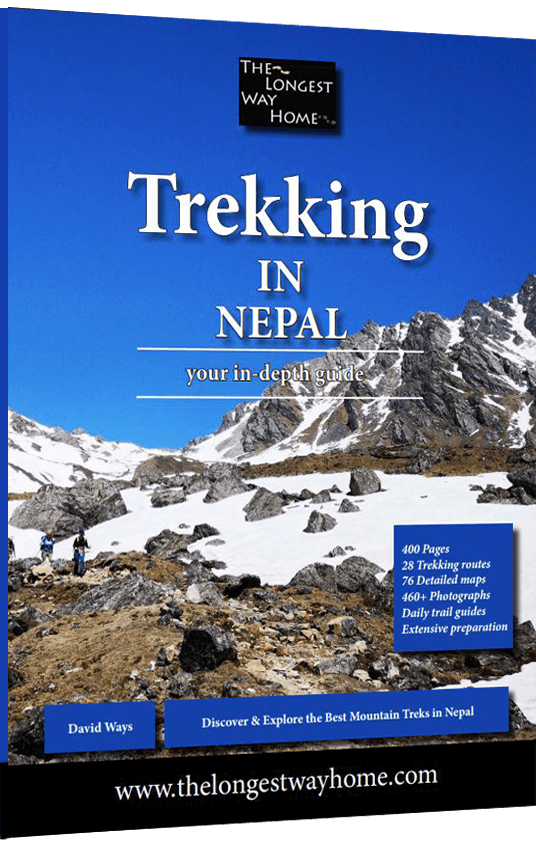
- Choose Your Format: High-res Digital or Print edition.
- Scalable Maps: Works offline with zero data or GPS.
- Real-World Logistics: Accurate costs and updated safety rules.
Was this page helpful to you? If so please tell others!