
About Haleshi Mahadev
Haleshi Mahadev, or Maratika Cave, in Khotang, Nepal, is a sacred site for Hindus, Buddhists, and Kirats, located between the holy Dudh Koshi and Sun Koshi rivers. Revered for over 6,000 years, it's where Lord Shiva hid from the demon Bhasmasura, who was tricked by Vishnu as Mohini and turned to ash.
Buddhist monk Padmasambhava achieved enlightenment here. The three caves represent Shiva's eyes, with rock formations showing his footprints and Bhasmasura's remains. A 2025 UNESCO World Heritage nomination highlights its global significance. Though remote, the BP Highway aids access, but roads often deteriorate. Upgraded with paint and solar lights in 2022, it's an off-the-beaten-path destination.
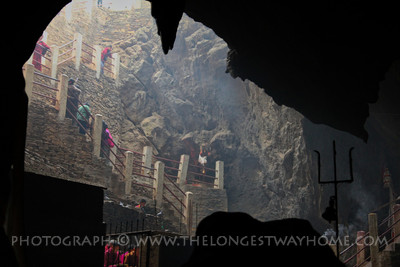
The caves' history centers on Shiva's battle with Bhasmasura, a devotee granted the power to turn anyone to ash by touch. Betrayed, Shiva hid in Haleshi's caves, blending into walls. Vishnu's Mohini guise fooled Bhasmasura into self-destruction. For Kirats, the cave is the ancestral home of Hetchhakuppa Raichhakule. Padmasambhava, Hindu sage Mirchaya Baba, and Mahaguru Sankaracharya meditated here, with beliefs that heartfelt worship grants wishes.
On this page
Haleshi Mahadev: At a Glance
Entrance Fee
100 NPR per cave. Mahadev Cave and Basahasthan Cave are paid separately. Remove shoes before entering either.
Location
Khotang district, between the Dudh Koshi and Sun Koshi rivers. Remote eastern Nepal, 8 to 12 hours from Kathmandu.
Main Highlight
Sacred 6,000-year-old cave complex also known as Maratika Cave. Revered by Hindus, Buddhists, and Kirats. Where Shiva hid from Bhasmasura and Padmasambhava achieved enlightenment.
Best Time to Visit
October to May. Avoid June to September when monsoon landslides and road damage make access risky. Four annual festivals on the calendar.
Getting There
Flight to Lamidanda (USD $150, 35 min) plus a jeep (1,500 NPR). Helicopter USD $5,000 for six. Private jeep from Kathmandu USD $350 to $400, 8 to 12 hours. Bus to Jairam Ghat (1,500 NPR, 8 hrs) plus shared jeep (1,200 NPR, 2 to 3 hrs).
Information verified: October 2026
Visiting Today
Haleshi Mahadev, a key pilgrimage site for Hindus and Buddhists, drawing monks who meditate intensely, some fasting for days.
A major drawback remains in reaching Haleshi Mahadev as it is challenging due to rough roads beyond the BP Highway, worsened by 2025 floods. Avoid monsoon season (June to September) due to landslides. Pilgrims fly to Lamidanda or take helicopters; jeeps or buses take 1 to 2 days from Kathmandu. Basic guesthouses fill up during festivals, so book early.
Haleshi Mahadev is an authentic, off-the-beaten-path Uncovered Corner destination; it pairs well with nearby Sindhuli Gadhi. You'll be hard pressed to meet many people who say they've been there. If the site was in Kathmandu it would be a top attraction for those curious about Buddhism and Hinduism as it is atmospheric. However, it's a full day's travel away to say the least which is both a plus and a negative. Plus meaning it's an uncovered corner. Negative due to travel alone.
Haleshi Mahadev Caves
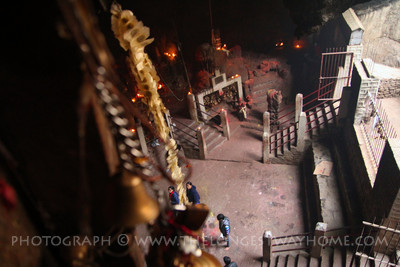
Haleshi Mahadev is located just west of the main road. There are several ways to enter the cave sites. The easiest method is via steps from the main road. If you arrive late at night or early in the morning and plan to spend the night, arrange accommodation first near Hotel Royal Haleshi or further along past the second cave.
Just outside the main cave area is a small souvenir market where pilgrims buy Buddhist beads or sacred threads. Steps lead down to the right for the Basahasthan Cave, while steps straight ahead lead to the Mahadev Cave.
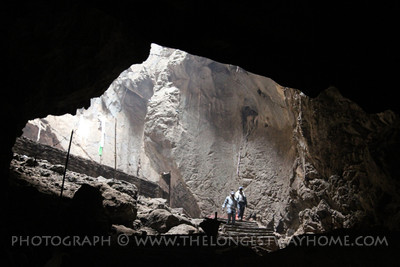
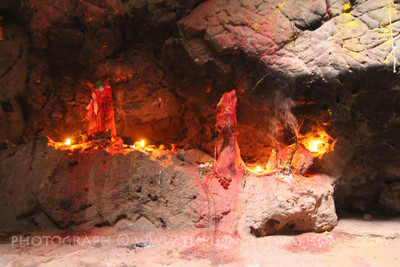
Mahadev Cave (100 rupees admission) has a crescent-moon entrance with a Ganesh Shrine outside. Remove shoes before descending steps to a platform where monks meditate. A small flight of steps leads to a cavern with a vermilion-covered Shiva Lingam stalagmite. The main cavern has shrines for written blessings and a large brass Shiva Lingam, the holiest in the complex, surrounded by a railing. People cast flowers and pray here.
Circle clockwise, noting priests meditating in a nearby grotto. En route the two cave crawl challenges symbolize rebirth: one through a hole near a small stalagmite, another high on the wall around a pole (watch some locals do it first, and don't forget it's a sacred area). Butter lamps and incense are lit near the Shiva Lingam.
Basahasthan Cave (100 rupees admission), meaning "place to spend the night," is where Shiva hid from Bhasmasura. Many monks meditate here, and people sleep during festivals. Rock formations include Bhasmasura's head, Vishnu's conch (blown to signal safety), and Shiva's handprint on the ceiling.
Padmasambhava's ancient inscriptions line the walls, tied to his tantric meditation with Mandarava, achieving "phowa rainbow body." Two more cave crawls involve squirming around columns, requiring flexibility and assistance.
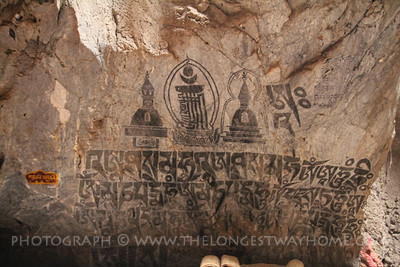
The main area, amphitheater-like, has Shiva's trident, a Nandi rock giving milk or chalky water, and shrines with butter lamps and incense. Monks meditate in grottoes where Shiva merged with walls. A tunnel-like roof marks Shiva's escape, with a legend that milk drops signify a virtuous heart, while water indicates otherwise. Outside, a stupa with prayer flags and a hiti for ritual bathing are accessible, though terrain is challenging in wet seasons.
Explore the stupa or forest area to the south, leading to the second accommodation area. Local guides can explain rock formations tied to Shiva's battle with Bhasmasura, enhancing the experience.
Activities & Tips
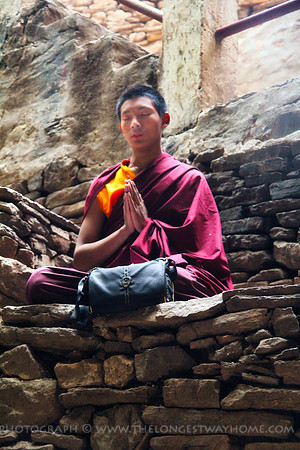
1. Cave Exploration: Visit Mahadev and Basahasthan Caves (100 rupees each) to see Shiva Lingams, rock formations like Bhasmasura's head, Vishnu's conch, and Padmasambhava's inscriptions; hire a local guide for detailed insights.
2. Cave Crawl Challenges: Try four rebirth-symbolizing cave crawls (two per cave), but be cautious due to flexibility needs and lack of official guides, again watch locals or seek assistance.
3. Meditation: Join monks meditating in cave grottoes, especially during festivals, for a profound spiritual experience.
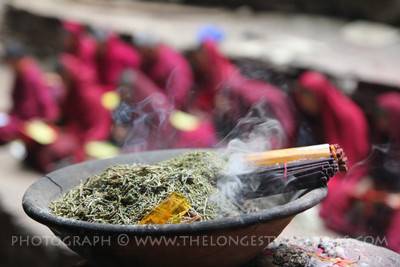
4. Prayer and Offerings: Light butter lamps, burn incense, or leave written blessings at shrines for a traditional experience.
5. Stupa and Hiti Visit: Explore the stupa and bathe in the hiti's sacred water, but note difficult terrain in wet seasons.
6. Responsible Tourism: Respect the sacred site by removing shoes, keeping noise low, and avoiding flash photography near meditating monks or shrines.
Accommodation in Haleshi Mahadev
There are a plethora of low-budget guesthouses in Haleshi Mahadev. If you are used to trekking tea houses, then you'll find something similar here. They are mainly located after Hotel Royal Haleshi. More standard-budget hotels are located on the main road near Hotel Haleshi Village and further by Bagh Bangshi Hotel.
These are the two main areas for accommodation in Haleshi Mahadev, and they are both central. Guesthouses seem to change names in Haleshi on a regular basis. During festivals, the prices skyrocket. English is also not widely spoken. If going by public transport, it's probably best to go when there's no festival to ensure you have accommodation. Prices shoot up during festivals. It's also worth noting that tours to Haleshi that can include accommodation and meals can be seriously overpriced.
Full accommodation details in my Nepal Guidebook.
Restaurants in Haleshi Mahadev
Haleshi lacks any form of "tourist" restaurant. Most people eat at their hotel or one of the guest houses in the area. There are plenty of little stores selling basic sweets and drinks. There is also one random Nepali sweet shop in the second accommodation area, but the opening times are as random as the choice is small. It's probably best to simply eat basic food at your guesthouse or hotel, keeping in mind that refrigeration is not a strong point in the area. Dal bhat is probably one of the safer meals if everyone else is eating it!
Responsible-Tourism-Tip: Support local businesses by eating at guesthouses, but check food freshness to avoid health issues in this remote area.
Getting There
The new BP Highway has made the journey to Sindhuli Gadhi a lot easier than it was previously. However, there are road problems after Jairam Ghat during the monsoon season.
International pilgrims often opt for taking a helicopter to Haleshi if that gives any indication of the journey. By flight: there are irregular flights from Kathmandu to Lamidanda Airport three times a week for roughly USD $150 (35 mins). From Lamidanda, you then take a jeep to Haleshi for about 1,500 rupees. This is best done through an agent in Kathmandu.
Likewise, a popular way for some to reach Haleshi is to take a helicopter. The entire return trip, with a one-hour wait at Haleshi, costs USD $5,000 for up to six people.
By Jeep: hiring your own jeep is one of the more comfortable ways to reach Haleshi Mahadev. Jeeps cost between USD$350 and $400 for an overnight return trip. With a jeep, you can stop off and visit other places on the way, such as Sindhuli Gadhi or even a short stop at Dhulikhel if you have the time. Jeeps usually take 8 to 12 hours to reach Haleshi Mahadev.
By Bus: From Kathmandu's Koteshwor bus stop, you can get a bus to Jairam Ghat for 1,500 rupees. They leave in quick succession at 5.30 am, 5.45 am, and 6.00 am daily (8 hours). At Jairam Ghat, if the bridge is operable, you cross it and then hire a shared jeep to Haleshi for 1,200 rupees (2 to 3 hours). If the main bridge is inoperable at Jairam Ghat, there is a footbridge.
Coming back is a little bit more random, and you would be advised to ask at your hotel for help. Most people leave at 4 a.m. by jeep to Jairam Ghat and wait for a bus. Otherwise, you can hire direct jeeps to take you all the way to Ghurmi, and from there, take a bus to Kathmandu. There have been many cases over the years of landslides and buses damaging the road on the way to Haleshi during monsoon season. Extreme caution is advised when taking any form of transport to Haleshi Mahadev during the monsoon season.
Map to Haleshi Mahadev
FAQs about Haleshi Mahadev
Haleshi Mahadev, or Maratika Cave, is a sacred site for Hindus and Buddhists, linked to Shiva's escape from Bhasmasura and Padmasambhava's enlightenment. Its ancient caves, rock formations, and spiritual ambiance make it unique.
Yes, Mahadev and Basahasthan Caves are open for exploration (100 rupees each). Visitors can see Shiva Lingams, rock formations like Bhasmasura's head, Vishnu's conch, and Padmasambhava's inscriptions, and try cave crawl challenges symbolizing rebirth.
Options include a flight to Lamidanda (USD $150, 35 mins) plus a jeep (1,500 rupees), a helicopter (USD $5,000 for six), a jeep (USD $350 to $400, 8 to 12 hours), or a bus to Jairam Ghat (1,500 rupees, 8 hours) and a shared jeep (1,200 rupees, 2 to 3 hours).
Explore the Mahadev and Basahasthan Caves, the nearby stupa with prayer flags, and a hiti for ritual bathing. Combine with Sindhuli Gadhi or the Dudh Koshi and Sun Koshi rivers for a richer experience.
About the Author
David Ways is an experienced travel writer and explorer who has spent years documenting the lesser-known corners of Nepal and beyond. With a passion for uncovering authentic cultural and spiritual experiences, he provides detailed guides to help travelers navigate destinations like Haleshi Mahadev with ease and insight. Learn more about David.
Get my Nepal Guidebook for the best in independent travel!
Articles are great, but 20 tabs open on the move isn't. In my guidebook I cover all attractions with well-researched information, photographs, itineraries, reviews, accommodation, restaurants, and travel-tested walking tours. It's an interactive and printable guidebook like no other.

- Complete Country Coverage: Kathmandu, Pokhara, Chitwan, heritage walks, and culture.
- Includes First Time Trekking: The entire beginner trekking guide is included right inside!
- Offline Interactive Maps: Zoomable maps and walking tours for seamless navigation.
Was this page helpful to you? If so please tell others!