
Why Fitness Matters for Nepal Trekking
Trekking in Nepal, from the lush trails of Mardi Himal to the towering heights of Everest Base Camp, is a bucket-list adventure that demands specific physical preparation. Unlike gym workouts or daily runs, Nepal's Himalayan trails test your endurance, strength, and adaptability over 6–8 hour days carrying a 7–10kg backpack on uneven terrain. As an expert trekker, I've navigated these trails and learned the hard way that general fitness isn't enough. Early on, I assumed my gym routine would suffice, but the trails' relentless ascents, descents, and high-altitude conditions proved otherwise. This guide offers a comprehensive fitness blueprint for all trekkers, from beginners to seasoned adventurers, to conquer Nepal's challenges.

Nepal's trails require sustained effort, navigating rocky paths, steep inclines, and high altitudes up to 5,500m. Tasks like hand-washing clothes or adjusting to dal bhat add to the physical toll. Unlike a treadmill, the trails shift from humid lowlands to dry, oxygen-scarce peaks, demanding specialized training. My years of trekking, detailed at my about page, inform this guide, ensuring you're ready for the physical and mental demands. For personal insights, check my practical guide to getting fit for Nepal trekking.
At a Glance
Training Window
12 weeks minimum. Start earlier if you are new to hiking or tackling a high-altitude route. Cramming in the last month rarely works.
Weekly Walks
3 to 5 walks of 30 minutes to 6 hours, building up over the plan. Wear your boots and carry a weighted pack from week one.
Strength Work
2 to 3 sessions a week. Squats, lunges, step-ups and planks. Legs and core carry the load on stone steps and long descents.
Altitude Prep
Cardio matters most above 4,000m. Build breathing efficiency with intervals and long steady efforts. Fitness does not prevent altitude sickness, but it helps you cope.
Gear Testing
Test everything before you fly. Boots, pack, poles and layers. Blisters and chafing ruin more treks than fitness does.
Understanding Nepal's Trekking Demands
Nepal's treks vary widely, from short, moderate routes like Ghorepani Poon Hill to grueling, high-altitude journeys like Manaslu Circuit. Each trek demands tailored fitness preparation due to differences in duration, altitude, and terrain. For a full list, see my Nepal treks with maps. Shorter treks like Mardi Himal (5–7 days) require leg strength for steep climbs, while longer treks like Annapurna Circuit (12–21 days) demand endurance and knee stability. High-altitude treks like Everest Base Camp (5,364m) need cardiovascular fitness and breathing efficiency.
Terrain varies from stone paths to muddy trails, with weather shifting from humid lowlands to cold, dry peaks. Daily tasks like unpacking, hand-washing clothes and eating dal bhat add to physical demands. Timing your trek is also key; my best time to trek guide details optimal seasons. Understanding these demands helps tailor your training. For example, I once underestimated a trek's altitude, struggling with breathlessness; now, I prioritize cardio for high-altitude routes. This guide ensures you're prepared for any trek's unique challenges.
12-Week Fitness Plan for Nepal Trekking
This 12-week fitness plan builds strength, endurance, and adaptability for Nepal's trails, scalable for beginners (e.g., Mardi Himal) or advanced trekkers (e.g., Manaslu Circuit). Start early and adjust based on your fitness level.
Weeks 1–4: Foundation Building
Focus on establishing a base. Walk 30–60 minutes, 3–4 times/week with a 5kg backpack to mimic trek weight. Use trekking boots to break them in, preventing blisters. Perform 2 strength sessions/week: 3 sets of 12 body-weight squats, lunges, and 30-second planks. Beginners can start with 10 reps; advanced trekkers add 2–5kg weights. Practice hand-washing clothes post-walk to build routine. I learned the hard way that untested boots cause pain; a month of short walks saved my feet on later treks. Schedule: Mon/Wed/Fri (walks), Tue/Thu (strength), Sat (rest), Sun (1-hour walk).
Weeks 5–8: Intensity and Endurance
Increase walks to 1–2 hours, 4–5 times/week with a 7kg backpack. Add 1–2 stair or incline walks/week to mimic ascents. Strength sessions rise to 3/week, adding step-ups (3 sets of 10/leg) with a backpack. Test trekking poles for balance. Beginners stick to body-weight exercises; advanced trekkers use 5–10kg weights. Practice interval training: 10 minutes fast walking, 5 minutes slow, for 1 hour. Schedule: Mon/Wed/Fri (walks), Tue/Thu/Sat (strength), Sun (2-hour walk). Rest days are key to avoid burnout.
Weeks 9–12: Peak Preparation
Mimic trek days with 2 long walks (4–6 hours) per week, carrying a 7–10kg backpack. Incorporate HIIT: 10 minutes fast, 5 minutes slow, for 1–2 hours. Strength sessions include weighted squats (3 sets of 15) and planks (60 seconds). Eat dal bhat-style meals 3 times/week to adapt digestion. Train in varied weather (rain, heat) for resilience. Schedule: Mon/Fri (long walks), Tue/Thu/Sat (strength), Wed (interval walk), Sun (rest). This phase ensures you're trail-ready.
Gear Testing for Fitness
Gear is critical to trekking fitness. Untested boots or clothes can cause blisters or chafing, derailing your trek. Test everything during training, as I learned when a new backpack rubbed my shoulders raw. Use my gear guide for recommendations.
- Boots: Wear for 4–6 weeks on walks (30 minutes to 2 hours) to prevent blisters. Use moisture-wicking socks (merino wool or synthetic).
- Backpack: Load with 7–10kg, adjusting straps for weight distribution. Practice taking it on/off to build shoulder strength.
- Clothes: Test moisture-wicking base layers, fleece mid-layers, and waterproof jackets. Hand-wash after walks to check durability and odor retention.
- Poles: Practice on uneven terrain to master balance and reduce knee strain. Adjust length for comfort.
Common mistakes include skipping gear tests or using unwashed clothes, leading to discomfort. Hand-wash clothes with travel soap to simulate trail conditions. Test in varied weather to ensure gear withstands rain or heat.

Nutrition and Hydration Strategies
Proper nutrition and hydration fuel trekking performance. Nepal's trails demand sustained energy, especially at high altitudes. Adapt to dal bhat (lentils, rice, vegetables), served twice daily, by eating similar meals 3–4 times/week during training. A sample meal plan includes: breakfast (oats, nuts, fruit), lunch (dal bhat or rice/protein), dinner (lentils, vegetables, lean protein). Aim for 50% carbs, 30% protein, 20% fats to balance energy and recovery.
Drink 2–3 liters of water daily during training, testing hydration systems (bladder or bottle) with your backpack. For high-altitude treks (e.g., Everest), use electrolyte tablets to prevent dehydration. Test snacks like nuts, dried fruit, or energy bars to avoid stomach upset. I once relied on untested bars, only to find they caused bloating; now, I stick to nuts and fruit. At 5,000m, calorie needs rise to 3,000–4,000/day, so practice eating larger meals during breaks to mimic trek conditions.
Mental Fitness for Long Treks
Mental resilience is as crucial as physical fitness. Long days, basic teahouses, and unpredictable weather test your patience. Practice mindfulness (e.g., 10-minute daily meditation) to stay calm during fatigue. Simulate tough conditions: train in rain, cold, or early mornings to build adaptability. I once struggled with a rainy trek's discomfort until I trained in similar conditions, making the trail feel manageable.
Learn Nepali culture to reduce stress. Study basic phrases (e.g., "Namaste," "Dhanyabad") and trekking etiquette via my trekking guide. Understanding local customs, like respecting yaks or monks, enhances your experience and mental ease. Practice unpacking/repacking your backpack post-walk to build routine efficiency.
Injury Prevention and Recovery
Preventing injuries ensures a successful trek. Nepal's stone paths and descents strain knees and ankles, so incorporate stretches: calf stretches (30 seconds, 3 sets), hamstring stretches (20 seconds/leg), and quad stretches post-walk. Use knee braces or supports if prone to strain, testing them during training. Trekking poles reduce impact by 20–30%; practice to master technique.
Schedule a health check 3–6 months before trekking, as advised in my practical guide. Discuss your training plan, trek duration, and altitude with your doctor. Ask about vaccinations (e.g., hepatitis A, typhoid) and altitude sickness meds (e.g., Diamox). Post-trek, use foam rolling (10 minutes/day) and rest days to recover. I avoided stretches early on, leading to soreness; now, daily stretching keeps me trail-ready.
Trek-Specific Fitness Requirements
Each Nepal trek demands unique fitness preparation. The table below outlines requirements for popular treks, detailed at my Nepal treks page. Tailor your training to your chosen trek, using my best time to trek guide for planning.
For Everest Base Camp, focus on cardio and breathing exercises to handle 5,364m altitude. Annapurna Circuit requires endurance for long days and knee strength for descents. Mardi Himal suits beginners, needing leg strength for steep climbs. Langtang Valley demands core stability, while Manaslu Circuit requires mental resilience for remote trails. Ghorepani Poon Hill needs short bursts of cardio for quick ascents.
| Trek | Fitness Focus | Duration | Training Tips |
|---|---|---|---|
| Everest Base Camp | High-altitude cardio, breathing | 12–14 days | HIIT, diaphragmatic breathing, 6-hour walks |
| Annapurna Circuit | Knee strength, endurance | 12–21 days | Squats, lunges, 5–6 hour walks |
| Mardi Himal | Leg strength, moderate endurance | 5–7 days | Step-ups, 3–4 hour walks |
| Langtang Valley | Core stability, moderate cardio | 7–10 days | Planks, 4-hour walks |
| Manaslu Circuit | Endurance, mental resilience | 14–18 days | Long walks, mindfulness practice |
| Ghorepani Poon Hill | Leg strength, short cardio bursts | 4–5 days | Stair walks, interval training |
Downloadable Fitness Checklist
My Nepal Trekking Fitness Checklist helps you track your 12-week training, gear tests, and nutrition prep. It includes weekly exercise goals (e.g., walk duration, strength reps), gear testing milestones (e.g., boot break-in, pole practice), and nutrition targets (e.g., dal bhat meals, water intake). This tool keeps you organized, ensuring you're trail-ready. Download it to monitor progress and avoid overlooking critical steps like health checks or gear durability tests.
Frequently Asked Questions About Fitness for Nepal Trekking
A 12-week training plan is recommended to build endurance, strength, and adaptability. Start with 30–60 minute walks with a 5kg backpack, 3–4 times/week, and 2 strength sessions/week (squats, lunges, planks). Adjust based on your trek's demands, like Annapurna or Everest Base Camp.
High-altitude treks like Everest Base Camp (5,364m) require strong cardiovascular fitness and breathing efficiency. Train with 45–90 minute cardio sessions (e.g., running, cycling) 3–4 times/week, and practice hiking with a 7–10kg backpack to mimic trail conditions.
Yes, beginners can train for Nepal treks like Mardi Himal with a 12-week plan. Start with shorter walks (30 minutes, 3 times/week) and lighter weights (body-weight exercises). Gradually increase intensity to build leg strength and endurance for uneven terrain.
Moderate fitness suits beginner treks like Mardi Himal, requiring 3–4 hour walks and basic leg strength. Tougher treks like Everest Base Camp demand 12 weeks of training, focusing on endurance, strength, and altitude prep to handle 6–8 hour days at 5,000m.
Yes, use stairs, inclines, or a treadmill set to 10–15% elevation. Wear a 7–10kg backpack and walk 1–2 hours, 4–5 times/week, to simulate trail conditions.
Squats, lunges, and planks (3 sets of 12–15 reps, 3 times/week) strengthen knees and core. Trekking poles reduce strain by 20–30%, improving balance on rocky paths.
Combine 3–4 weekly walks (1–6 hours, with intervals) for cardio with 2–3 strength sessions (squats, lunges, step-ups, planks) to build endurance and stability for Nepal's varied terrain.
Wear boots, clothes, and backpack on training walks (30 minutes to 4 hours). Hand-wash clothes to check durability and odor retention. Test poles for comfort and balance. See my gear guide.
Find Out More
For personal insights and practical tips, read my practical guide to getting fit for Nepal trekking. For in-depth planning, my Trekking in Nepal Guidebook covers routes, gear, and logistics for all trekkers. First-time visitors to Nepal can benefit from my Nepal Guidebook, offering cultural insights and travel tips. Find full details on both at my guidebook shop. Explore more at my Nepal trekking guide.
Take the Guesswork Out of Your Nepal Trek
This article covers the essentials, but the trail is always changing. For the most reliable experience, I've compiled my years of on-the-ground research into the Trekking in Nepal Guidebook.
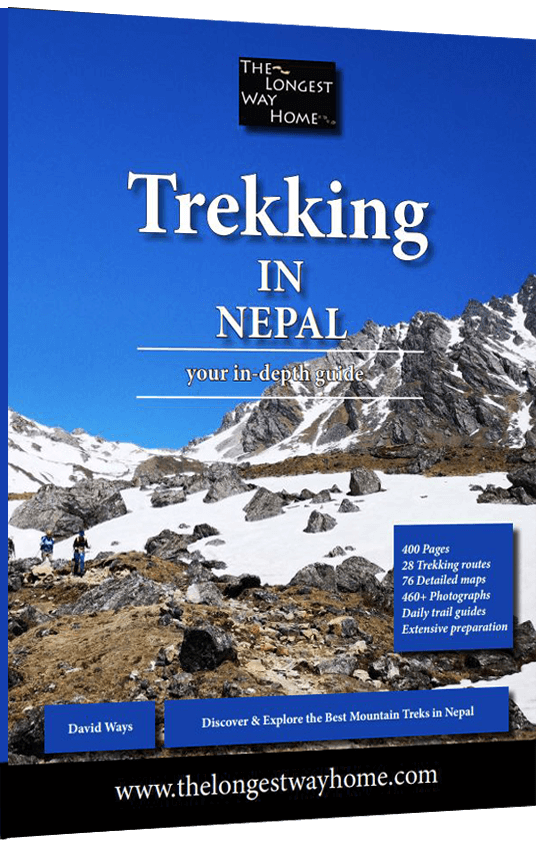
Trekking in Nepal Guidebook
- Choose Your Format: High-resolution Digital for your phone or a Print edition for your backpack.
- Scalable Trail Maps: Detailed views that don't require a data connection or GPS.
- Real-World Logistics: Accurate trekking costs and safety protocols updated for the current season.
Includes 29 trekking routes across Nepal.
See Trekking in Nepal Guidebook →
Full Nepal Guidebook
- Complete Country Guide: Everything you need for Nepal beyond the trek.
- Includes Trekking: Also covers First Time Trekking in Nepal.
- Updated for the Season: Practical, travel-tested information throughout.
Includes everything from culture and food to logistics and more.
See Full Nepal Guidebook →Was this page helpful to you? If so please tell others!