
About the Australian Camp to Dhampus Trek
The Australian Camp to Dhampus trek or Australian Camp Trek is located close to Pokhara in the Annapurna region. While Dhampus has been used as a starting point (trail head) for many other treks in area such as Mardi Himal or Annapurna Base Camp. Australian Camp is an alternative route, and indeed both are often end-points to a these Annapurna treks as well.
It's an enjoyable low altitude trek, taking you from a trailhead in Khande up through a forest area, to pasture land where Australian Camp is located along with views of the Annapurna range. From there, many spend the night, or continue on to the Gurung teahouse village of Dhampus with more views.
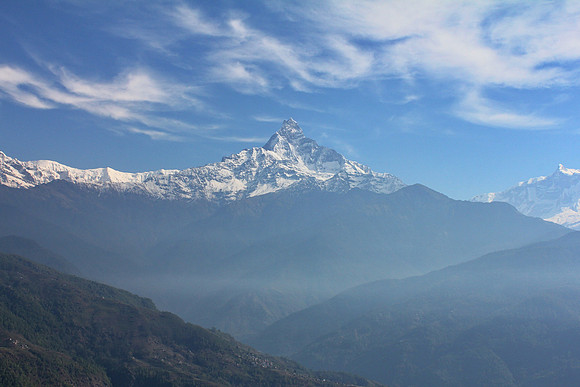
Views of Machapuchare from the village of Dhampus
This is a teahouse trek wihout having to embark on a long trek. It meanst enjoying traditional trekking accommodation, without the crowds of say Poon Hill. While some will say the views are the same as Poon Hill, the reality is they face the same direction but are a little father back. All the same, this trek offers things Poon Hill cannot.The Australian Camp to Dhampus trek can be completed in a day, with an overnight in either Australian Camp or Dhampus for sunset views, and sunrise views before departing the next day. It's easily accessible via Pokhara, has little commerciality compared to Poon Hill, nor the large tour groups.
Australian Camp to Dhamnpus is an ideal trek for those who are looking for quiet mountain views with a genuine teahouse experience that's nearby Pokhara. Those with small children often cite the trek as offering a great introduction to trekking. It still holds a rustic traditional charm similar to villages far up into the mountains.
There are no permits required for the Australian Camp to Dhampus Trek. There used to be a checkpoint in Dhampus but it's moved north of Australian Camp to Pothana. Quite honestly, I often go to Dhampus to simply relax in a quiet trekking enviroment without having to bothered with permits, crowds, or hassle. For this alone, Dhampus has been included in many of guidebooks for years as that secret spot!
Trek Overview
Australian Camp to Dhampus Trek: At a Glance
Difficulty
Easy. Suitable for beginners and families. Short, well‑defined trails with gentle gradients. No technical sections or high altitude concerns.
Duration
1-2 days. Flexible itinerary for a short break or overnight stay. Can be done as a day hike or extended to include a night at Australian Camp.
Max Altitude
2,100 m (6,890 ft). Reached at Australian Camp. Altitude is not a concern at this elevation.
Total Distance
8.5 km (5.28 mi). Short and manageable. Average walking time is 3-4 hours, depending on pace and stops.
Accommodation
Teahouse / Resort. Comfortable lodges and resorts available along the trail. Great views of the Annapurna range from the lodges.
The quick look above gives you the headline facts, while the rest of the page goes in-depth. However planning a Nepal trek takes more than just a quick read. Good trekkers take everything with them. From teahouse etiquette and permit rules to daily budgets and altitude acclimatization, my Trekking in Nepal guidebook covers every detail including route maps, gear checklists, and insider tips you won't find elsewhere for 29+ treks!
For broader coverage, the Nepal Guidebook includes 5 of the most popular treks alongside Kathmandu, Pokhara, Chitwan, and the rest of the country.
Contents
Australian Camp to Dhampus Trek: table of contents
Where is the Australian Camp to Dhampus trek?
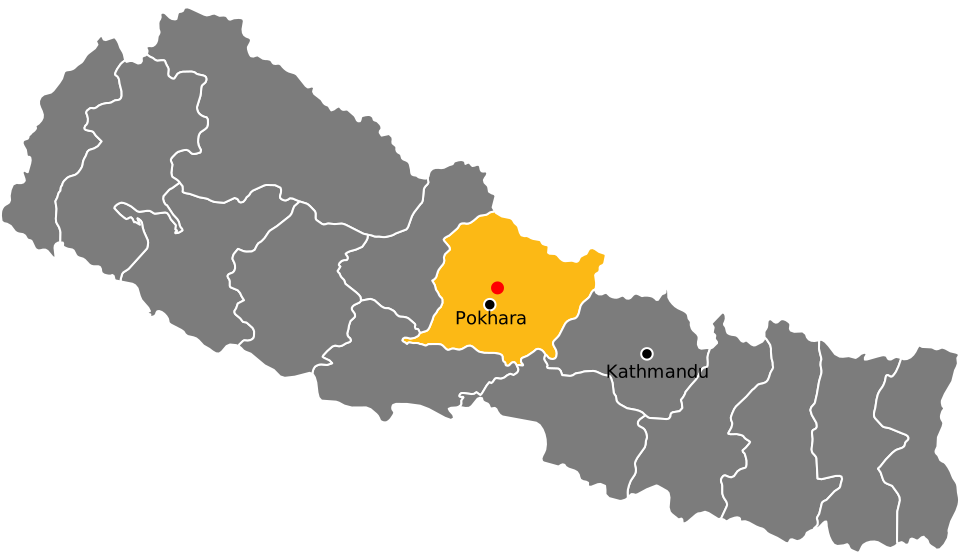
The Australian Camp to Dhampus is trek located north of Khande, to the north-west of Phedi, in an area in the province of Gandaki Pradesh. Austrlain Camp is just south of Pothana. Both Khande and Phedi are roadside trailhead areas where many buses and cars stop so it is easily accessible.
Buses or jeeps will take you to the trailhead at either Khande or Phedi, where there are small villages. It's here you will start your trek with traditional stone paving before quickly moving into forests.
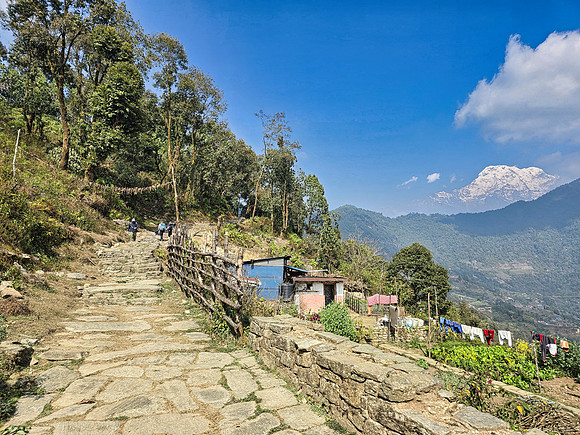
This trek does not entail any great effort aside from the steep steps at the start from both the Khande or Phedi side. Khande has slightly less steps. They essentially wind up through forest areas. The advantage of either side is that you can take your time on these steps. There's abot 2.5 hours on Kande and 3.5 hours on the Dhampus side to reach both destination depending on which one you start from.
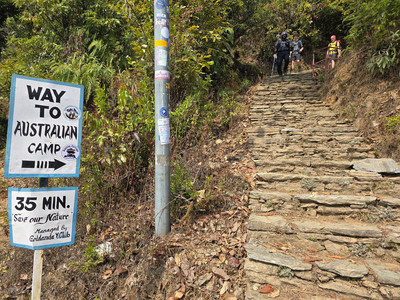
It is more or less pure forest all the way to either village. It is here on a clear day you will see the large peaks of the Annapurna Mountains.
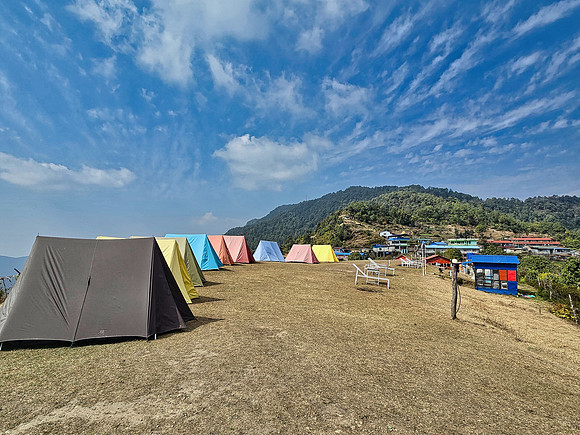
Australian Camp is also known as Thulo Kharka or "big pasture". You'll notice the pasture land for grazing buffalo and cows once you reach the village. The name Australian Camp comes from several origins. The area was once a popular camping area for some regular Austrian trekkers. However, in Nepal the word "Austrian" is quite difficult to pronounce as you may note if speaking to Nepali, or indeed in Lumbini if you visit the Austrian Monestary as the word "Austrian" is often pronounced "Australian" - hence Australain Camp became a nickname that stuck. Largely overshadowed by Dhampus as a trail head, in recent years the area has become a secondary trailhead in its own right offering both a starting point for other Annapurna treks, and a end point for those wanting one more night with the mountains before returning from their treks.
Of note is that on many maps you will probably see "Dhampus" written across large areas. You will see it written as Lower Dhampus, Dhampus Phedi, and Dhampus.
The name Phedi means "foot of the hill" or "base of the hill." The two areas grew apart in terms of development; Dhampus as a teahouse village versus Phedi as a trailhead. Similarly, there is a Lower Dhampus developing; however, the reality is that it is an area more than a stopover. Dhampus Phedi is used only to confirm the area. For most trekkers, it is simply Dhampus.
Dhampus Peak (6,012 meters) is a compltely different place 12 km west of Jomsom. It is situated within the Dhaulagiri massif between Tukuche Peak and Dhaulagiri.
Map of the Australian Camp to Dhampus Trek
This map shows you the most popular Austrlian Camp to Dhampus trekking route.
Please note this map should not be used as a practical trekking map though it is the offical route that has been GPX traced. While the main Australian to Dhampus route remains the same, there are variations depending on side trails, the road, weather conditions, time of year, natural events, and physical changes to the trek paths. Detailed trekking maps can be obtained in Nepal at very low costs.
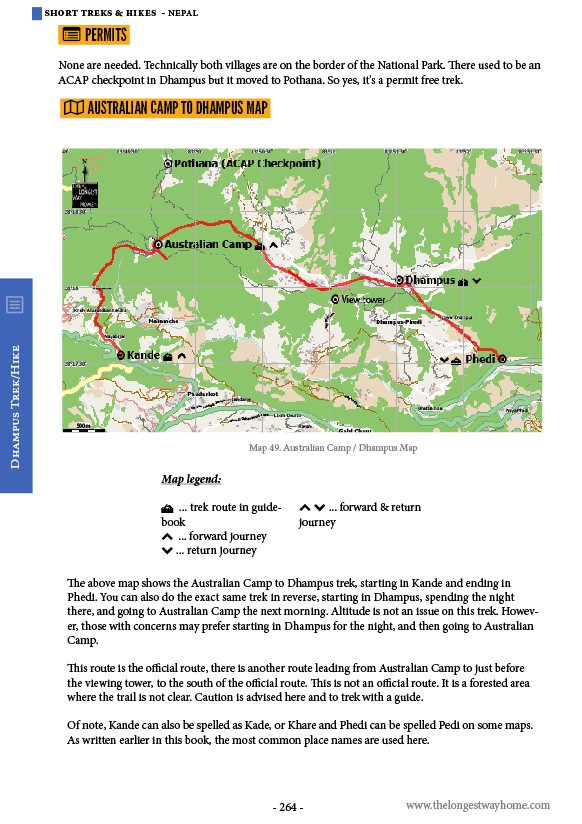
The above map of the Australian Camp to Dhampus trekking route is from my Trekking in Nepal Guidebook & Nepal Guidebook. The map can be zoomed right in to display the trails up close in the digital editions. In the paperback version, there are additional maps.
Facts about the Australian Camp to Dhampus Trek
Both Australian Camp and Dhampus are a well-known areas, with Dhampus having a longer pedagree. It is the first part of many other trekking routes and is also the first village with mountain views trekkers come across. Many trekkers leaving late for their trek will stay over at Dhampus or Australian Camp, while early starters stop over for lunch before trekking on to Pothana.
Highest point of the Australian Camp to Dhampus trek
At 2,000m (6,561ft) to 2,100m (depending where you stay), this is the highest part of Australian Camp and indeed teh trek. At 1,650 meters (5,413 ft), Dhampus Village marks the highest point of the Dhampus Trek. This should not be confused with Dhampus Peak, which is 6,012 meters (19,724 feet). So with about 400 meters is there much of a view difference? A little, with Dhampus offering a nice viewpoint looking up a little, while Australian Camp offers somethign akin to Poon Hill.
Highest sleeping point on the Australian Camp to Dhampus trek
The highest sleeping point along the Australian Camp to Dhampus trek is at Australian Camp, which is 2,000 meters (6,561 ft). Acclimatization is not an issue here.
How long have people been trekking the Australian Camp to Dhampus route?
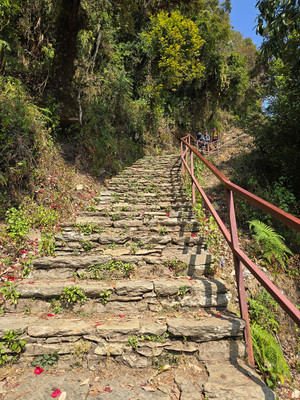
Australian Camp is the new comer here. The Dhampus area has always been a popular local area. The route is the first teahouse village for many other popular treks like Mardi Himal.
In terms of being an actual trek, It only came about in the last 5 years or so. Pundits will say it's longer, but only as a route from Dhampus to cross Australian Camp to Pothana. Australian Camp to Dhampus has only become popular in recent years as teahouses opened up in Australian Camp, and more trekkers were looking for short treks with views. Dhampus as a trek first appeared in my First Time Trekking in Nepal guidebook in 2016, and was integrated into my other books thereafter due to its popularity. It's now being expanded into Australian Camp as the permit office has moved to Pothana.
What mountains can you see from Dhampus Village?
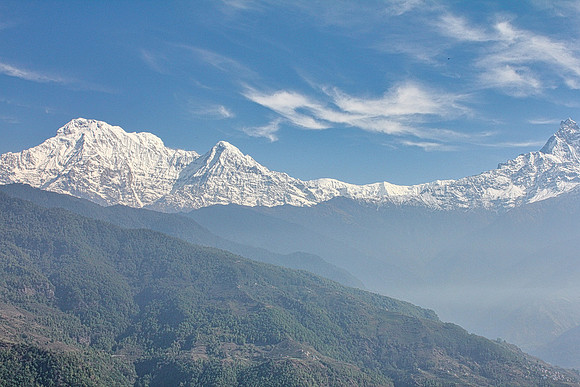
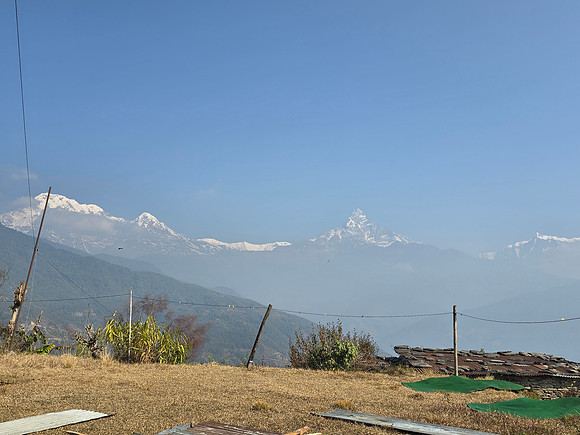
Both Australian Camp and Dhampus village have great views of the Annapurna mountain range, including Annapurna I (8,091m), Annapurna South, Annapurna IV, and Machhapuchhre (Fishtail, 6,993m). These are best seen at sunset. However, early mornings can also have great views. On clear days, the views can be seen in the afternoon.
Similarly, on clear days, there will be distant views of the Dhaulagiri range, along with Tukuche Peak (6,920m), Nilgiri (6,940m), Gangapurna (7,455m), Mardi Himal (5,587m), Lamjung Himal (6,983m), and Putha Hiunchuli (7,246m). Note that the latter ranges form part of a ridge view. Those claiming views of Manaslu would need exceptionally haze-free days and some trekking around the area.
For those wondering if there's a difference between Australian Camp and Dhampus views the ansewr is it's minimal. Australian Camp does offer more panoramic views, while Dhampus offers village shots, and indeed panoramic if you walk through the village.
Highlights of the Australaian Camp to Dhampus Trek
Highlights on the Australian Camp to Dhampus trek include:
- Easy trek to see the Annapurna Massif
- Short trek of only 2 days and 1 night
- No permits needed
- Traditional trekking villages
- Two view points
- Few tourists
- Forest Trails
- Village Trails
- Friendly locals
- Budget friendly
How to arrange a trek to Australian Camp to Dhampus
Over the past few years trekking companies have been adding Australian Camp and or to Dhampus as a trek. However, it's usually not what it seems. Extra days, or costs are involved. Again, being put in group wihout being told upfront is the latest trend. The reason is that there is not much profit for trekking agents to offer a 2-day, 1-night trek that is so close to Pokhara. It is often deemed not worth the effort compared to a 2-night, 3-day trek to Poon Hill, which yields more profit.
All the same, all you need to do is wander into a trekking agency and ask if they can arrange a 1-night trek from Australian Camp to Dhampus, and they will. We'll cover costs below.
Due to the fact that no permits are needed, many trekkers can make their own way there and back. The only real logistics are getting transport there and back to Pokhara by bus. If going by private car, it's not an issue. Just remember that those steps can be slippy, and don't trek in the dark or outside the offical route.
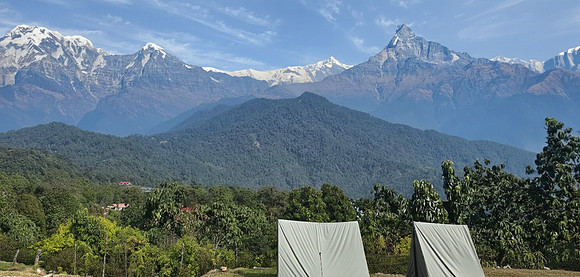
Mountains at Australian Camp
Arranging a regular Australian Camp to Dhampus trek
There are many options for a regular trek ranging from package tours to independent trekking. Booking online is not recommended for this trek as it can be expensive and convoluted. Again, the biggest worry with online treks these days is paying for something, and then arriving to find something quite different e.g. you are trekkign with a group. Treks to Australian Camp to Dhampus can easily be arranged in Pokhara or done by yourself. Prices below are based on a one-night, two-day trek.
Package tours bought online:
Package tours to Australian Camp to Dhampus bought online usually have additional days added to them. Most of these "extra" days are not necessary and are only placed onto the trek to bump up the price by using a guide's fee by the day. Remember, if you are fit, the whole trek can be done in a day. The real reason to stay over night are sunrise views, sunset view, and to simply relax.
Package tours usually include a guide, food, and accommodation. Costs are around USD $200-300 per person.
Pros of an online package tour are that everything is done for you ahead of time.
Cons include it greatly increases the cost of the Australian Camp to Dhampus trek, which does not really have to be booked online. You can basically arrange a guide on the same day you leave Pokhara should you wanted to.
Package tours bought in Nepal:
If you want to buy a package trek from Australian Camp to Dhampus when in Nepal, then do it from Pokhara and not Kathmandu. You can easily arrange a package trek to Australian Camp or Dhampus yourself. If you have time, then try to visit a few trekking agents along lakeside to compare prices.
Permits are not required, so basically all you need is a guide, transport, accommodation, and food. Trekking agents tend to pass off new guides for this trek as it is not very profitable for them. Do make sure you are comfortable with your guide before agreeing to anything.
Ensure that you understand what is included in the total price of the trek. This should include accommodation, food, bus/taxi/jeep fees, etc. There are no flights involved with the trek unless you are coming from Kathmandu to Pokhara. Again, make sure it's just you and the guide, and that nobody else will be joining your trek.
You could break down your package trek for just a guide, transport, and accommodation, looking after the food yourself. Just remember it is protocol when trekking to eat where you stay. Costs are around USD $120+ for a 1-night, 2-day trek which includes a guide, transport, food, and accommodation.
Pros with a package trek include meeting your guide before hand and being able to talk or ask questions in person. It means all the logistics of transport are taken care of for you. Buying a package trek from Pokhara to Australian Camp to Dhampus is much cheaper than online.
Cons include trekking agents trying to add extra days to the trek. At best the trek is 2 days. However, many will try to include "side treks" to other villages, or take you up to the permit area in Pothana The issue with this is that you will be adding days, need to pay permit fees, and the views won't change much. During peak seasons, you may also find it difficult to find a qualified guide for such a short trek. It is just a matter of patiently asking around.
Hiring a guide for Australian Camp to Dhampus yourself:
Perhaps the best option for the Australian Camp to Dhampus trek is to hire an independent guide yourself rather than paying extra for a package tour. It is a very short and uncomplicated trek, so there really is no need to pay over the odds for an all-inclusive package. Just remember, that to get a registered, qualified and insured trekking guide it has to be from a licensed trekking agency these days. Getting a guide of the street is easy, the issue in this day and age is that they won't be insured and all issues relating to that will be on you.
If you go with just a guide, then you will need to pay for transportation, accommodation, and meals yourself. You will likely have to pay for the guide's transportation too. This is not hard as there are only a few tea houses to choose from. Menu prices are fairly set. Costs will be around USD $60 for the guide (two days, one night) and $50-70 for your own transport, accommodation, and meals.
Pros with just having a guide include having someone work out the transport for you and showing you the mountains, while still being more independent than a full package trek.
Cons include having to deal with the initial prompts to trek for longer.
Independently trekking to Dhampus yourself:
Lastly, you could try trekking to Austrlaian Camp to Dhampus yourself. The route is fairly well marked on the way up from with Khande or Phedi. If you have never trekked before or are not used to the outdoors, it is safer to take a guide. Think of a trekking guide as a teacher. They'll teach you how to get transport, book teahouses, which mountains are called what, how to order, fauna, animals, what to be careful of ... the list goes on.
Pros here include independence and a very low budget.
Cons include having to deal with transport, navigating the trail, and dealing with teahouse owners yourself. For transport, some people simply prefer not to deal with buses that have no set timetables.
No matter what option you take, keep in mind that you can start from either Khande, or Phedi. You can skip Dhampus or Australian camp or do both. Everything is close together.
Please note: Some rogue trekking agents will try to include the cost of an Annapurna Conservation Area Permit and TIMS. These are not needed. The checkpoint for the Annapurna Conservation Area is at Pothana.
If looking for a guide for either the Australian Camp to Dhampus Trek or just one of these treks, I recommend you read my article on how to find a trekking guide in Nepal or use my Find a Trekking Guide Service.
My Nepal Guidebook and Trekking in Nepal Guidebook contain detailed trekking guides to Australian Camp to Dhampus.
Best time of year to go trekking to Australian Camp to Dhampus
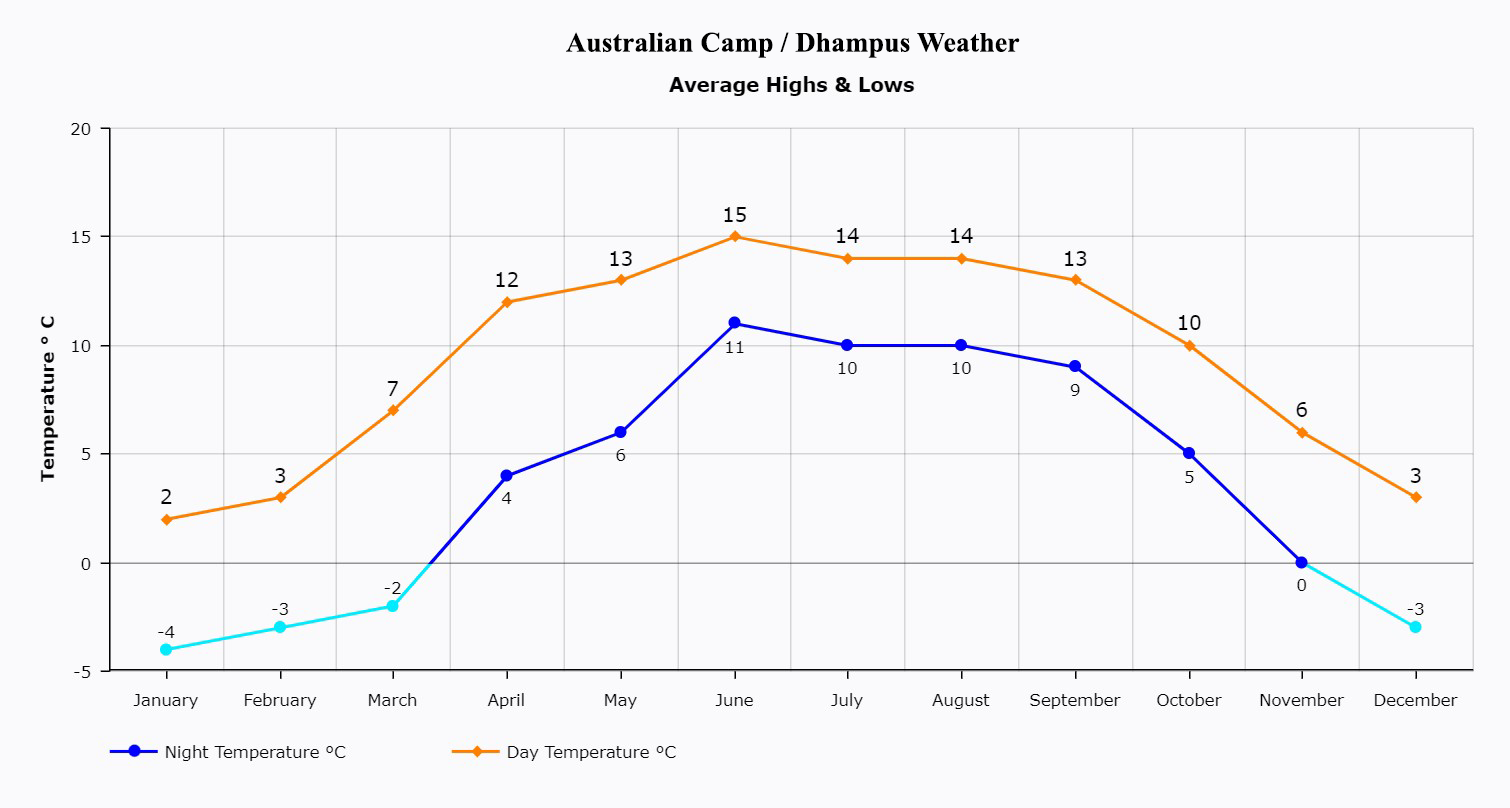
Australian Camp and Dhampus have the same weather climate as Pokhara, although in winter at either 2,000m or 1,650m it will be cooler than Pokhara due to the altitude. However, snowfall is rare.
Due to this mild climate, both Australian Camp and Dhampus are open for trekking year-round. Do note, however, that it can be one of the wettest areas in the Annapurna region. There are peak seasons which suit this trek, and the following months have traditionally been used as a guide for the best times of the year to do the Dhampus trek.
Australian Camp to Dhampus Weather by month (Pokhara)
| Month | Avg Temp °C | Avg Temp °F | Rainfall (mm) | Good for Dhampus Trek? |
|---|---|---|---|---|
| January | 13.1 °C | 56 °F | 28 mm | Yes – cool & clear |
| February | 14.9 °C | 59 °F | 24 mm | Excellent |
| March | 19.5 °C | 67 °F | 52 mm | Perfect – warm days |
| April | 23.0 °C | 73 °F | 106 mm | Still great |
| May | 24.1 °C | 75 °F | 312 mm | Hot & humid – possible |
| June | 25.2 °C | 77 °F | 626 mm | Monsoon |
| July | 25.3 °C | 78 °F | 876 mm | Avoid – heaviest rain |
| August | 25.2 °C | 77 °F | 807 mm | Avoid – wet & leeches |
| September | 24.1 °C | 75 °F | 491 mm | Shoulder – still rainy |
| October | 21.6 °C | 71 °F | 140 mm | BEST month – clear views |
| November | 17.5 °C | 64 °F | 6 mm | Perfect – dry & pleasant |
| December | 13.8 °C | 57 °F | 6 mm | Very good – crisp |
Best months for Australian Camp to Dhampus Trek:
October–February (clearest Annapurna mountain views) and February–April (comfortable temps)
June–September = daily rain, however, mountain views can still peak out from villages if the cloud breaks.
There's no real reason you can't go in June, July, August other than it
will be cloudy, as teahouses villages they are still visitable.
Do note that at Australian Camp at 2,000m and Dhampus at 1,650m neither are high altitude. So cloud will roll in similarly to Pokhara. If there are blue sky breaks during monsoon in Pokhara, chances are you will catch a glimpse of mountains due to their proximity to Australian Camp or Dhampus. If it's cloudy in Pokahra, chances are it will be the same at either Australian Camp or Dhampus.
Humidity, Cloud & Rain Monthly Index Chart for Australian Camp & Dhampus (Pokhara)
Humidity and Cloud Weather Data Table for Australian Camp and Dhampus
| Month | Humidity % | Cloud % |
|---|---|---|
| January | 26 | 9 |
| February | 33 | 20 |
| March | 26 | 9 |
| April | 36 | 16 |
| May | 29 | 11 |
| June | 57 | 41 |
| July | 85 | 73 |
| August | 86 | 58 |
| September | 80 | 33 |
| October | 38 | 4 |
| November | 45 | 5 |
| December | 34 | 4 |
Clouds and rain play a part in any trek. Due to its relative low altitude, Australian Camp and Dhampus can be affected by cloud cover and rain. Mountain sunrise views can be determined pre-dawn; if there are stars in the sky, then there is a good chance at a great sunrise.
Due to the teahouse locations with most having mountain views, any cloud break can easily be spotted with the mountains appearing. The lure of Australian Camp or Dhampus is not only mountains though, but the proximity of such a traditional teahouse village to Pokhara.
Months with the best weather to trek Australian Camp to Dhampus
Both are open year-round. The best months for mountain views are listed below. Snow rarely occurs in Australian Camp or Dhampus so the area is never closed. Rainfall can make forest paths and steps slippery, so exercise caution during rainfall.
Mid Sept-October - November/(early)December: This is Nepal's peak and best time to go trekking; however, if the Monsoon is late, then Australian Camp and Dhampus can remain cloud covered until mid-October. Otherwise, the views at this time of year in Dhampus are usually very good.
February-March-April: This is the end of the dry season and the second best time of year to go trekking. However, if there is rainfall in Pokhara, then Australian Camp and Dhampus are likely to have cloud cover.
November/December to January/February: The skies are quite clear and it can get cold in both Australian Camp and Dhampus. There is, however, little chance of snow in Dhampus. Do be careful of ice on the stone steps. Mountain views are excellent at this time of year.
May - June: This is Nepal's hot pre-monsoon season and it can get quite warm. The valleys around Australian Camp and Dhampus are starting to bloom with flowers, which makes for a very nice trek. However, cloud cover can be an issue.
June - Mid-September: This is Nepal's Monsoon season and not the best time to go trekking to Australian Camp or Dhampus for mountain views unless you are looking for a quiet break. The risk of leeches in this area is low. The stone steps can become slippery; downpours also increase greatly. Of all treks, going to Dhampus alone for some rest and relaxation in a teahouse or resort in the monsoon can be enchanting.
For more details please see my guide on the best time of year to go trekking in Nepal.
What trekking gear is needed for the Australian Camp to Dhampus trek?
If you take a package tour, your trekking agency will give you a list of things to bring for your trek. Likewise, my guidebook Trekking in Nepal has an extensive list. Good companies may also supply you with some items like trekking poles, which are useful on the stone steps.
If taking a trip along the Ausralian Camp to Dhampus route in Nepal, you will need the following:
Equipment and gear depends on the time of year in regards to clothing and equipment (see the weather charts above). The following are necessities:
- A pair of boots/shoes (preferably with good grips)
- A wind cheater style jacket or light rain jacket
- Long sleeve shirts
- Trekking pants
- Head torch
- Shorts
- Socks
- Rubber sandals
- Water bottles (water purification system - though bottled water is available)
- Map
- Sunglasses
- Sun protection
- Trekking poles can be very helpful when coming down from Dhampus due to many stone steps which can be slippery.
Please note the above is a very basic list. Do remember the trek is very short, so a full kit is not really necessary. Many people just go with a single change of shirt, underwear, and socks, saving their laundry for their return to Pokhara. For a full comprehensive list, please see my article on trekking equipment you need for Nepal.
Permits needed for the Austrlian Camp to Dhampus trek
No permits are needed for the Australian Camp to Dhampus trek. Local communities have paid for the trail signs, and the area is on the border within the Annapurna National Park until you reach Pothana where there is an Annapurna Conservation Area checkpoint.
For many years the checkpoint was at the mid-point in Dhampus village. While Australain Camp was permit free coming from Khande. However, once the ACAP and TIMS checkpoint in Dhampus moved to Pothana, the area become permit free.
What is the food like on the Australian Camp to Dhampus trek?
Food on the Australian Camp - Dhampus trek will introduce you to the same trekking meals you will get across the Annapurna region. While Dal Bhat is the staple meal, all the other typical trekking meals will be found on the menus, like pasta, pancakes, momos, and chop suey. Being closer to Pokhara, most items on the menu are usually available.

This is a plate of typical Dal Bhat on the Dhampus trek - rice, potatoes, beans, curry, fresh vegetables (spinach), and soup
While treks like Poon Hill will have lodges with special menus, Austrlaian Camp and Dhampus is far more traditional in terms of trekking meals. For only 2 days, it can bring a wonderful experience to anyone who has not gone on a longer trek and wants to know what it feels like. Of the two villages, Dhampus has slightly better facilities than Australian Camp.
Typical Australian Camp and Dhampus Menu
| Item | Price |
|---|---|
| Porridge with milk | 350-400 Rupees |
| Fried eggs (2) | 250-300 Rupees |
| Cheese Omelet | 450-500 Rupees |
| Tibetan Bread | 400-450 Rupees |
| Dal Bhat (Meat) | 750-900 Rupees |
| Dal Bhat (Veg) | 600-750 Rupees |
| Boiled Potatoes | 350-400 Rupees |
| Fried Noodles (Veg) | 350-400 Rupees |
| Fried Potatoes with Cheese | 550-600 Rupees |
| Pasta with sauce | 500-600 Rupees |
| Tea/Coffee | 50/100 Rupees |
| 1 liter beer | 600+ Rupees |
| Soft Drinks (Coke, Sprite etc.) | 150+ Rupees |
| 1 liter tap water (from underground spring or stream) | Free |
| 1 liter boiled water (for filtering) | 50 Rupees |
| 1 liter bottled water | 100-150 Rupees |
Bringing some personal snacks can be a great help in Australian Camp or Dhampus, particularly for the sunrises or sunsets by your teahouse. This is the type of Dal Bhat you will get when trekking.

This is a bowl of porridge (oatmeal) on the Dhampus Trek topped up with extra milk!
There is very little fruit at either village. Cheese also seems to be rather dubious if you are not used to Nepali cheese. Other than those items, most others menu items are worth a try!
What is accommodation like on the Australian Camp - Dhampus trek?
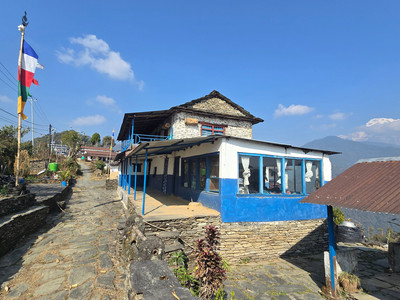
Accommodation on the Australian Camp to Dhampus trek is traditional teahouse style. Dhampus has the edge in choices with long standing teahouses, lodges and even a resort on offer. However, do not go expecting en-suites with hot showers, though some are available. Both Australian Camp and Dhampus accommodation is much like you will find further out on the Annapurna Circuit, Mardi Himal, or Annapurna Base Camp treks.
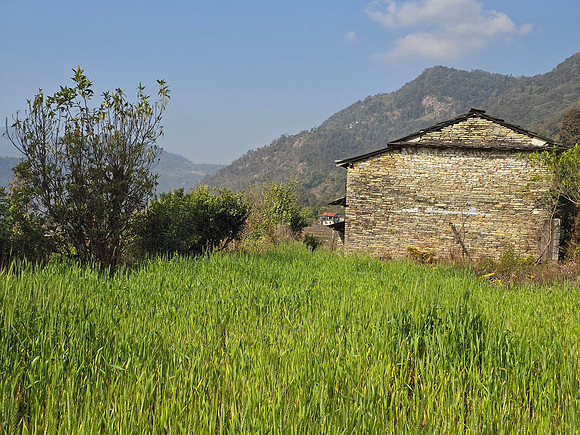
One thing to note is that there is now a luxuary resort (Nana Mountain Resort) in Dhampus with prices ranging from USD $100-200 per night. I would be hesitant to say it's good value for money compared to resorts in Pokhara or Kathmandu. But, for those with the cash it seems to work well!
Personally, I prefer the local teahouses which offer rustic tradition at its best.
Hot showers are not available in all places and depend largely on either solar-heated water or gas. Do ask about the cost for a shower.
Battery Charging
Electricity is not much of an issue at eitehr village due to their proximity to Pokhara. Many do not even charge for charging batteries, though it can happen, but it is usually minor.
Read more and see what trekking accommodation is like in Nepal.
SIM cards & Wi-Fi on the Australian Camp to Dhampus Trek
Both Australian Camp and Dhampus are on the same main telecommunication network found around Pokhara. While not all teahouses will have Wi-Fi, most will.
Mobile reception
What SIM card is best for telephone calls and data? NTC and NCELL both offer 4G signals in this area.
Internet
Is there Wi-Fi in Australian Camp or Dhampus? It is there, but not always working. That said, most teahouses have it these days; just do not expect a lot of speed.
How difficult is the Australian Camp to Dhampus trek?
Note for Trekkers: I have provided the essential planning details in this article for free. If you would prefer to have all 28 other major treks in a printable PDF or a durable paperback for the trail, you can find my full Trekking in Nepal Guidebook here. It is designed to work offline at high altitudes where you will not have a signal.
There is certainly no need for any technical climbing or even difficult trekking. There are no high passes on this trek with Australian Camp sitting at 2,000m and the Dhampus village only reaches 1,650 meters in altitude.
The trails are mainly steps, pasture lands, and forest pathways. With little doubt, the hardest part of the trek are the steps if they are wet. Trekking poles are advised. Likewise, do see if your footwear easily slips on stone before going. Some modern trekking boots struggle with wet stone steps.
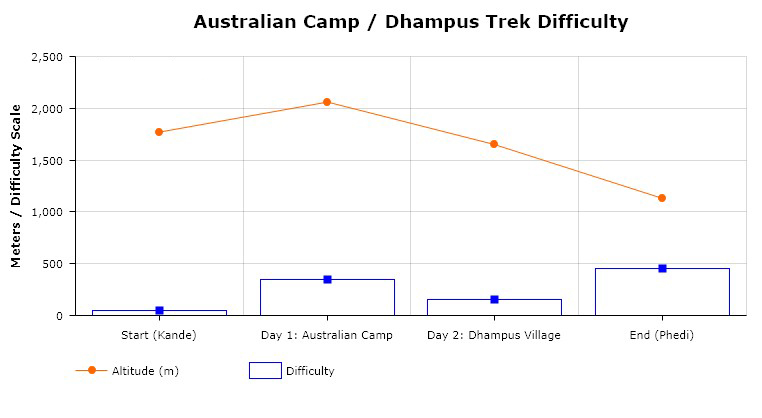
Astute readers might be wonderign why Day 2's Phedi route has a higher difficulty rating than Day 1 when you much trek up to Australian Camp. The reason are the steps going from Dhampus to Phedi. There's a lot more of them here, than from Khande to Australian Camp. Going down steps requires more effort than going up! Trekking poles will help with balance or slippery patches.
Also of note: to reach Dhampus or Australaian Camp for sunset will mean arriving in Phedi or Khande by at least lunchtime. A morning trek is the preferred option for many, which gives you time to wander the villages, unpack, eat lunch, and prepare for sunset.
It takes about 2-4 hours to reach Australian Camp. It takes about 3-4 hours of trekking to reach Dhampus village. So there's about an hour more of steps if you start from Phedi compared to Khande. It takes about an hour to trek from Australian Camp to Dhampus or vice versa.
How fit do I need to be to go on the Australian Camp to Dhampus trek?
This is not a particularly long nor taxing trek. One of the hardest parts will be the steps leading up to either village. And, the steps leading down. However, if you are fit, then it's a regular trekking day to go from Khande to Australian Camp to Dhampus to Phedi in a day. The only issue, is you'll miss sunrise and sunset.
Dhampus village itself is paved with flagstones and does not offer much difficulty getting around.
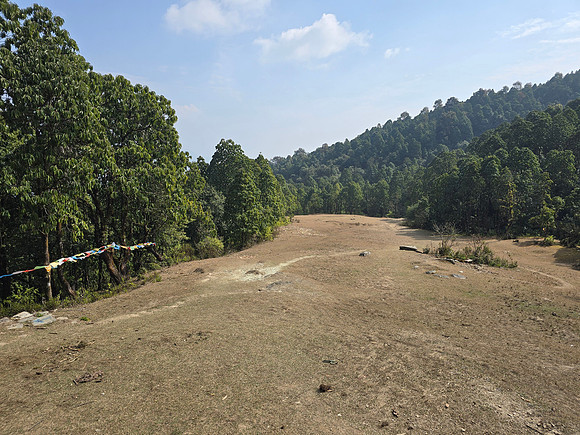
Australian Camp is set on pasture land which is relatively flat.
A certain level of fitness is definitely required; however, there is no climbing involved (other than steps).
Many people do find the number of steps taxing if they take them on all at once. The key is to take you time. There's absolutely no rush. Stop multiple times, have a packed meal etc.
Like any trek, I would advise anyone going trekking to see a doctor before they go for a check-up and to talk about dealing with altitude.
Most people who are considering the Australian Camp to Dhampus trek fall into the following categories: those pressed for time but who want a feeling of what a trek is like, those with small children looking for a short hike, those looking for better views than Sarangkot or Panchase. Finally, there are those who just want a "mountain break" for a couple of nights.
The hardest point for many people are the steps. Starting from the Dhampus side means an hour of more steps than the Australian Camp side. But once you are in either village, it is mainly flat.
Altitude sickness is not really a problem on the Australian Camp to Dhampus trek as you will only be reaching 2,100 meters around Australain Camp. As a precaution, do read about altitude sickness in Nepal.
Many people of all ages go on the Australian Camp to Dhampus trek. Many more opt to just visit one village and stay the night. It is very close to Pokhara, so there is no rush.
If you go back to Pokhara the way you came, then the route is much easier.
How much does the Austrlaian Camp to Dhampus trek cost?
Putting a cost on the Australian Camp to Dhampus trek is relative to your needs.
There are no permits, entry fees, or TIMS cards needed for the standard route, so you will already be saving money there.
Package tours bought online are without doubt the most expensive option for those looking for a Australian Camp to Dhampus trek. Do be aware of agencies offering 3+ treks; these often have many "filler" days just to stretch out the itinerary. See the itineraries below.
For example, some will suggest leaving from Sarangkot, trekking to Dhampus for an overnight stay, and then going to Australian Camp. While this is an option, it means walking on a road for most of the day from Sarankot. That used to be one of the old treks from 30 years ago, but with the road, it's not so pleasent these days.
Package tours for Australian Camp to Dhampus bought within Nepal are the next most expensive option - they will again try to add in other stops. Going with just a guide will involve paying for the guide, transport, accommodation, and food. Finally, trekking to Australian Camp to Dhampus alone is the cheapest option.
Online package tours of between 1-3+ days can cost up to USD $300+ per person. This usually does not include water but includes a guide, accommodation, and meals. Personally, I think this is not worth it at all. Moreover, many add in extra costs for private jeep transport over public buses. A taxi is more than enough to reach either Khande or Phedi.
In-country package tours for 2 days can cost $160-$250+ per person. This includes a guide, meals, transport, and accommodation. This is also expensive if you are alone. Most on the higher end of the price scale will include private cars or jeeps. If you are traveling as a pair, the price per person should drop. Some will also include a porter, which really is not needed on this trek unless you legitimately cannot carry a small backpack for the night.
For a guide-only service, it can cost from $28 to $50 per day for a guide. Basically, the more you pay, the more experience your guide should have. However, keep in mind this is not a particularly difficult trek, so you most likely do not need a high-end guide.
Independent costs for Australian Camp to Dhampus make it a very affordable low-end budget trek.
Two or more people can share the room price or a private car, which is something to consider if budget is an issue.
If you opt for a porter, their fees are roughly USD $20 per day.
Average 2-day trek cost to Australian Camp Dhampus with a guide
| Item | Cost USD $ |
| Permits (ACAP & TIMS) | 0 |
| Guide x 2 days | 60 |
| Accommodation x 1 night (private) | 12 |
| Meals 3x2 | 45 |
| Water (4 liters a day) | 11 |
| Transport (Private - RTN) | 20 |
| Total | 148 |
Extras: Do not forget to include a 10% tip for your guide, plus any soft drinks, sweets, or hot drinks you may want to purchase along the way.
The above costs can be reduced by sharing accommodation and taking public transport. Below is a "rock bottom" budget for the trek, but first, here is a further breakdown to help you understand local prices.
- Room prices vary between 500 and 1,100 rupees (USD $4-11) depending on whether the room has an attached bathroom.
- The cost of one liter of bottled water reaches a maximum of around 100 rupees, though you can often find it for 50-80.
- A plate of vegatarian Dal Bhat starts at around 450 rupees and goes up to 900+ rupees.
How to reduce costs on the Australian Camp to Dhampus trek?
- Use a Steripen, Lifestraw, or filtration system instead of buying water. Just remember they do not remove all chemicals or viruses, and on a trek this short, the cost of the device is nearly the same as the bottled water you would have bought.
- Consider a porter-guide if you are on a budget. Note that these are trainee guides and may have limited English. For a short trek like Australian Camp to Dhampus, they are often sufficient.
- Take public buses rather than private transport to the trailheads.
- If you have prior experience trekking in Nepal, both Australian Camp and Dhampus are easy enough to navigate without a guide. However, you will miss out on local insights regarding the culture and the mountain peaks.
Cost of a 2-day trek on the Australian Camp to Dhampus trek on a budget
| Item | Cost USD $ |
| Permits (ACAP & TIMS) | 0 |
| Guide | 0 |
| Accommodation (shared bathroom) | 5 |
| Meals 3x2 | 40 |
| Water (filtering your own) | 0 |
| Transport (Public - RTN) | 5 |
| Total | 50 |
The biggest saving is not having a guide, but you will miss out on learning about the surrounding area. If you want to cut costs further, bring a friend to halve the accommodation price. If you want to increase comfort, opt for the more diverse "tourist" food on the menu or stay in ensuite lodges.
Do not forget to include travel insurance in your budget. While Dhampus is low altitude, people often slip on the stone steps. Here is my recommendation for travel insurance in Nepal.
The Australian Camp to Dhampus trekking routes & itineraries
Note for Trekkers: I have provided the essential planning details in this article for free. If you would prefer to have 28 other major treks in a printable PDF or a durable paperback for the trail, you can find my full Trekking in Nepal Guidebook here. It is designed to work offline at high altitudes where you will not have a signal.
Due to their location as trailheads, there are many "official" trekking routes connected to both Australian Camp and Dhampus. However, we are looking at a Austrlaian Camp to Dhampus trek as a 2-day, 1-night, permit-free trek. Therefore, the route is Khande - Australian Camp - Dhampus - Phedi. You can also do the trek in reverse starting in Phedi. The only difference is the accommodation in Dhampus is better, while Australian Camp is the easier route to reach. We will explore other routes, but this is the dedicated offical Australian Camp to Dhampus trek.
Australian Camp to Dhampus Official Route
The official trail goes from Khande to Australian Camp where you spend the night. Then the next day you go to Dhampus then to Phedi. At Australian Camp you watch sunset and sunrise over the mountains.
Dhampus to Australian Camp Trek
This is the same route but in reverse. You leave from Phedi, trek to Dhampus for the night. The next day you trek to Australian Camp and then to Khande. With this route you'll watch sunset and sunrise from Dhampus rather than Austrlaian Camp.
Sarangkot to Dhampus to Australian Camp Trek
I mentioned this itinerary briefly earlier. It's an old trekking route prior to the roads that have come to surround Pokahra. If you start from Sarangkot and trek to Dhampus you'll likely be trekking for 90% of the time on a road. Personally, I would give this a skip.
Panchase to Australian Camp to Dhampus Trek
This is a bonafide low-altitude trek worth considering if you are looking for a low altitude trek covering 2 nights and 3 days. Panchase is a short trek in its own right. It covers more farmland, and villages enroute to the peak. The views at the top of Panchase are far more distant than either Australian Camp or Dhampus. However, it is interesting to compare for those looking for a gentle easy going trek.
Best trekking route for the Australian Camp to Dhampus trek?
It really boils down to either starting in Khande, or Phedi and this is decided upon by working out where you want to spend the night. If you like open spaces, a slightly higher mountain view, and teahouses similar to other longer treks then starting form Khande for an over night in Australian Camp is best.
If you like stone villages, traditional farming villages, with slightly better faciltiers then starting from Phedi and overnighting in Dhampus is the way to go.
Typical Australian Camp to Dhampus Trek Itinerary (Khande Route)
Here is the typical Australian Camp to Dhampus trek route itinerary in detail
| Day | Route | Distance (km) | Highest Altitude |
| 1 | Pokhara to Khande | 27 km (bus/taxi) (50 / 50 minutes) | 1,770 m |
| 1 | Khande to Australian Camp | 4.5 km (2-3 hours avg) | 2,060 m |
| 1 | Explore & enjoy sunset | 0.2 km (min avg) | 2,060 m |
| 2 | Sunrise at Australian Camp, trek to Dhampus for lunch | 4 km (2-3 hours avg) | 1,650 m |
| 2 | Dhampus to Phedi | 2.5 km (2-3 hours avg) | 1,100 m |
| 2 | Phedi to Pokhara | 20 km (bus/taxi) (45 / 45 minutes) | 1,100 m |
* Reducing days: It is relatively easy to reach both Australian Camp and Dhampus in a day trip. However, making it for sunrise or sunset is unlikely. Trekking at night is never recommended due to no light and accidents. If the weather is absolutely blue sky clear, then a day trip to Dhampus or Ausltrain Camp is possible.
Here is the Dhampus to Australian Camp trek route itinerary in detail
| Day | Route | Distance (km) | Highest Altitude |
| 1 | Pokhara to Phedi | 20 km (bus/taxi) (45 / 45 minutes) | 1,100 m |
| 1 | Phedi to Dhampus | 2.5 km (2-3 hours avg) | 1,650 m |
| 1 | Explore Dhampus & enjoy sunset | 0.5 km (1+ hours avg) | 1,650 m |
| 2 | Sunrise at Dhampus | N/A | 1,650 m |
| 2 | Dhampus to Australian Camp | 4 km (2-3 hours avg) | 2,060 m |
| 2 | Australian Camp to Khande | 4.5 km (2-3 hours avg) | 1,770 m |
| 2 | Khande to Pokhara | 27 km (bus/taxi) (50 / 50 minutes) | 1,100 m |
* Day Trips: Again it's possible to reach Dhampus in a day, and return that same day.
* Short Stays: Both Australian Camp or Dhampus accommodation will mean you can also opt to just visit one location, and spend the night (or more) there. It doens't have to be a complete Australian Camp to Dhampus trek.
Which is better: Australian Camp or Dhampus?
For mountain views, Australian Camp has the edge. The panorama is up there with Poon Hill, though you're set a little further back. Sitting on a ridge at 2,000m-2,100m, it simply has more sky.
The trade-off is that the teahouses tend to be a bit more basic than what you'll find in Dhampus. Dhampus has a slightly more enclosed feel to the views, but there's something to be said for looking up at the Annapurna Massif from a traditional stone village. It feels genuinely imposing from here. The village itself is the real selling point: flagstone paths, stone houses, vegetable gardens spilling over walls. It feels lived-in. Facilities are better too, with more rooms offering private bathrooms and Wi-Fi that actually works.
Bad weather or off-season? Go to Dhampus and sleep well.
Clear skies and peak season? Stay at Australian Camp first, then walk down through Dhampus the next morning and you get both. Personally, if I had two days, and hadn't been to either, I'd do both via the Australian Camp to Dhampus route written above.
How to get to Dhampus and back to Pokhara
All treks start from what are known as trailheads. In the case of the Austrlaian Camp to Dhampus trek, the following are the trailheads:
- Kande (for Australian Camp)
- Phedi (Dhampus)
Kande
Buses from Pokhara take about 45 minutes and cost around 250 rupees. A private car will charge approximately 1,800 rupees.
Phedi
Buses from Pokhara take about 45 minutes and cost around 250 rupees. They depart from Baglung Bus Park or Zero (near Prithvi Chowk), which you will need a taxi to reach or walk for 1 hour. A taxi to Phedi would cost 1,500 rupees.
Kande or Phedi to Pokhara
Buses will stop by at both Khande and Phedi en route to Pokhara. Taxis or those offering shared rides will also be in the area. Similar prices apply as the route there.
For more treks, here is a list of Treks in Nepal.
A fully detailed "trek through" trekking guide to Dhampus is available in both my Nepal guidebooks (print & digital) along with my Trekking in Nepal guidebook below.
Frequently Asked Questions about Australian Camp to Dhampus Trek
The Australian Camp to Dhampus Trek typically takes 2 days and 1 night, though it can be completed as a long day trip from Pokhara for those with limited time.
The trek is considered easy, reaching a maximum altitude of 2,100m (Austrlian Camp) or at Dhampus 1,650m. The primary challenge is the steep stone staircase from Khande and Phedi, making it an ideal choice for beginners or as a training trek.
No ACAP permits or TIMS cards are currently required. However, if you choose to extend your trek to Pothana, permits may be checked at the ACAP post.
The best times are March to May and September to November for the clearest mountain views. Because of its low altitude, it is accessible year-round, though the monsoon months (June–August) can make the stone steps quite slippery. Accommodation is open year round.
Take the Guesswork Out of Your Nepal Trek
This article covers the essentials, but the trail is always changing. For the most reliable experience, I’ve compiled my years of on-the-ground research into the Trekking in Nepal Guidebook.
- Choose Your Format: High-resolution Digital for your phone or a Print edition for your backpack.
- Scalable Trail Maps: Detailed views that don't require a data connection or GPS.
- Real-World Logistics: Accurate trekking costs and safety protocols updated for the current season.
Includes this trek plus 28 other routes across Nepal.
See Guidebook & Print Options →Was this page helpful to you? If so please tell others!