
About Changu Narayan
North of Bhaktapur, perched on a forested hilltop, stands Nepal’s oldest temple, Changu Narayan. With definitive proof of its existence since the 5th century, this Vishnu temple rivals Swayambhu’s claims. Extensive restoration, completed in 2018 with further enhancements, ensures the temple and its complex are in excellent condition. Easily accessible by bus from Kathmandu or Bhaktapur, Changu Narayan is a short visit, ideal for combining with a Bhaktapur trip.
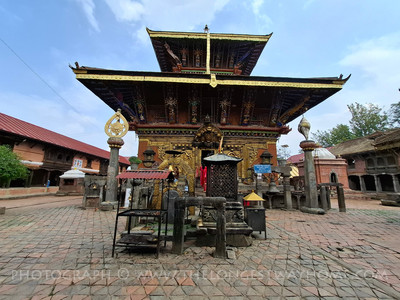
Known as a “living museum,” Changu Narayan boasts 5th-century inscriptions and intricate repoussé work, offering a cultural haven for history enthusiasts and spiritual seekers exploring Kathmandu Valley attractions.
On this page
Changu Narayan: At a Glance
Nepal's Oldest Temple
Changu Narayan dates to the 5th century and is Nepal's oldest surviving Hindu temple. A UNESCO World Heritage Site with a "living museum" of inscriptions, pillars and repoussé work.
Entrance Fee
300 NPR for foreigners at the temple complex. The Changu Museum is a further 300 NPR. No permits, no TIMS, no ticket booths beyond the main gate.
How Long to Stay
One to two hours covers the temple complex and museum. Ideal as a half-day add-on to a Bhaktapur trip.
Best Time to Visit
October to November and February to April for clear weather and valley views. Mornings are quietest before the tour groups arrive.
Getting There
90-minute local bus from Kathmandu's Ratna Park (70 NPR, every 30 minutes), or a 45-minute taxi (3,000+ NPR one way). Buses stop at Bhaktapur en route.
Where to Stay
1,000 to 2,000 NPR per night in village guesthouses and homestays, most with rooftop restaurants. Bhaktapur is a cheaper alternative base.
Information verified: October 2026
A Little History
Often called a “living museum,” Changu Narayan contains inscriptions dating back to the 5th century. A pillar within the grounds shows writing about King Man Deva who reigned from 496-524 CE. The temple features one of Nepal’s earliest known inscriptions describing events from the 3rd century during Licchavi King Mandeva’s reign (until 464 CE). Major restorations occurred during Siva Simha Malla’s reign (1585-1614 CE) and after a fire in 1702 CE, with gilt copper roofs added in 1708 CE.
Visiting Today
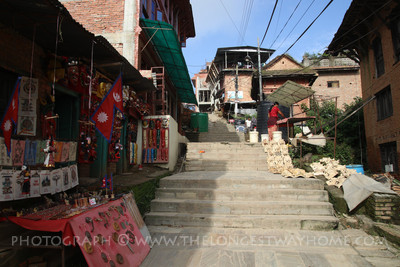
From the parking area, it’s a 10-minute walk up steps to reach the Changu Narayan Temple after purchasing tickets. It’s a quaint area with low-key tourist stalls, guesthouses that double as restaurants, and a small museum. A visit typically takes 1-2 hours, making it ideal for combining with a Bhaktapur trip for a culturally rich day in the Kathmandu Valley.
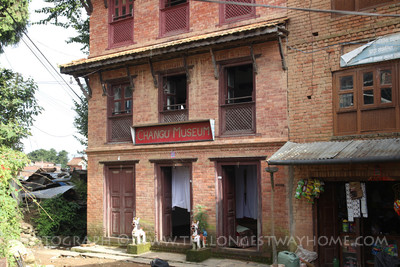
Changu Museum
Admission: 300 rupees
About halfway up the steps, they turn slightly to the left. Just past this bend to your right, you’ll notice some smaller steps leading down to a small, four-story house. This is the Changu Museum. Inside the Newari townhouse is an eclectic mix of items. Farming tools, pots, kitchen utensils, swords, and musical instruments from over the ages are on display. It’s overpriced for what you get by Nepali standards. But again, the money stays locally.
Changu Narayan Complex
When you enter the complex, you will be on the eastern side, facing the rear of the temple. As is custom, you should walk clockwise around the temple. It’s hard not to notice the large, two-story temple in the middle of the courtyard. Here, two stone griffins guard the eastern entrance. Let’s take a look at the surrounding buildings.
Chinna Masta Temple
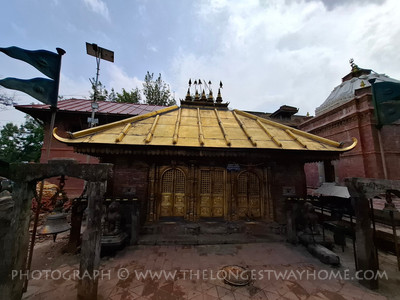
Immediately to your left, you’ll see a small white Ganesh shrine; to the right, there is what looks like a very old elephant statue. The single-gilded roof temple here is dedicated to Chinna Masta, a local version of Kali. Some priests say that Chinna Masta was worshiped here during prehistoric times. Animal sacrifices are still made here due to Kali’s blood-lust. In front of the temple is the first of many small taleju bells.
Rebuilt shrines: These include a Vishnu Vishvarupa sculpture, Shiva shrine, and Lakshmi-Narayan shrine. Of note is a small sculpture of a four-headed Vaikuntha Chaturmurti, or Vaikuntha Vishnu.
Shree Kilishwor (Pashupatinath) Temple
The small, two-story temple up ahead is the Shree Kilishwor Shiva temple, also known as Pashupatinath temple, dedicated to Shiva as Mahadev. You might notice that all along the courtyard walls there are windows and doors. These were once the bahals of the area. The Living Traditions Museum, housed in these buildings, was destroyed in the 2015 earthquake but reopened in 2023 with recovered artifacts, showcasing Newari culture.
Changu Narayan Temple
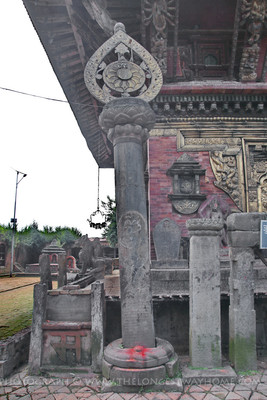
Crossing over to the front of the main temple, we can see a plethora of statues, sculptures, pillars, and artifacts, many dating back to the 5th century. The main temple, dedicated to Vishnu, was reconstructed after a fire around 1700. The front features some of the finest repoussé work in Nepal. Only Hindus may enter this temple. The roof struts display tantric carvings, including a monkey on the right corner strut. A small white stone at the top right was once said to replicate rice mystically until greed stopped it. The pagoda-style temple is protected by elephants, lions, sarabhas, and griffins at the rear. To the right of the temple’s front is a small taleju bell and a tall pillar with Vishnu’s conch.
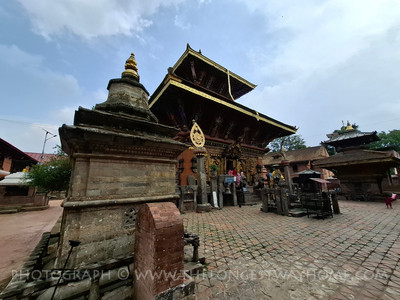
Garuda statue & pillar: In front of the temple, kneeling, is Vishnu’s mount Garuda, resembling King Mandev, dating to the 6th century. On the left, beside a larger taleju bell, is a pillar once topped by the Garuda. The nearby pillar with Vishnu’s Chakra holds 5th-century inscriptions about King Mandeva, including tales of victory donations and his mother’s sati ritual.
Krishna, Narayan & Vishnu shrines: Walking down the northern side, there is one stone Krishna shrine with Narayan shrines on either side. To the right is a faded Nateshwari shrine. A red brick platform with a small tree may have once held a temple. Small sculptures along the front depict Vishnu, Avalokiteshvara, Durga, and Garuda. To the left is a detailed Narayan statue, with another Vishnu statue and a red-brick Shiva shrine to the rear.
Chariot & Palanquin: Along the entry wall is a shelter housing a worn chariot and palanquins used during the Changu Narayan Festival, celebrating farming’s joys and sorrows.
Accommodation & Restaurants in Changu Narayan
In the past few years, several new guesthouses have opened up in Changu Narayan, all serving meals or having restaurants, based on local reviews. A plethora of local eateries awaits near the parking/bus stop area, with options like Changu Heritage Coffee Shop, Ta Khaa Chhey Cafe, and Changu Restaurant. Many guesthouses cater to both guests and walk-in customers for convenient dining.
Sakura Rooftop Restaurant & Homestay (( +977-986-3553421): This charming homestay offers clean, comfortable rooms and a rooftop restaurant with panoramic views. From authentic Newari cuisine to delectable chicken cutlets, Samir’s culinary creations will tantalize your taste buds. (dbl $15+)
Eagle Nest Hotel (( +977-984-1480637): One of the most modern well-kept hotels in the area. Mountain view rooms are a treat, as is the food on the menu. The fast wifi & excellent service by the owner Dhruba only add to this great choice. (dbl $20+)
Viewpoint Rooftop Restaurant & Guesthouse (( +977-1-5141110): This small family-run guesthouse has 1 attached bathroom and 2 shared. It’s quite local but friendly, offering a menu with freshly cooked items. The view from the roof is nice too. (dbl $10+) *They keep changing the name! - it’s basically the establishment just before the entrance into the temple on the left.
Changu Newa Homestay (( +977-984-1042007): Run by the friendly Narayani, her family home has 2 rooms above their souvenir shop. Breakfast is included & you may have good value lunch/dinner here or even cook for yourself. Rooms are clean and well-kept with shared bathrooms. (dbl $15+)
Getting There and Away
To/from Kathmandu: By local bus (90 mins): From Kathmandu’s Ratna bus area, buses leave every 30 minutes for 70 rupees. Leave before 7 a.m. to avoid traffic; return trips past 8 a.m. may take 120 minutes due to Kathmandu congestion. Buses stop at Bhaktapur en route.
By taxi (45 mins): Taxis charge upwards of 3,000 rupees one-way, or 4,000 rupees for a return journey with waiting. Bargain hard or use ride-hailing apps like InDrive. A cheaper option is hiring a car for a day trip including Changu Narayan and other Kathmandu Valley sites.
Map to Changu Narayan
Frequently Asked Questions about Changu Narayan
Changu Narayan, Nepal’s oldest temple, dates to the 5th century with inscriptions from King Man Deva (496-524 CE). Dedicated to Vishnu, it features intricate repoussé work and historic artifacts, earning its title as a “living museum” of Kathmandu Valley.
Yes, the Changu Narayan Temple complex has an entrance fee included in the ticket price, payable at the entrance. The Changu Museum costs 300 rupees, considered overpriced but supporting local preservation.
Take a bus from Kathmandu’s Ratna bus area (70 rupees, 90 minutes, leave before 7 a.m. to avoid traffic) or a taxi (3,000 rupees one-way, 4,000 return). Hiring a car for a day trip with Bhaktapur is a cost-effective option.
Top attractions include the Changu Narayan Temple with 5th-century inscriptions, Chinna Masta Temple, Shree Kilishwor Temple, Living Traditions Museum, and Changu Museum showcasing Newari artifacts.
About the Author
David Ways is an experienced travel writer and explorer who has spent years documenting the hidden gems of Nepal and beyond. With a passion for uncovering authentic cultural experiences, he provides detailed guides to help travelers navigate destinations like Changu Narayan with ease and insight. Learn more about David.
Get my Guidebooks for the best in heritage walks!
Articles are great, but 20 tabs open on the move isn't. My guidebooks put years of honest on-the-ground research into one place, updated every season so you've got the latest information.
- Complete Country Coverage: Kathmandu, Pokhara, Chitwan, heritage walks, and culture.
- Includes First Time Trekking: The entire beginner trekking guide is included right inside!
- Offline Interactive Maps: Zoomable maps and walking tours for seamless navigation.
- 28 Step-by-Step Walking Tours: Explore hidden courtyards, temples, and ancient streets.
- Turn-by-Turn Directions: Easy-to-follow routes through Kathmandu, Patan, and Bhaktapur.
- Exclusive Heritage Maps: Zoomable, offline-ready maps with zero data needed.
Was this page helpful to you? If so please tell others!