
Planning a trip to Bardia is easier than it seems
Bardia National Park is in Nepal’s far south west region. On my first trip there many years ago I’d heard the rumors for years of Bardia being like Chitwan was before the tourists arrived 20+ years ago. It was the “real jungle” of Nepal where tigers, elephants and one-horned rhinos roamed freely.
There were no tourist restaurants. No elephant rides. No electricity. No comfort. And, according to my many Nepali friends, no tigers.
I’ve since been to Bardia over the past few years on many occasions. Without a doubt I prefer it to Chitwan in terms of wildlife and a real jungle experience.
I wanted to write up my experiences in the “real jungle” to dispel some rumors, confirm some others, and show you my experiences in getting there so you can plan your trip with up to date information. (Here is my full how to get to Bardia guide and my Bardia National Park Guide.) Everything about Bardia is also in my guidebook to Nepal.
Bardia Bus Journey: Quick Facts
- Journey time: 12-16 hours from Kathmandu or Pokhara
- Departure time: Typically 2pm-4pm (arrives 4am-7am)
- Bus type: Local bus (ignore “deluxe” or “VIP” labels)
- Drop point: Ambassa (entrance to Bardia)
- Best tiger spotting season: Late winter, before monsoon (when tigers come to water holes)
When to visit Bardia?

Bardia is open year round to tourists. There’s one caveat though. If you want to see Royal Bengal Tigers you have to go when they are thirsty. This means a trip during the tail end of winter in Nepal and before the monsoon season. It’s only during these months that tigers come out of the deep jungle to the water holes to drink.
It is during this period that the chances of spotting a tiger are best.
Of course there are no guarantees. So if you are in Nepal over this period, it makes sense to call a reputable friend or resort and ask them if there were any tiger sightings during the week.
For me, I pestered at least two Nepali friends on a weekly basis for over a month. One in Bardia and one from a travel agency in Kathmandu.
“How many tigers did you see last week?”
“Two” Dhai (the Nepali for older brother).
Then the following week I asked, “How many this week, Bhai? (the Nepali for younger brother)”
“One yesterday, Dhai,” came the reply. “And three more during the week!”
“Ok, I’m on the way tomorrow!”
Arranging a bus to Bardia National Park
Of course, getting to Bardia is what puts many people off. It’s not such an easy journey in terms of comfort. You could get a plane to Nepalgunj and then take a bus or jeep to Bardia if you have the budget. Or hire your own jeep all the way there. But most people visit via the more economical bus route.
I’ve visited Bardia from both Pokhara and Kathmandu. On my first trip I took a bus from Pokhara. It was an experience in itself. Both journeys are about the same time: 12-16 hours (currently there is a lot of road widening taking place, so delays are expected).
Ignore old guides. There are direct buses to Bardia from both Kathmandu and Pokhara. Check with local agents or my Nepal Guidebook for current schedules.

The first thing to do is realize that it’s a local bus. Not a “tourist” bus nor “deluxe” bus in the strict sense. So in other words, the seats will be really small. Not so small to kneecap you, but enough to make you realize you are not “Nepali sized”.
The second thing to do is to try to book your bus seat in advance. This way you should be able to reserve a seat up front, rather than the bumpy back seats. Certainly nothing past seat 16 is comfortable.
In Kathmandu, buses depart from the New Bus Park, Kalenki, and Gongabu Bus Park. The good news is that there are direct buses to Thakurdwara (the village near the park) from the New Bus Park. But they can be canceled, so don’t expect everything to go smoothly. It is all part of the adventure of visiting Nepal.
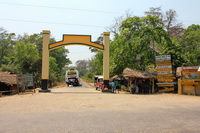
All other buses, including the Pokhara buses, will drop you at Ambassa. From there, your pre-booked resort will be waiting to pick you up. There are some local vehicles that will also take you, but it’s better to go with a booking to Bardia as it is remote.
Buses usually leave Kathmandu and Pokhara between 2pm and 4pm and arrive between 4am and 7am. There are also night buses leaving randomly from 11pm to 1am, but the latter are not so reliable in terms of leaving at an exact time.
Arriving at 4am in Ambassa makes it pretty important to have someone meet you there, as you can imagine. Luckily, the resorts in Bardia are fairly reliable. But for reassurance, it’s a good idea to have a Nepali SIM card to stay in touch with them along the way. That said, reception is not the best in Bardia.
Don’t worry though. There are usually some random guides and jeeps waiting in Ambassa at that time, so you shouldn’t get stranded. Though you’ll probably have to stay in their resort or pay for a jeep to Thakurdwara, or a motorbike (40 minutes).
The bus journey to Bardia
I booked my bus the day before. In Pokhara, I just went to the old bus park ticket office and booked in person. It’s a 40-minute walk from Lakeside. In Kathmandu, I asked an agent to book the bus due to the expense of taxis in Kathmandu and the hassle. Again, full details are in my Nepal Guidebook.

The bus is fine for a local, “tourist”, or “deluxe” bus. Up front with a window seat, I hunkered down with my daypack filled with bakery goodies, a battery power bank, and some headphones.
The bus took off promptly and, like all Nepali buses, stopped continuously for the first two hours picking up people. I texted my resort in Bardia to let them know my bus company name, seat number, and to let them know I was on the way.
The bus trundled on with tea breaks, toilet breaks, and random breaks where the driver runs off for 10 minutes and no one can find him. All normal in Nepal.
I ate my apple danishes for dinner when we stopped at 8pm. There was nothing too inspiring to eat at the local roadside stop, and I also wanted to maintain good “stomach composure” for the entire journey. The good news was that my seat partner changed from a middle-sized man to a very slim man. So I had more room to begin the evening process of dozing off before being shaken awake by Nepali road conditions, all the while being lulled by loud Bollywood music blaring out until 11pm when someone decided to shout at the driver to shut up.
By 12.30am we pulled into another restaurant. Toilet break time. I just followed the scurrying men down a slippery and smelly set of steps to the little iron doors hiding the squat toilets. Then it was back up to eat at the small selection of night cafes. The dal bhat place everyone was eating looked fine, but again I figured I had another 6 hours to maintain stomach composure, so I went with a chow chow (egg noodles) man at the side of the road for 80 rupees.
Back into the bus and we were off again. By 3am, online maps were no longer working and reception was gone as well. It was pitch black outside. The bus rumbled on as we encountered several police checkpoints. Poaching is a big business, hence the police are looking for smugglers and the like. Bardia’s one letdown is that poaching there is not being handled as well compared to Chitwan. We were stopped at least 5 times, and at least one man got an ear bashing for something.
Arriving into Ambassa
By 4am I confirmed with the sleepy conductor boy that I wanted to get off at Ambassa for about the 10th time. About 5 minutes later I was sound asleep.

I stirred as we pulled over at the side of the road next to a collection of army checkpoints. A young man with long braided hair charged onto the bus and locked eyes with me.
“David?”
“Pratap?”
“Let’s go, brother!”
And that was it. With only a daypack, I jumped into Pratap’s jeep and we were off on the bumpy road from Ambassa to Thakurdwara and the jungles of Bardia as the sun began to rise.
The real jungle adventure was about to start.
In the next post I’ll write about my jungle experience in Bardia. For now, this is some basic information on getting to Bardia which should give you practical and relevant help. Here’s my online guide to traveling to Bardia and my online guide to Bardia National Park. For full details with up-to-date maps, accommodation, and planning, please see my guidebook below.
Get my Nepal Guidebook for complete coverage of Bardia and beyond!
The most up-to-date, popular and dedicated guidebook to Nepal in the world. It includes my complete Bardia guide with interactive maps, up-to-date park fees, transport options, accommodation reviews, and tiger-spotting tips.
Also available: Trekking in Nepal Guidebook | Kathmandu Valley Heritage Walks
Wow. Never heard of this place. Looking forward to reading what’s it’s going to be like
It’s worth taking a look at my guide to Bardia National Park to learn more.
Great to get such a hands-on guide on transport there. Thank you
Thanks, it’s something that helps I think!
Great explanations thanks. Makes my life simpler!
Glad to hear that
I bought your guidebook to Bardia. It’s very clear and well presented! Very good value!
Hi Maria, thanks for the purchase. Very glad to hear you like it!
Like above, I’ve never heard of Bardia but now you have me curious. We were planning to go to Chitwan and read your posts so now we wait to know more from you.
Glad it helps you. Hopefully you can make the right choice for yourself depending on what you like!
What’s the bird-life like there compared to Chitwan?
I’d say the bird life is more accessible Bardia than in Chitwan but the latter will have larger numbers.
We were just looking for this information!! It’s invaluable!! Thank you.
Very glad it was of help to you!
I’ve lived in India for long but have never visited Nepal! This year I am planning to when I go to visit family and I had Bardia on my mind!
You’ve put great info here!
Cheers!
Thanks for sharing your tips! This place really looks amazing. Cheers!
Hi,
Superbly written article, I think this is an informative post and interesting too. Therefore, I would like to thank you for the efforts you have made in writing this article. Keep writing and helping the people with your travel experiences.
Cheers!!