

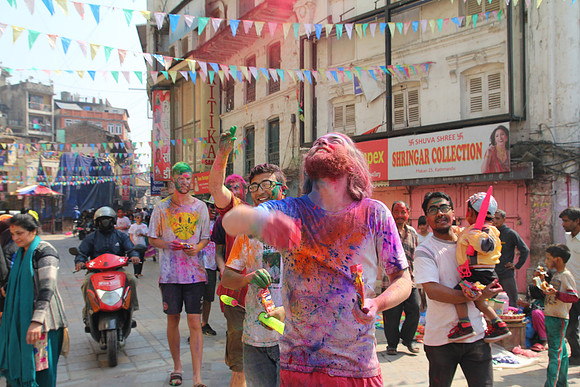
Holi in Nepal this year falls on March 2nd in Kathmandu and Pokhara, and March 4th in the Terai. But that’s only half the story. A general election on March 5th turns the whole week into something travellers need to plan for carefully.
This year some tourists will be in Kathmandu on a Monday morning, wearing their oldest white t-shirt, powder dye in hand, thousands of laughing strangers closing in from every direction. Three days later, those same streets go quiet as Nepal holds a landmark general election, the direct result of a Gen Z protest movement that brought down a government. Two completely different experiences.
This guide is based on the ground and it’ll walk you through every day so you can get the most out of Holi while keeping well clear of anything election-related.
Holi Nepal 2026: The Full Week at a Glance
- Monday, March 2 – Holi Festival in the central regions: Kathmandu, Bhaktapur, Pokhara (it’s not really celebrated on trekking routes)
- Wednesday, March 4 – Holi Festival in the Terai flatlands: Chitwan, Sauraha
- Wednesday, March 4 – Mass travel day as voters head home for the election (local buses full, tourist buses ok)
- Thursday, March 5 – General Election. Expect most businesses closed, effectively a public holiday
- Friday and Saturday – The country is still largely on pause
From Monday to Saturday, Nepal runs on a rolling public holiday schedule. Odd hours, late openings, and a country that has other things on its mind. If you’re travelling this week, build flexibility into everything.
When is Holi in Nepal 2026? It Depends Where You Are
This is the mistake that catches tourists out every single year. Holi does not fall on the same date across Nepal.
In the hilly mid-elevation regions, including Kathmandu, Bhaktapur, Patan, and the lakeside city of Pokhara, Holi is on Monday, March 2nd. Head down to the Terai flatlands near the Indian border, places like Chitwan National Park, and the festival is on Wednesday, March 4th.
Picture arriving in Chitwan on Monday in your white t-shirt with a bag full of coloured powder, stepping outside and finding everyone just going to work. Or waiting until Wednesday to celebrate in Kathmandu, only to find the streets completely normal. Get the date right for where you’re staying and you won’t have a problem – except for washing out all the colorful dye!
Holi in Kathmandu 2026: What to Actually Expect
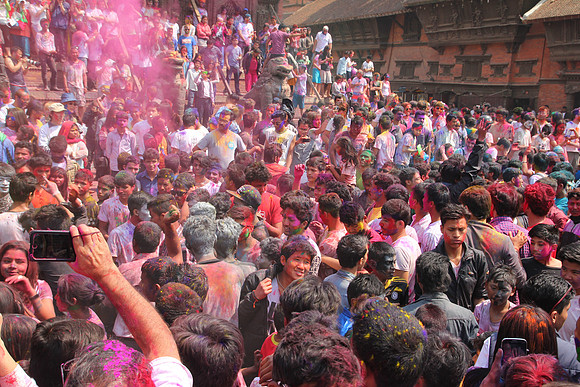
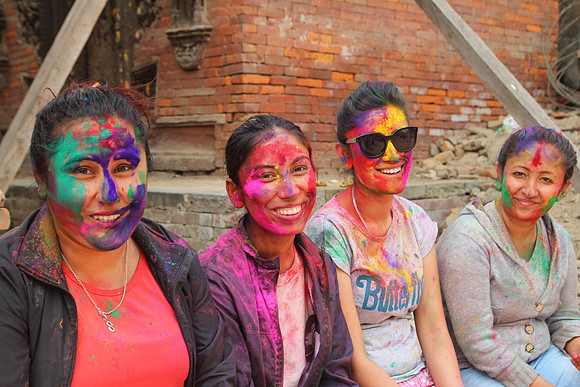
I’ve written extensively about the Holi Festival. For those looking for a short recap to see if they’ve like it I’ve written about Holi here with lots of photographs. There are few other festivals that bring out genuine smiles than Holi, and it’s not hard to understand why. The festival marks the arrival of spring and the victory of good over evil, but what makes it special on the ground is how completely it levels the social playing field. Age, status, hierarchy, none of it matters. If you’re outside, you’re playing. A teenager and an elderly shopkeeper are equally fair game for a fistful of gulal (colored dye) powder or a water balloon (lola).
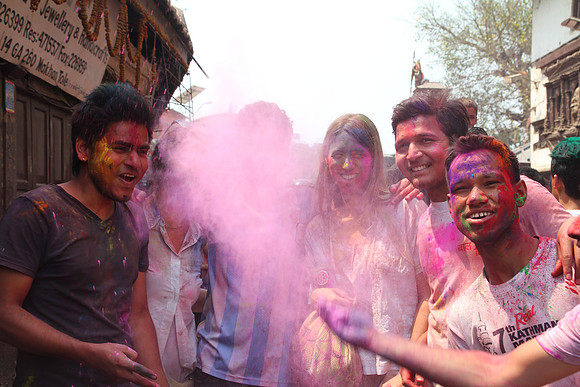
Coloured powder fills the air and settles on everything. Water balloons turn the dry powder into bright paste on your clothes and skin. Music comes from every direction. It’s loud, it’s chaotic, and it’s genuinely joyful in a way that’s hard to find anywhere else.
Where to Go
For the full experience, go to Durbar Square in Kathmandu, specifically the Basantapur area. Thousands of people pack between ancient temples, the noise is immense and the colour is everywhere. If that sounds like too much too soon, start in Thamel around 9am where the party gets going with local kids and shopkeepers, then follow the crowd as it works its way down toward Durbar Square.
In Pokhara, the celebration runs along the lakeside a little later 10am. It’s more subdued in Pokhara giving you slightly more room to breathe, and a mountain backdrop that makes the whole thing even more tranquil. Though there may well be a few overly enthusiastic tourists around. For Pokhara people it’s more about chill and small dabs of color. In Kathmandu, it’s far more frantic with a large party atmosphere. In Bhaktapur and Patan it’s more relaxed again with some local parades.
What to Wear and What to Watch Out For
Clothing. Old clothes only. Things you’re prepared to throw away at the end of the day. White t-shirts are popular because the colours show up brilliantly. Leave your hiking gear at the guesthouse.
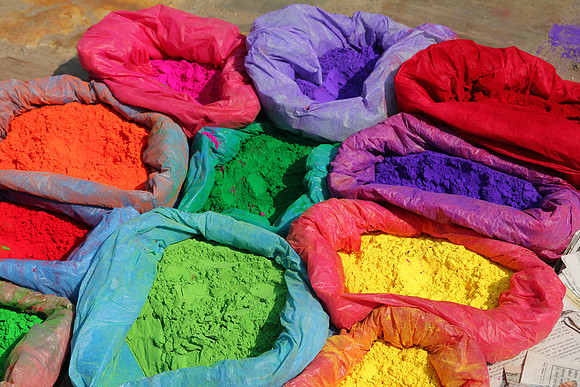
The dye warning. Not all Holi dye is the same. Dry powder (gulal) from local shops costs 10 to 20 rupees a packet and washes off fine. Grease-based or oil-based dye, usually dark blue or silver, is a different matter entirely. It contains harsh chemicals, it can burn your skin, and because it’s grease-based it won’t come off with water. Weiss had a bad experience with it and warns against it strongly. If you see someone walking toward you with a bucket of dark blue paste, walk the other way. For your own supply, buy dry powder from small local shops.
The anyone is game rule. Being outside on the streets or visible on an open rooftop means you’re in the game. Some tourists arrive and simply haven’t done their research or rely on social media and get completely surprised by this huge festival and then get upset by having color thrown at them. To be honest, I don’t have much sympathy for people who don’t research when visiting a country. It comes with the territory of writing guidebooks, that’s why they exist!
Not joining in. The only way to genuinely sit Holi out is to stay inside until around 3pm. By mid-afternoon people are tired, the powder runs out, and things settle down. It’s safe to go out for a meal by late afternoon.
Safety Warning: Test the Railings
This is worth taking seriously. In the older parts of Kathmandu, the architecture is beautiful but old. Balcony railings can be rusted iron or loose brick. When you’re caught up in the fun, dodging a water balloon, leaning out to get a better shot, it’s easy to forget to check what you’re leaning against. Accidents have happened and some have been fatal.
Before you lean on any railing, push on it and make sure it holds. If you have kids with you, keep them close and in your sight at all times. A three-storey fall is not a joke.
Again, as I’ve written previously, some have tried to rein in the Holi festival by banning water balloons, or setting time limits. Meanwhile, in India it’s an all out party. People within tourism then wonder why Nepal lags. Many moons ago, there were indeed water shortages in Kathmandu, mainly due to bad infrastructure. And while environmentalists still get upset, the reality is Holi is a once a year festival that brings a lot of joy and happiness. Having a look at water contamination, or air pollution would be a lot more postive in my view.
Wednesday in Nepal: Holi down south, and avoid the local long distance buses
After Holi on Monday, many are surprised that Holi in the Terai region happens on a different date, Wednesday the 4th of March. Again, it’s more subdued, but it is celebrated. So if you are planning to be in Chitwan on Wednesday the 4th, expect some color. But if you plan to be their on Monday the 2nd, it’s business as usual.
Meanwhile, Wednesday the 4th is also when many Nepali will travel home (tourism facilities largely not affected). Nepal’s voting system requires most people to cast their ballot in their home village or town, not wherever they happen to live for work. So the entire, non-tourist employed, population of Kathmandu e.t.c, that originally came from somewhere else needs to get there by Thursday. Wednesday is when they go.
For tourists taking tourist buses, this is usually not a problem. Though locals do use them, there’s usually enough to get around. But, if you are taking local buses from places like Gongabu etc, then they could well be jammed and booked out that day. Likewise, domestic flights will rise in price over those days.
Nepal Election 2026 Travel Advice: How to Stay Out of Trouble
The March 5th election is a big deal for Nepal. It came directly out of the Gen Z protests last September that removed a government over corruption. People care deeply about this and emotions are running high. As a tourist, your job is simple: watch, don’t touch.
The rule is observe, never participate.
In practice:
- Don’t join election parades, even if they look fun and the music is good
- If you are staying with locals, and they invite you to a rally, politely decline
- Don’t take a political flag if someone hands one to you
- Don’t photograph rallies, parades, candidates or voting booths
- If a parade comes down your street, go into a cafe and watch from inside
The photography point is the one people consistently get wrong. The political climate is sensitive right now. The last government fell over corruption charges, and authorities are watching closely for any sign of outside interference. A foreign tourist standing there photographing a political rally looks suspicious, and tourists have been arrested for exactly this in the past. Put the camera away and just watch.
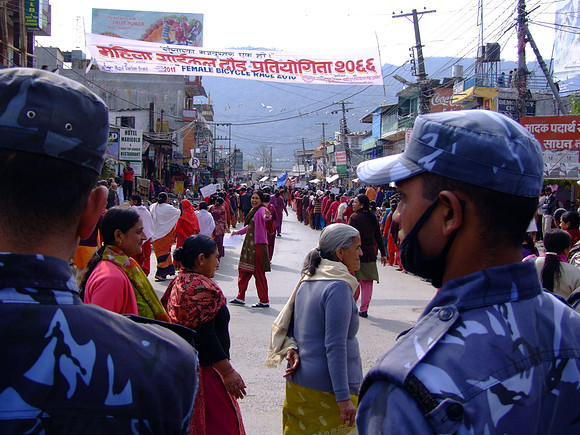
Again, I’m not joking here. Over the past few general elections some tourists, and “vloggers” have been arrested with confiscation of equipment, and even deportation occurring. Sadly, some do this on purpose to get “views”, the reality is they make everything worse for everyone else.
Friday won’t see much movement either as people wait in their villages for results to come in, and Saturday is already Nepal’s regular weekly public holiday. Expect a slow end to the week and use the time for quieter exploring.
Election Results are due … I’ve no interest in expressing political views here. The facts remain that two of the main candidates are vying for the same ward (district), this will be one of the key moments in this election. Landslide victories may curb any tension, while close tallies may bring about allegations of fraud and recounts demanded. Election landslides will be known quickly, while closer voting will see late Friday / Saturday results.
However, it’s Nepal. And things don’t always go as they should. If election landslides happen then things will clear up quickly. Otherwise, a coalition government needs to be formed and that could take days to weeks before anything is made official. The good news for tourists, as I’ve written about previously, is that the army is on top of things for this election. When this happens, things usually run smoothly in terms of strikes, or protests. So, I don’t expect any major events to occur other than if some political person is in a close race and allegations are made. All the same, Nepal knows the world is watching and it wants to put on a well put together election.
What to Do Instead: Day Trips from Kathmandu
If all is quiet in the capital, with less traffic and people, it’s an amazing time to do a heritage walk. If you’ve already done this (and I hope you have), then heading out to Nagarkot is worth the trip for the Himalayan sunrise views. Panauti is a beautifully preserved ancient town that most tourists skip entirely. Nearby, Kirtipur has good food and a hilltop atmosphere that feels completely removed from the city below. And Boudhanath, the great stupa on the edge of Kathmandu, is always worth a visit. Need more things to do? Try my guide to day trips from Kathmandu.
One thing to know: taxi pricing gets unpredictable during election week when demand spikes. My guidebooks to Nepal have the solution to this with accurate prices so you know what to expect, and what ride sharing apps to try.
Making the Most of Nepal’s Holi and Election Week
There’s genuinely nothing quite like being in Nepal in the upcoming week. Holi is one of the best travel experiences you can have anywhere, and witnessing a country hold a historic election just days later gives the whole trip a weight that’s hard to describe. Get stuck into Monday. Then step back, be patient from Wednesday onward, and let Nepal do what it needs to do.
Get it right and it’ll be a week you talk about for years. Get it wrong and, well, you won’t be bored. Don’t get caught out for the rest of the year if you are visiting Nepal. Read about other festivals throughout the year in Nepal.
I may make a quick update when the election results are confirmed, more to let people know all is good, carry on. Then, it’s back to travel!
Get the Only Guidebooks Worth Reading
Skip the outdated information and sponsored reviews found in mainstream guides. These books offer a field-tested, completely independent strategy for exploring Nepal on your own terms. Plan with confidence using exact, up-to-date costs for meals and tea houses, plus access to the world’s only vetted, scam-free trekking agency list.
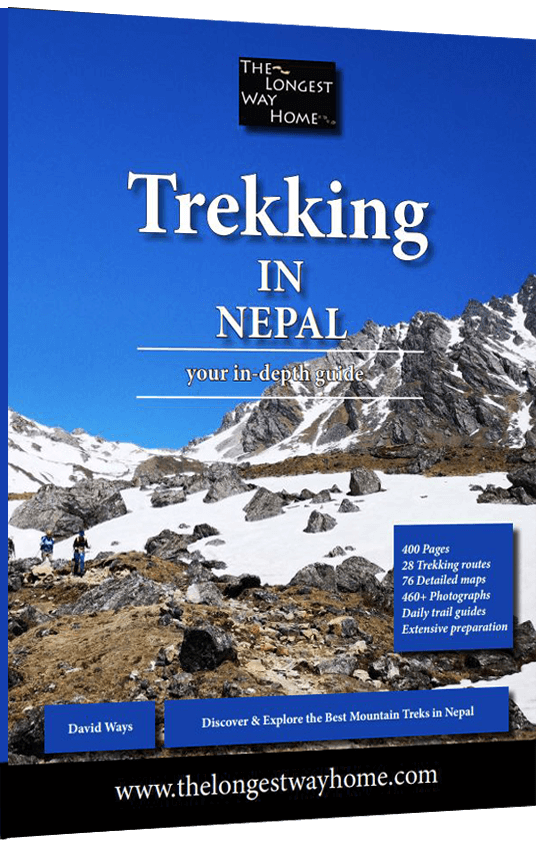
Trekking in Nepal
The ultimate companion for your Himalayan adventure. Experience the world’s most comprehensive trekking guide, featuring a completely vetted scam-free agency list, beautiful detailed maps, and 29 complete treks.
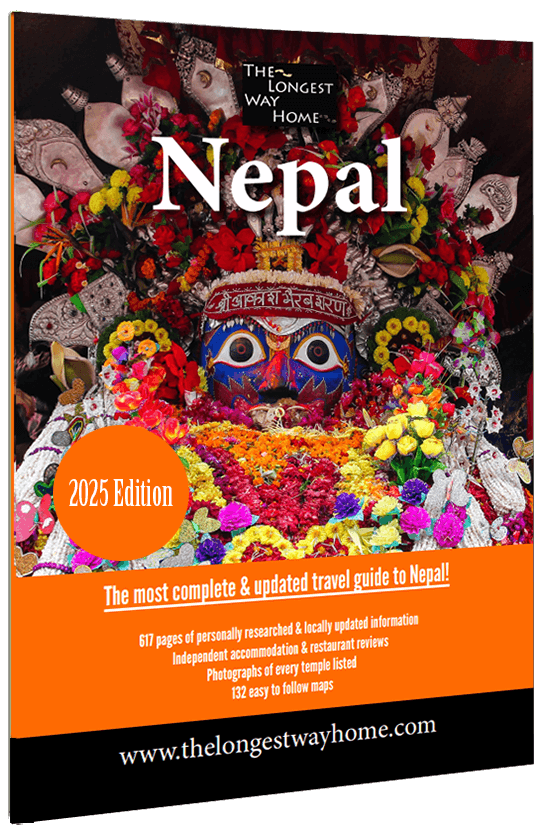
Nepal Strategy Guide
Your ultimate blueprint for exploring the entire country. Uncover Kathmandu’s hidden streets, plan an unforgettable jungle safari, and discover the absolute best trails without the usual crowds.
Perfect timing! I’ve been using your site to prepare for my trip. I arrive in Kathmandu on March 1st and had no idea Holi was happening. Now I know to pack old clothes! Thank you!
Glad it helped!
The railing safety warning is no joke. I read some Nepali news post about it before. They were trying to ban Holi. Do you think they will get away with it?
No, I don’t think they can ban Holi. The outcry used to be about water shortages. Then they switched to the old tradition of banning water throwing a few days before Holi. Then they started to highlight any deaths that occurred during Holi due to accidents. One needs to think about how news media has changed over the years and how much negativity sells these days. A lot of the accidents sadly revolve around safety precautions and people taking responsibility for safety rather than Holi being blamed. Yes, it’s sad, and accidental if someone has an accident like falling off a rooftop. As mentioned above, taking safety precautions is important, not just during Holi, but throughout the year.
Wait so if I’m in Chitwan on Monday March 2nd there’s no Holi celebration at all? I’m planning my itinerary now and this is really confusing because I thought Holi was a national holiday that happened everywhere at the same time. Should I change my plans to be in Kathmandu on the 2nd instead or is Chitwan on the 4th just as good? Also what about the election day – will I be able to get from Chitwan back to Kathmandu on March 5th or should I plan to be back earlier?
Correct, Holi is not celebrated in the Terai region, including Chitwan until March 4th – the same date as Holi in India. Holi is largely a Hindu festival. However, as Nepal is made up of different faiths, predominately in the mid areas and northern areas, the festival in the rest of the country moved forward by a few days.
The likelihood of anything happening on Monday the 2nd in Chitwan is low. So if you want to celebrate Holi on Monday, then Kathmandu is probably the best place. On Wednesday it will be celebrated in Chitwan, though due to a smaller population, it won’t have a huge party atmosphere. However, locals will have several events taking place.
This is such helpful practical advice! Most travel blogs just talk about how “colorful and fun” Holi is without mentioning the grease-based dye issue or the election logistics.
It comes from years of being in Nepal and understanding the real practicalities vs what some people “research” online.
The photography ban during the election makes sense but I guarantee tourists are going to ignore it and get themselves in trouble.
The only tourists I’ve some across that were arrested in the past for photographing or participating in election events were there for specific reasons which had little to do with tourism. While Nepali are free to take videos and participate, some tourists who may have befriended some Nepali may think or try to do the same. This is a huge mistake. Usually the police or army will give a warning, but generally a non-Nepali will be removed from any political event. Sadly, many YouTubers, or social media types will try to “get away with it”. There’s little sense in it, as the risk vs the video of a group of people speaking in Nepali at a rally does not add up. It’s Nepal’s election, Nepali media will cover it. Tourists are not invited so, best to stick to tourism!
So basically Monday is party mode and Thursday through Saturday is stay-in-your-lane mode. Got it.
That’s pretty much it!
So Nepali can film, but nobody else can? That’s not right, we should be able to document something like this. Let the world see what is really happening!
Yes, Nepali can film and participate in their own elections. No, non-Nepali cannot. It’s been that way for over a decade. Nepal is a landlocked country that is aware of influence from it’s borders and so all non-Nepali are not allowed to record or participate in politics.
While Nepal tried to implement a social media ban in 2025, it led to the downfall of the government. There is no media ban in Nepal, so there’s plenty of freedom for Nepali to document their election without the need for anyone else. There are international observers who will observe the election itself.
So while some non-Nepali may feel impassioned to document the elections, it’s not needed on a street level at all. Hence, one of the reasons arrests have, and will be made if non-Nepali try to participate.