
Bhaktapur: Quick Facts
- Location: 12 km east of Kathmandu, in the Kathmandu Valley
- UNESCO World Heritage Site since 1979
- Entrance fee: Approx. 1,800 NPR (foreigners)
- Best for: Traditional Newari culture, pottery, woodcarvings, and ancient temples
- Don’t miss: Durbar Square, Pottery Square, Nyatapola Temple, 55‑Window Palace
- Time needed: Full day (or two days for a slower pace)
Bhaktapur is one of those rare places that still lives in an ancient world
It’s very rare that I come across a place that’s been given a UNESCO world heritage site status and still find it a nice place to visit. As opposed to being overloaded with tourists, tourist traps, an commercial outfits. Bhaktapur does more than scrape by in winning my approval.
Yes in the middle of peak tourist season it can get crowded. And yes, unfortunately I’m starting to see Chinese group tours complete with placards and name tags appearing. But Bhaktapur still retains its charm and beauty.
Why? So far I can only put it down to some good and bad points that seem to neutralize each other.

Bhaktapur a living museum of ancient temples and smiling people
There are more temples in Bhaktapur than any other city in Nepal. They are wonderfully preserved too. Bhaktapur’s Durbar Square is simply the most charming of squares I’ve been to anywhere in the world. It’s a living breathing square that people use everyday that’s surrounded by some of the most wonderful looking temples in all Nepal.
It’s relatively easy to get “templed out” in China, or “churched” out in Europe or “mosqued out” in the Middle East. But in Bhaktapur, and to be fair Nepal in general, no two temples are quite alike. There’s always something new. They rarely get tiring to see or visit.
Moreover the everyday people in Bhaktapur have not become tired of the endless queues of tourists streaming into their living museum of a city.
Is this the calm before the storm?
The curse of a UNESCO heritage site listing

It’s a fantastic notion, listing unique, historic places of cultural importance. However what follows is usually a shot in the foot. Now with a UNESCO status many local communities see both an influx of notoriety and tourists that can lead to an increase in local revenue. Some completely cash in and open the flood gates to selling out their status.
That once peaceful little place now becomes a torrid mess of tourist overcrowding, higher prices and locals with tired eyes at seeing yet another tourist invade their personal space.
Bhaktapur has not reached that point, yet. Other places around the world have asked to be removed from UNESCO (source), so the very reasons I stated above.
Does a higher entry price make a difference?
It costs approximately 1,800 rupees for an entrance ticket into Bhaktapur. It’s been around that level for many years. Read my travel guide to Bhaktapur to see how you can get this ticket extended for free. The idea is that a higher price means more tourist cash to help with the upkeep of the city. Years ago tourist complained about Bhaktapur’s higher than average ticket price, however over the years Bhaktapur has shown that it uses that entrance fee to keep the heritage zones in better condition than many others around the Kathmandu Valley.
For once this seems to actually be working. My congratulations to the city council of Bhaktapur because the place is pretty spotless compared to other sites in Nepal.
This leads me to wonder, and shudder, if higher prices to a tourist site do actually work better than mass budget tourism?
At USD $200 a day Bhutan is the premier country promoting higher fees to keep numbers down and promote the original beauty of a place. Is there a similar effect going on in Bhaktapur?

Surely 1,800 rupees is not that much? Well, considering other heritage sites in Nepal charge less, there’s a big difference. What does it accomplish? Well, aside from an increase in fees, it also means keeping out lower-income tourists. Nepal was once a hippie hashish loving tourist destination. That’s all changed with a greater push away from low spending “free loaders” to higher income trekkers and culture lovers. This part, I disagree with. It is however, not the reason Bhaktapur has a higher fee.
There’s a visible difference between Kathmandu city’s culture and Bhaktapur’s. Bhaktapur’s hertiage streets are nearly devoid of rubbish, touts, for must part heavy traffic. Indeed Patan is the only one that comes close, and yet that has much more traffic. Post 2015 earthquake Bhaktapur used it’s ticket money and local donations to reconstruct temples rather than relying on overseas donations and cheap concrete.
So yes, there is something to this charge a higher price and cleaning up of an area. Like it or not.
Bhaktapur keeps its traditional ways
Bhaktapur has a great background in Nepali handicrafts, artistry and a growing reputation in reviving traditional Newari foods. From paper mache string puppets to hand-made dolls, musical instruments and thangka paintings, Bhaktapur’s handicraft trade continues to grow. Bhaktapur’s pottery has long been established as the best in Nepal.

Walk the side streets of Bhaktapur and you’ll very easily find people sewing, painting, carving and sculpting in their chosen art form.
In a way Bhaktapur is becoming the art and cultural capital of Nepal.
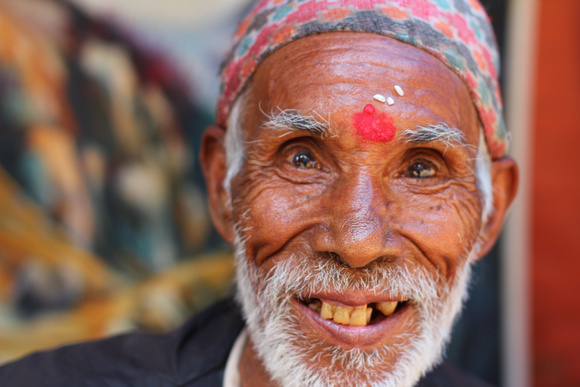
The people of Bhaktapur keep smiling
There’s a uniqueness to the people of Bhaktapur compared to other cities in Nepal too. I think it has to do with the strong traditional roots mentioned above. There’s a pride about the place and the people genuinely seem happy to show you their work without a hard sell. Something you simply can’t find in the likes of Kathmandu anymore.
That’s not to say touts don’t exist. They do. And you do have to be careful if you are not used to them. But again compared to Kathmandu they are easy to deal with.
More to the point, the everyday person you meet in Bhaktapur seems genuinely happy to talk with you. Again, randomly walking up to a stranger is not the way to accomplish this. But try talking with a shop keeper or sitting down next to a group of people in one of the many squares. The hardest thing about it is the language barrier. Learn a sentence or two of Nepali and you’ll open up a whole new world to your sight-seeing.

A building can impress and stay with you, but it’s always that smiling face and conversation that will sit next to your heart’s memories.
Personal thoughts on what makes Bhaktapur such a special place
The people, the temples, the old world ancient aura. The high entrance price and the incoming tours. There are no doubt good and bad points to Bhaktapur. The combination of which I think creates the difference and makes Bhaktapur stand out from all other cities in Nepal.

Bhaktapur is a living museum of ancient temples and traditional culture.
Over the years I’ve seen big changes in Nepal and its premier locales such as Kathmandu, Chitwan and Pokhara. In comparison Bhaktapur has remained pretty much unchanged in all that time. Subtle differences are improved restaurants, more handicraft stores, better maps and internet access. So yes there’s a growth there too. But it’s been strategically merged with old world tradition so as not to spoil it in the least.
Can there be improvements? Yes, for sure. But given the current status of Nepal, Bhaktapur does seem to be a head above everywhere else. So I say keep going as you are.
I’m not sure if there are other places like this left in the world. If you’ve been to one, do let me know. I think it would be interesting to compare them.
Meanwhile if you are visiting Nepal on a short stay, do please consider adding a full day or overnight trip to Bhaktapur. It’s well worth it!
Planning a trip to Nepal and a visit to Bhaktapur? For all the details on what to do, places to visit, photos, costs, accommodation and a map to Pottery Square, check out my travel guide to Bhaktapur.
Frequently Asked Questions About Bhaktapur
How much is the entrance fee for Bhaktapur?
What are the must‑see sights in Bhaktapur?
How can I get to Bhaktapur from Kathmandu?
Is Bhaktapur worth visiting if I’m short on time?
What souvenirs are best to buy in Bhaktapur?
Get My Nepal Guidebooks and Discover More Than Anyone Else!
Looking for more insider tips and information like this? Get the most up‑to‑date, popular, and dedicated guidebooks to Nepal in the world. Over 617 pages, 110 maps and 984+ photographs of every temple listed plus photos of every day on all the treks shown, jungle safaris and so much more. The only guidebooks in the world that are updated throughout the year. Available as an instant download or worldwide shipping for the paperback edition!
Great look at what looks lake a fabulous city. I’m not gone on high ticket prices to preserve places. Doesn’t UNESCO supplement their historic sites?
I don’t believe they do. It’s left up to the national/local district to run the place.
Time has not changed this nice city at all. I was there nearly ten years ago. Looks pretty much the same. Even those plastic buckets!
Yea, even from 2007 until today it looks practically the same.
Nice looking place alright. Great portraits of these guys too. I wonder why the price has been so stable though.
Bureaucracy. It’s also been the highest ticket price in Nepal for years by quite a margin. I imagine it’ll go up soon as the other entrance prices around the country have all recently increased.
Love the photos! Putting Bhaktapur at the top of my Nepal list now!
Glad you are!
Hy dave, it’s 5 below zero here! Damn, you are such a lucky person ;)
Hi Ivy :) Okay you win with the cold weather for today!
I love those two profile pictures! Especially the first one! Great shots!