

Nar Phu Annapurna Circuit – Day 15 of 15: Leaving Muktinath to …
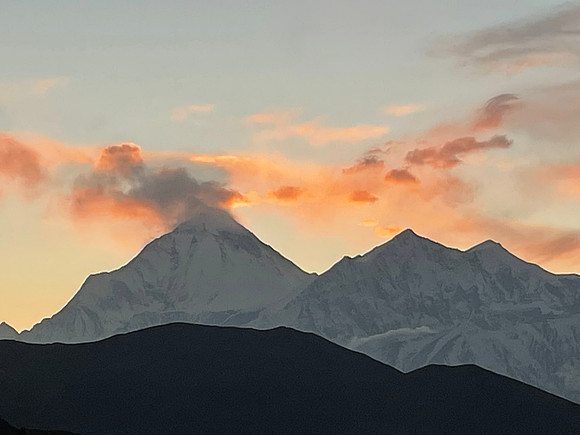
The morning after a Thorong La pass crossing has a particular quality to it. One’s legs usually register the previous day in full before you even stand up. The air in Muktinath, sitting somewhere between 3,710m and 3,800m, is noticeably richer than anything we breathed at High Camp or on the pass itself. Outside, the pilgrims are already moving through the Muktinath temple complex. Trekkers are asking for bus timetables (not happening) and menus. Gautam is having tea. After 15 days, this is our last morning on the Road-Free Annapurna Circuit, and there’s a specific kind of quiet that comes with knowing a long trek is finished.
Before reflecting on the trek, let’s look at the logistics. Getting out of Muktinath.

Getting Out of Muktinath: The Bus Reality
I would not recommend the night bus to Pokhara or Kathmandu from this region. I know people take night buses, but I’ve seen too many accidents over the years at night to recommend them. Road conditions and driving standards after dark make it a risk not worth taking. Bus accidents happen mainly at night in Nepal – they usually end with deaths, including earlier this year.
The last day bus from Muktinath to Pokhara and Kathmandu currently departs at around 11am, which at least allows for a reasonable sleep and a proper breakfast. If there’s a mass of people after 11am, then guess what, I bus will usually appear. Personally though, I would aim for an earlier departure, particularly to Kathmandu where the journey runs to twelve to fifteen hours or more. Less to Pokahra. Conditions, timings, and availability change seasonally – current details are in my Nar Phu Annapurna Circuit Trekking Guide and my Trekking in Nepal guidebook.
For those wanting one more day before heading home, Kagbeni is my honest answer. One can catch a bus to Kathmandu or Pokhara from there too. Kagbeni is one of my favorite places in Nepal.
Kagbeni: One More Night or Not?
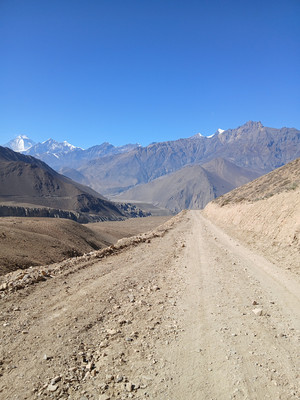
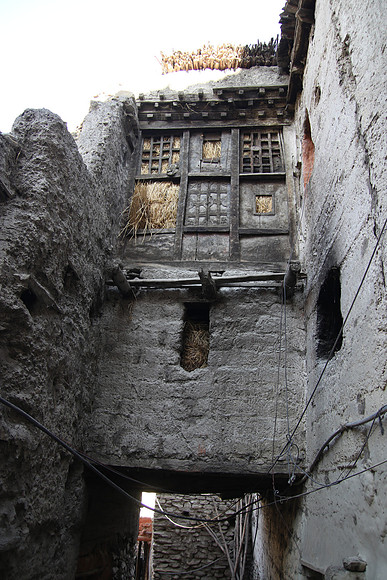
Kagbeni sits on the border with Upper Mustang, an almost medieval stone village of narrow lanes, whitewashed mud houses, and shrines that look as though they belong to a different century (or trek). The Kangni Chorten, built in 1665, is said to relieve you of sin if you walk through its archway. The trail from Muktinath to Kagbeni is easy compared to everything that came before it, and if you want to avoid the road section entirely, the route through Jhong and Puthak adds an hour or two but keeps you off the dusty road.
Here is my honest take on adding Kagbeni for those who have just completed the road free Nar Phu Annapurna Circuit: if you loved the stone architecture of Phu and Nar, Kagbeni will feel familiar and worth a night. If your legs are done and you feel good with what you’ve accomplished, then head back. If you are on the Classic Annapurna Circuit and have not been through Nar Phu, then Kagbeni is absolutely worth the stop. It is one of the better overnight villages on the entire route.
For those that find the Upper Mustang permits are too expensive, then staying in Kagbeni will give you as taster on what to expect. I’ve made it a point that any person who uses my find a trekking guide service for anywhere in this region gets a borderland trek to Upper Mustang. It’s been in my guidebooks for years, and I think it’s well worth the couple of hours detour and it doesn’t need a permit.
What’s further south?
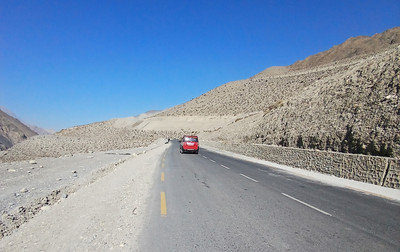
South of Kagbeni toward Jomsom and beyond, the road increasingly dominates. I would take a bus on this section from Kagbeni, or if you read my guidebooks, learn about the riverbed walk, (in the right season). Jomsom itself is a useful hub for flights to Pokhara and buses to Tatopani. After that, it’s often packed with locals on weekends away availing of cheap flights. A hotel with a view of the mountain backdrop runway is worth it.
Marpha, an hour or two south of Jomsom, retains much of its old character – the main road bypasses the village, the streets are clean stone, and it is best known as the home of Nepal’s apple orchards and the apple brandy that comes from them. It was the first village used on the APC to avoid commercial Jomsom. Sadly since the road, it’s also one of the most skipped villages. Best visited if apples are your thing.
The golden stretch from Tatopani to Ghorepani via Poon Hill is genuinely good trekking. But if you have just crossed the Kang La and the Thorong La and spent time in the hidden valleys of Nar and Phu, the honest question is whether this lower circuit adds to your trek experience or simply extends it for the sake of extending. In my opinion, it just extends. I’d rather take a bus down, and do the Mardi Himal Trek if I wanted to extend. My trekking guidebook covers all the link extension options in full for those who want to keep moving.
The Five Annapurna Circuit Treks: A Final Clear Summary
Fifteen days in, this is a good moment to lay out the five treks, and four tiers of the new Annapurna routes clearly, because the naming matters for anyone planning from here. Trekking agents are already foaming at the mouth reading all this and will try to come up with their own which only adds confusion. So let’s stick to the facts for trekkers who have to deal with them:
- Nar Phu Valley Trek: 8-9 days (road free) Koto to Nwagal via Kang La Pass medieval villages, in a hidden restricted area. This is what we started out to do in this series, and it’s hands down a great trek in its own right.
- The Original Annapurna Circuit – 18 to 21 days (Besisahar to Nayapul via Thorong La): Still possible, still worthwhile in sections, but the road south of Kagbeni has changed its character significantly. Best for those who want the full historical route and are comfortable with some road walking.
- The Short Annapurna Circuit – 8 days Also called the half-circuit (Chame to Manang to Thorong La to Muktinath): The current standard short circuit. Too compressed and possibly dangerous for proper acclimatization if rushed, but solid if done with two nights in Manang and sensible pacing. Please trek from Chame and do not drive to Manang! A good short first circuit trek.
- The Nar Phu Annapurna Circuit – 12 to 13 days (road free) (Koto through Nar Phu, over the Kang La, then the Classic APC over Thorong La to Muktinath): No roads. Two high passes. Medieval villages. Solo permits are now available with a licensed guide for Nar Phu. The best option for anyone who wanted the original Annapurna Circuit experience and found the road has ruined it. This is the trek the 2026 permit change makes possible.
- The Nar Phu Annapurna Circuit – 14 to 15 days (road free) also sometimes called the Greater Annapurna Circuit (As above, plus Tilicho Lake): Everything the Nar Phu Circuit offers, with the addition of one of the highest lakes in the world and the best acclimatization preparation available. Road-free throughout the critical sections. In my view, the best two-week trek in Nepal. This is the trek we just accomplished in this series. So you can see it for yourself.
Can the Road Free Nar Phu Annapurna Circuit be done in exactly 14 days from Pokhara or Kathmandu? Yes, by trimming one night from either Phu or Nar depending on what you enjoy when trekking, your fitness and acclimatization response. The choice of which to cut is yours and your guide’s to make on the ground.
Upper Mustang: The Natural Extension
To the north of Muktinath and Kagbeni lies my favourite trek in Nepal: Upper Mustang. The solo permit restriction has eased here too, though the daily permit fee remains USD $50. Arid Tibetan plateau landscapes, ancient walled cities, cave settlements, and a remoteness that even Nar Phu does not fully prepare you for. If you have the time and the budget, it connects naturally from where we are standing now. Full itineraries and logistics are on my Upper Mustang trekking guide.
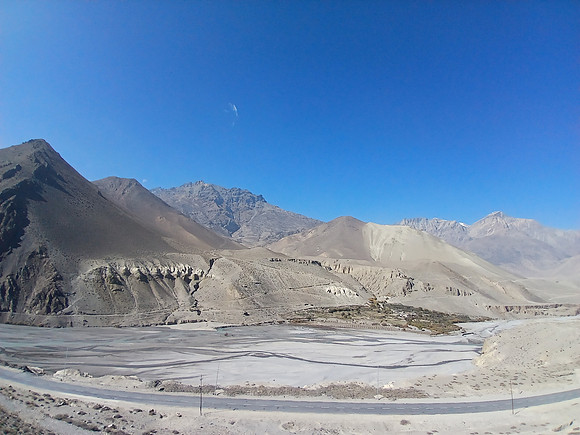
Again, I’ll add in one extra detail here that you won’t find elsewhere, other than in my trekking guidebook. If you are in Kagbeni with the right guide, you can venture into the Upper Mustang Borderlands for a day. A rare glimpse at the forbidden kingdom. See my guidebook to Trekking in Nepal for details, or use my find a trekking guide service.
The Road Free Annapurna Circuit: What This Trek Proves and why we did it
Gautam, or any guide I trek with, have been on trails together long enough that we do not need to narrate everything on our treks. We sat over a final breakfast in Muktinath, the Road Free Nar Phu Annapurna Circuit behind us in full. The conversation was quieter than Day 1 in a good way. The route works. We have crossed two passes above 5,000m, spent nights in villages that most trekkers will never reach, walked through canyon trails with 2,000 years of trading history under our boots, stood at the edge of the highest lake in the world, and rejoined the Annapurna Circuit from the north in a way that bypasses every section the road has damaged.
The 2026 solo permit change for restricted areas is what makes all of this possible for a solo trekker with a licensed guide. For years the two-person minimum kept Nar Phu as a niche destination for those willing to either wait for a partner or pay extra for a ghost permit. That barrier is now gone. What replaces it is an ancient valley, and two remote villages, and a high pass. Nar Phu is a stunning trek.
Moreover, if you are thinking about a two week Annapurna Trek, then don’t rely on the old classic route if you want to avoid the road. Instead, consider the Nar Phu Annapurna Circuit which avoids the road completely. It is a route that gives the Annapurna Circuit back the distance and the depth it lost to the road builders and those that made it happen.
I started this series saying I wanted to set off just as the restrictions lifted to prove it could be done this way. The Nar Phu Annapurna Circuit is a real route, and it is ready.

Finding the Right Trekking Guide: The Honest Version
On the Nar Phu section of this trek, a licensed guide is compulsory. It is a legal requirement, and in 2026 it is strictly enforced at multiple checkpoints maintained by the army and police. On the Annapurna Circuit side, the legal requirement eases, but the practical argument for a good guide remains that for first time trekkers having a trekking guide is a good thing. TAAN and NTB state that trekking guides are mandatory. Yet, where are the checkpoints? Today, TAAN will take your money for a TIMS card, but offer no safety checks.
All the same, that TIMS card money goes towards guide and porter insurance – something that is needed these days (Nepal has changed). Aside from all that, for first time trekkers, I would take an experienced trekking guide for more than just that alone. Jump over to missingtrekker.com if you want a glimpse of what has happened to others either without a guide or with a bad guide.
What a good guide actually provides at this level is not map-reading. It is high-altitude management, ground-level knowledge of trail conditions, the ability to read weather and terrain in ways that no app replicates, and the kind of cultural context that turns a trek into something you will still be thinking about years later. Gautam and others I have trekked with know these treks better than anyone.
They have been on these trails across multiple seasons (and the different conditions they bring) and know the difference between a trekker who needs to slow down and one who needs to turn around due to acclimatization. They know how each village has a different culture or tradition, they know what foods are grown in each village, they know every mountain, the names of fauna, they know the routes, the teahouse owners we stay with, they know the history and they translate everything else. They also know where to get the best food, and hot showers!

The trekking guide landscape in Nepal looks very different today than it did a decade ago. While there are outstanding guides working across the country, there is also a rise in pop-up agencies relying on fake online reviews, exaggerated experience, and quick rebrands. Over twenty years of trekking and reporting here, I’ve seen too many trips ruined by unverified recommendations passed around in private messages via online forums, groups, and social media threads.
To protect the integrity of my work, I apply a strict five-year benchmark of verified performance before considering any guide, trekking agency, or operator for my guidebooks. I only list local agents, trekking guides, and businesses to help protect the local economy. I don’t accept sponsorships or favor single agencies: the goal is simply to match the right trek with the right professional.
You can use my long-standing guide on hiring a trekking guide in Nepal to navigate the process independently, or reach out through my guide finding service if you want help matching an operator to your specific timing and route.
My priority with this series was to get accurate, boots-on-the-ground facts out as soon as the trail rules changed. I hope you enjoyed it, and it helps you plan with confidence.
Further Reading and Resources
- Nar Phu Trekking Guide – full logistics, permit details, updated pricing, and trail notes
- Road Free Annapurna Circuit – a full look at the Nar Phu Annapurna Circuit that contains no roads!
- Trekking in Nepal guidebook – 29 treks, complete itineraries for all treks plus variants, guide vetting, and trek linking options across Nepal
This concludes the 15-day Road FreeAnnapurna Circuit series. For the standalone 9-day Nar Phu trek, the series begins at Day 1: Pokhara to Koto.
Get the Only Guidebooks Worth Reading
Most guidebooks are years out of date or filled with paid placements. My books provide a complete strategy for Nepal with 100% independent reviews. Get the exact costs for every meal, bed, transport, plus the world’s only vetted, scam-free trekking agency list.
 Trekking in Nepal |
 Nepal Guidebook |
Great series, enjoyed seeing some impartial looks at this great trek rather than the same old stuff out there.
Thanks Justin. The internet has been come really cluttered with “sales” and “likes” over genuine content the past few years. Glad you’re reading here!
Well done. It was fascinating to compare Nar Phu with Upper Mustang and then to see both from your perspective.
Nar Phu and Upper Mustang are indeed interesting comparisons in terms of culture and trekking. Both the have edge in different areas too!
I admire your efforts to help the trekking industry in Nepal by making this trek so soon after the permits change. I dare say they’ll get work because of this.
It’s already happening, Stuart. The moment the permits went away and I started to publish and talk about the Nar Phu Annapurna Circuit, I saw the trekking agents follow suit, followed by trekkers coming on board. There’s pluses and minuses there too. So many trekking agents out there are “profit only”. So, they’ll ramp up their advertising to try to capture the market. Unfortunately, these are the same agents who stand around clapping at conferences when they are told the future are jeep tours and the roads along the Annapurna Circuit etc are the future. I’d rather local trekking agents get work with guides who know the areas well, and support the trekking industry who in term supports the local economy.
It’s been years since I read a good travel blog! Thanks this one. Enjoyed all 15 days!
Glad you enjoyed it Lisa.
I’m sure it’s been asked before, but this trek or Manaslu and Tsum Valley?
Hmmm. Both have something to offer. Both have similar vibes in terms of trekking and culture. But, for me, the Nar Phu Annapurna Circuit wins it on trekking by way of two high passes with no roads, and with culture in terms of remote villages. That’s just my take.
After such a horrendous year, reading your trek still gives me a reason to visit Nepal!
That’s good news!
Thumbs up for Kagbeni from me too! This little village deserves some attention from trekkers. I hope the road will not mean it ends up ruined like the others.
Kagbeni, perhaps the most underappreciated trekking village in the world today!