
Conditions are changing daily.
In short: Nepal is open, but open does not mean safe. Over the past week, official bodies have opened, closed, and reopened treks in the Annapurna and Manaslu regions, sometimes within hours of each other. Landslides and avalanches follow heavy rain and snow – a danger that lingers for weeks. If rain or snow is forecast, hold back, choose a shorter trek, and ask local people about conditions ahead. I write this for the now, and for anyone reading in the future: because things are not changing.
Nepal’s safety and tourism information line is broken
In the space of two days various official organisations in Nepal had treks in the Annapurna region open, closed, partially opened, washed out, and completely closed. In various orders. A complete and utterly dangerous mantra that had trekkers and tourists unsure of what or where to go, other than to cancel their treks.
Those that cancelled were sensible. Those that did not were taking a risk, not just that their trek paths would be blocked and they’d have to turn around, but that their lives were at risk.
Adding to this, AI and AI infographics from official organisations and trekking agents are littering social media with much of the same. I’ve not seen such a mess before in Nepal. And it’s not over yet.
The flood was a major natural disaster
The Bhotekoshi flood of 26 August in Rasuwa and Nuwakot was a major disaster that, in its most basic sense, could not have been stopped. At the time of writing, 1,454 bodies have been recovered and 4,718 people are still listed as missing. The post-flood reaction in regards to tourism could have been managed better. Within a week tourists were told “Nepal is open, come visit”. Yet it was not. Blatantly not.
When official organisations publicly state that all major roads are open, when the national highway linking three of the main tourist hubs of the country is broken in three places, something is wrong. A more nuanced, pragmatic, and assessed approach would have been better for tourism. Even the Kathmandu Post editorial (source) questioned the “other regions are open” message, and Pokhara’s tourism industry said the Prithvi Highway had been affected for more than two weeks (source).
Instead, it instilled a false sense of security and trust that was immediately revealed as untrue. Distrust set in. Tourists arrived in Kathmandu only to be told, “You can’t get to Pokhara, we don’t know when you can go.” But you can fly for 6 times the price of a bus, or twice as much as the price a local would pay. Two other routes to Pokhara eventually emerged, but with no indication of their safety, times, or even where the buses, vans, and cars were leaving from.
Monsoon rains continue
Now we must pivot to the monsoon rains, which typically finish up in Nepal by mid-September but are known to linger on. It’s bizarre in the world of tourism, but unlike back home, tourists pretty much want to know exactly when the weather will go from rain to blue skies for their trek. Nobody can predict the weather perfectly, but this time the forecast was right. What failed was getting valley-level information to trekkers. All someone can do is base it on the previous years weather. I’ve kept a record of treks affected by weather, and it’s clear that the early shoulder seasons are getting longer and more unpredictable. This year, Nepal’s weather systems continued on, with local floods occurring in various regions.
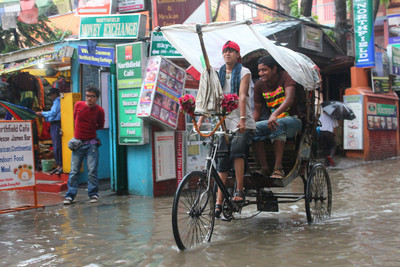
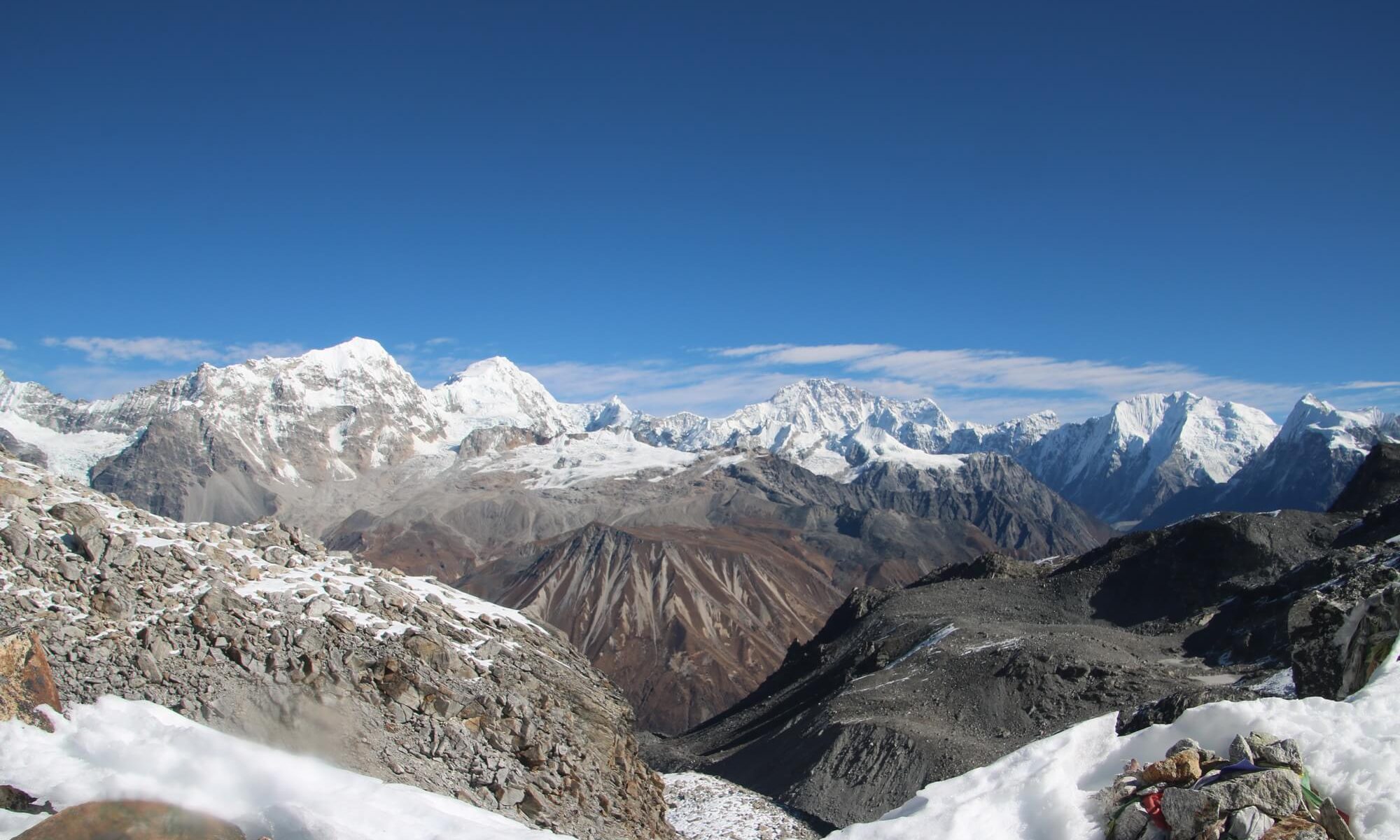
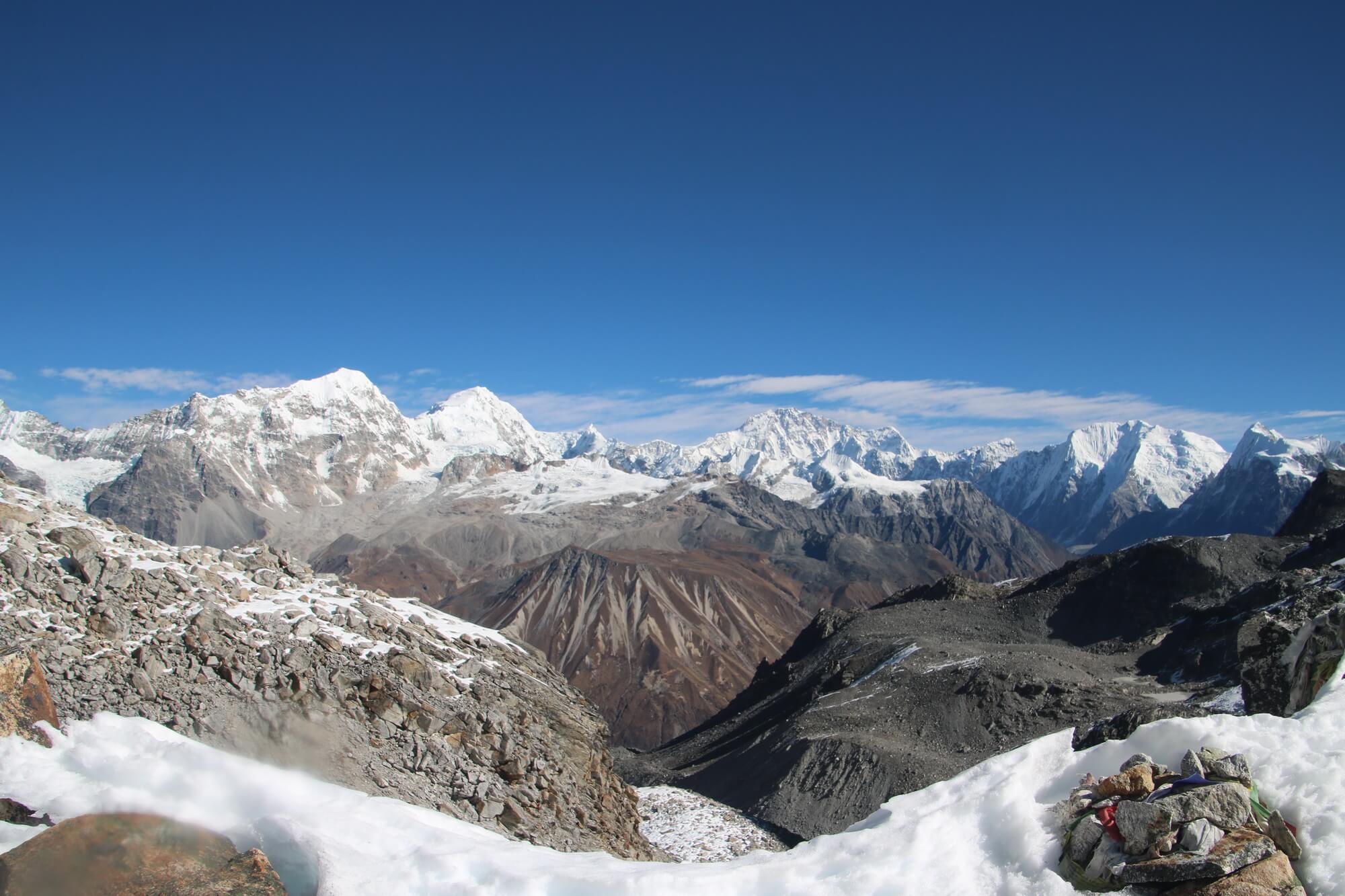
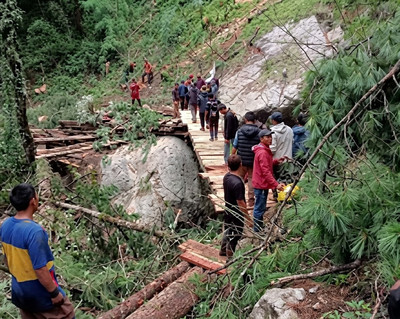
Manaslu was hit with a bridge being washed away. There was confusion about differing routes, turning back, going on. Only the locals stepped up, creating a temporary wooden bridge to allow locals and trekkers to continue on. A footnote here: Manaslu is a Conservation Area, with a dedicated organisation that seemed completely silent on this matter. Only locals were posting about the new bridge. I kept my own Manaslu page updated throughout all this, up-scaling and downscaling as the situation unfolded.
However, the bigger picture is not that the bridge was washed away, but why trekkers were allowed to continue on when such weather events were taking place. Monsoon rains, hills, and mountains all equal what we see every year in Nepal: landslides and avalanches. Something that was occurring around the rest of the country.
Heavy monsoon alert closes treks
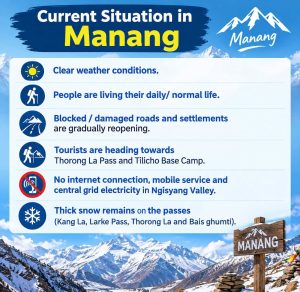
Then, from the 24th of September, heavy monsoon rains were forecast, finally prompting authorities to stop issuing permits and advise trekkers to stop and return. Manang banned high-altitude trekking (source) and the Manaslu Conservation Area suspended permits (source). This stoppage was due to continue until the 27th or 28th, depending on the region. The first thing that comes to my mind when heavy rain hits the mountains of Nepal is not just stopping immediate treks that are underway, but also the post-rain and snow danger of landslides, avalanches, and heavy snow in the succeeding weeks. The rivers are still surging, the ground is still sodden, the soil is still moving, and the mountains are balancing heavy quantities of fresh snow.
Landslides and avalanches are well known to occur after such events. And they did. On Sunday the 27th, the last day of the ban in Manang, an avalanche hit Himlung Himal base camp (source), killing Nepali expedition workers who were preparing the season, with more still missing. Chame on the Annapurna Circuit was hit by a flood that damaged buildings and roads (source) and washed away temporary bridges. Beni had a bridge damaged, cutting off trekkers in the region, and the government’s own damage report (source) lists the broken roads and bridges along the Kaligandaki and Marsyangdi corridors. Yet following this, we get a barrage of “everything is open” again, with some confused message about one village being hit: take a plane from Jomsom!
Mixed messages
Today, in the space of 12 hours, I’ve seen official posts saying go trekking, don’t go trekking, we are open, we are closed, we are really closed, avalanche. We are open.
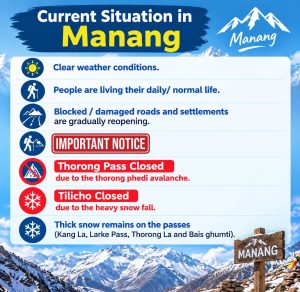
The above is rudimentary, because I am quite sick of reading the AI slop spewing out from various corners of Nepal. The reality is this: Nepal’s information is broken. Be cautious wherever you are going.
Just because a “pass” or “trek” is open doesn’t mean it is safe. The reality is post-monsoon landslides and avalanches occur weeks after rain or snow falls. This year the monsoon ended late. Nepal’s trekking agents and organisations in tourism have also discovered AI, which means they are bombarding social media with hype and nonsense at the click of a few words.
This on-again, off-again mentality is damaging Nepal’s reputation as a trekking destination.
To the incoming tourist or trekker
Yes, Nepal is open, but you need to manage your own safety. If you see rain or snow forecast, hold back. Make a change. Choose another trek away from avalanche or landslide dangers. What trek? It will depend on the weather, your location, and time frame.
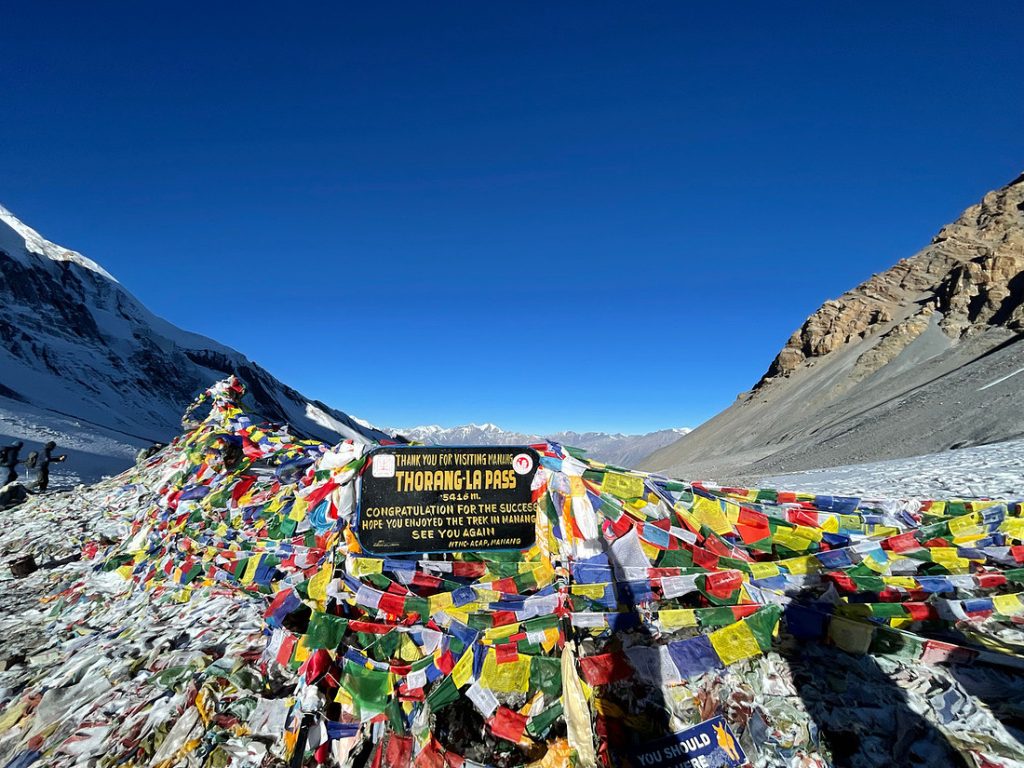
Anyone telling you to swap out the Annapurna Circuit for Manaslu is talking money over reality. Geographically they are in the same area and have high passes. Instead look at a shorter trek like Mardi Himal, or even Muldai. The big high passes are not worth it during such weather events. Even with these shorter treks, know that depending on the weather, there may be issues.
For those touting ABC, I would advise not to go during the coming weeks. ABC is well known for avalanches along the Deurali route.
For all treks, don’t just rely on your trekking agency or guide. Ask local people when you arrive at a village about the conditions up ahead. Unfortunately, many of today’s trekking guides and agencies want to push on so they can get paid, at any cost or risk. Yes, there are some good ones. I list the best of the best in my guidebooks. They still put their clients’ safety as a priority. And yes, I’m watching this year to get reports on issues on current and future potential recommendations. I would recommend caution until mid October at best – pending any more weather events.
There’s a trekking alert on missingtrekker.com saying the exact same message for the past week.
Yes, I know a holiday may be spoiled by such choices. Nepal is an “adventure” destination, not a fixed, time-tabled, precise tour destination. Part of the “adventure” is knowing there is a real danger out there, and making choices to avoid life-threatening situations – it doesn’t mean ending up in a life-threatening situation. There’s plenty of other places in Nepal that offer excitement and adventure without real danger.
Nepal’s Safety Information Is Broken
There isn’t one. That’s the reality. The TIMS checkpoints could and should be collecting localised information and passing it up to a centre of information, which can then send it back out in a clear, systematic way. TIMS checkpoints don’t exist any more, despite money still being taken for TIMS cards. The irony in all this seems lost.
Given Nepal’s current trajectory towards making everything “data driven” and “AI supported”, I dread the convoluted system someone will come up with, especially since the old simple system could have worked. You don’t need rocket science to get water flowing. Sometimes you just turn the tap back on.
For trekkers, watch yourself out there and be cautious.
Get the Only Guidebooks Worth Reading
Most guidebooks are years out of date or filled with paid placements. My books provide a complete strategy for Nepal with 100% independent reviews. Get the exact costs for every meal, bed, transport, plus the world’s only vetted, scam-free trekking agency list.
 Trekking in Nepal |
 Nepal Guidebook |