

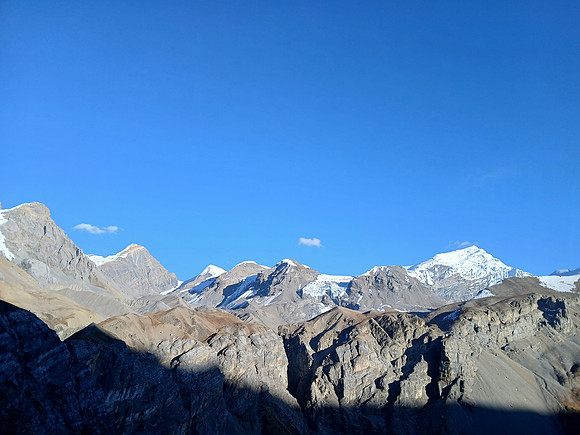
Nar Phu Annapurna Circuit – Day 13 of 15: On the way to the last high pass
I think my mood yesterday even registered with Gautam. Breakfast this morning was in our own corner. Today felt like approaching the last bastion of difficulty on the Nar Phu Annapurna Circuit. Trekking from Letdar to High Camp at 4,880m is about altitude and psychological preparation. For those of us who have already crossed the 5,320m Kang La, the altitude here should feel familiar. But the density of trekkers on this section of the circuit, and the time of year, can change everything. I’ve been here when it was -20 degrees before windchill. A frozen beard. A full water bottle solid and useless when I needed it most. Today, in better conditions, the focus is on preparation – because preparation makes the trek great.
And that is why my mood changed yesterday. It’s a personal thing. But mainly to do with the Annapurna circuit of old, vs today. What’s the old saying? Don’t go back to the places you loved so much in the past, because they’ve moved on. Only this time, with the road free Annapurna circuit we are here to help create and repair that.
Thorong Phedi: The Base Camp of the Pass (4,450m)
From Letdar, the trail crosses a high, swaying bridge and enters a landscape of steep, desolate arid slopes.
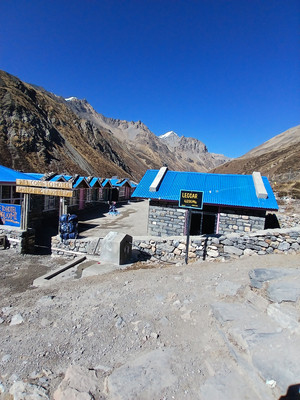
The rock becomes more scattered and the vegetation thins to almost nothing as we climb. Not even the trees can survive up here. The views are spectacular though. Deep valleys and frozen mountain tops. This part of any trek is where you realise that you are in a special place.
By midday we arrived at Thorong Phedi, a small cluster of lodges sitting at the foot of a massive scree wall. This is the actual base camp of the Thorong La, and the infrastructure here is, frankly, remarkable for something this remote. The Wi-Fi works intermittently, the food is adequate, and the lodges are warm enough to make the decision to stop for the night feel more appealing than it should.
Thorong Phedi is also one of the most important decision points for anyone just doing the short circuit:
- Stay at Phedi: If you feel even a hint of altitude, stay here. If you start feeling sick, get back down. Sleeping lower gives the body a better chance at a successful crossing the next day or the day after. This is not an over reaction. I’ll come to my previous mistake nearly 20 years ago a little later.
- Push to High Camp: If you are feeling strong, the extra climb today saves 430m of ascent in the pre-dawn dark tomorrow. Having already been above 5,300m on the Kang La, we pushed on.
The Grind to High Camp (4,880m)
The ascent from Phedi to High Camp is what I call a quadbreaker. It is a steep, relentless zigzag up a desolate slope with no shade, no shelter, and no flat section to recover on. To a fresh trekker in peak season it looks well-trodden and obvious. Having been here in winter, I know how deceptive this slope becomes once the snow falls. The trail disappears into a white and icy scree. At this stage, I have little sympathy for anyone attempting a high pass without a guide in the winter. Again, I’ll come back to this later.
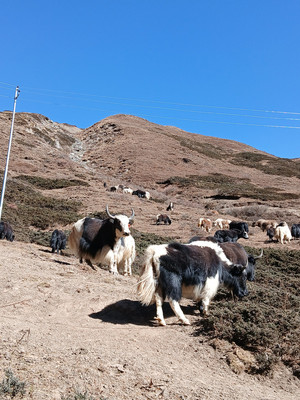
As I climbed, something else was happening. I was aware of something that would have been unthinkable on my first time at this altitude: I had no headache. Heavy breathing, yes. Slow progress, yes. But my head was clear. The Nar Phu trek section of our trek had done exactly what I hoped it would do physiologically. That clarity was a relief, because the last time altitude caught me off guard here and it was not a pleasant experience.
A Lesson in Altitude: The Night I Couldn’t Breathe
Nearly two decades ago, as a young(er) trekker in Yak Kharka, I felt vaguely tipsy before bed. No, I wasn’t drinking alcohol. It was the middle of winter and bitterly cold. I brushed it off. In the middle of the night I woke up gasping. I could inhale but there was nothing in the air that felt like oxygen. Panic hit me immediately. I near fell out of bed pulling my trousers on and lurched toward the door convinced that lower altitude was the only thing that would save me. As I reached the door, I felt something return to my breathing. I was flushed, heaving, and not a happy trekker. I don’t recommend anyone go through this. It is one of the reasons I have taken acclimatization seriously on every trek since. There was worse to come for another person though.
Later on that same trek, we came across a Korean trekker on the pass who had turned grey from HAPE – High Altitude Pulmonary Edema. His companions had left him behind on the pass in -20 degree temperatures. We never saw him again. I witnessed this myself. I also run MissingTrekker.com, and I hear versions of this story every single trekking season.
Once, I thought, that if a website like missingtrekker.com existed people would see the reality in things like altitude sickness, getting lost, let alone helping families located missing loved ones. The reality, and human nature, it seems, mean many people continue to take the easy, cheaper route, or believe the people they don’t know on online forums, tripadvisor, trekking agents, etc., It’s taken me many years of trauma and heartbreak at the repeated yearly unnecessary deaths let alone illnesses that people go through when it could easily be avoided, to not get involved emotionally any more. Probably one of the reasons I was in the mood I was in yesterday!
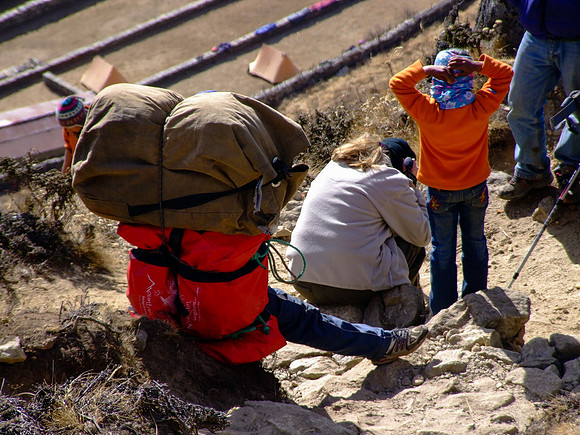
Gautam and I were relatively quiet on the climb up to High Camp. I told him my altitude story and some from MissingTrekker. It was not the first time he had heard them. He was non-chalant in the way that only someone who has guided hundreds of trekkers at altitude can be, and that non-chalance is always faintly unsettling from the outside. But it protects one from being emotionally involved when other people don’t research their trek in Nepal enough.
I thought about how I was now doing the same. Earlier in the year, I had missed a call. When I rang back, I apologised and explained that I had been occupied – we had finally located the couple who had gone missing several weeks before. The person on the other end of the line asked, as people do, whether they were ‘fine’. I have answered that question enough times now that I sometimes forget how much weight it carries for someone hearing it for the first time. After 24 hours in the Nepali mountains, depending on the conditions and the time of year, a search for a missing trekker is rarely about finding someone alive. It is about finding their bodies, so their families can have some resolution. It’s not the answer someone expects on the phone. Nor when researching a trek. But knowing that putting this information out there has saved lives and consoled families is why it’s there. Not for likes or subscribers – because nobody wants to know this side of trekking.
The tourism boards will show you the landscapes. The influencers will show you the sunrises and glitz. I will keep showing you all sides, because they are real and they are worth every step. But I will also keep being the person who tells you that seeing them requires preparation, research, and honesty about your own limits. The mountains are extraordinary. They are also completely indifferent to whether you come back.
There is no bravado in the mountains. If you feel unwell at Thorong Phedi, go down. An extra night in Letdar can literally save your life.
High Camp: The Final Outpost
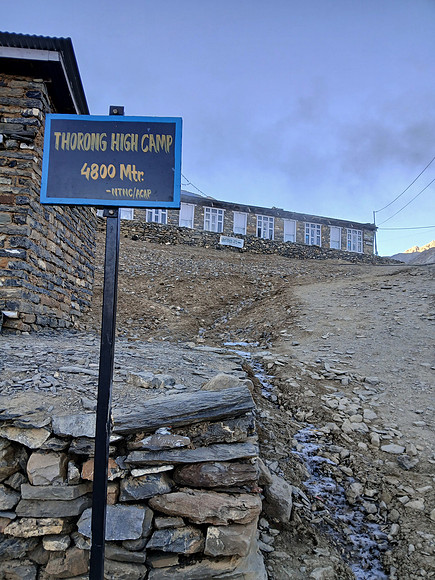
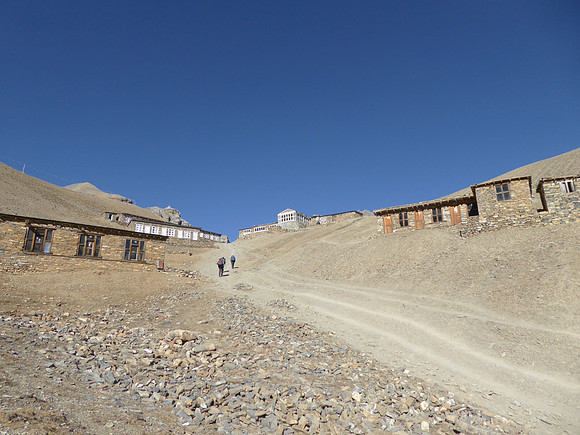
High Camp is a scattering of basic lodges across a rocky ridge at 4,880m. The landscape is grey and lunar, snow-capped peaks surrounding the camp on every side. Our room is stone and wood with no insulation worth mentioning. The toilets outside are frozen by 8pm. I’m not complaining. I like it. This is the reality of being at this altitude. Maybe in 20 or 50 years there will be all sorts of heaters and luxuries up here. But for now, high camp is the same as it was some 20 years ago.
The smell inside the teahouse is of wood smoke, old timber, and cooking oil. The wood is old but solid. I find myself thinking less about structural integrity and more about how many unwashed trekkers have passed through these planks and these beds before me – which is a thought I recommend not pursuing too far at altitude. I think instead about the people who work up here, who carry everything that arrives at this camp on their backs from far below. The food, the gas canisters, the timber for the stove. I then think about people who contact me about doing the APC cheap and avoiding a guide to save money. The stories from teahouse owners about the guy who wanted to bargain and knock $1 off his meal price are all too common.
Gautam and I ate a final dal bhat dinner. I had already ordered a packed breakfast for the morning – egg and bread. Simple as that. This is so we can move before 4am without waiting for a kitchen to wake up (they will be awake anyway). If you are following along here, you’ll know the reality for us. We are on a slightly different time schedule. Normally from high camp you don’t have to leave pre-dawn. But we have plans in Muktinath and must do some GPS tracing on the way so it will take us a little longer, hence we start earlier. This is the side to writing a guidebook you don’t often hear about.
The Pre-High Pass Checklist
- Hydration: Three litres of water prepared the night before. I will refill one with boiled water and sleep with it (hot water bottle). Doing most of this the night before means no fumbling in the freezing dark – or waiting for cold morning water to boil.
- Head Torch: Test the torch and batteries at night. Not on the morning of a high pass.
- Pack Light: Everything non-essential stays packed. The only item going into the pack in the morning is my sleep sheet.
For those comparing, yes it’s the same routine before any early morning trek.
Finally, one more truth. I cannot sleep well at altitude, which is common at 4,880m. I learned not to lie there frustrated. I go outside. I have been here before and I know what is waiting out there. The stars at High Camp are among the most brilliant. Standing under them for a few minutes is wonderful. Albeit cold. The Thorong La is waiting once again.
Next: Day 14 – The Thorong La Pass: Crossing 5,416m and the long descent to Muktinath.
Get the Only Guidebooks Worth Reading
Most guidebooks are years out of date or filled with paid placements. My books provide a complete strategy for Nepal with 100% independent reviews. Get the exact costs for every meal, bed, transport, plus the world’s only vetted, scam-free trekking agency list.
 Trekking in Nepal |
 Nepal Guidebook |
That not being able to breath part in the middle of the night! I would be terrified.
It was not a good experience!
It’s interesting to read about your acclimatization issued previously compared to this trek. Do you think many people experience this?
Over the past calendar year 25 people lost their lives due to acclimatization issues in the Annapurna area alone. That’s a figure that is rarely published in the media. It crept through this year, which is great, as it shows clearly there is an issue that needs addressing. Several of those who died were trekking guides. Specific details are not known, but the there’s a strong case for guides being “told” to trek on by clients and then acclimatization issues occur.
Came here to say the same thing about the altitude sickness, is that what it was?
It was altitude sickness. Normally I would just get a headache or the like for a day. But this was more. Lessons learned, so since then I pass it on to everyone else trekking.
Thanks for the update on the floods. Good to see it’s nearly time for the double pass!
The flood has all but disappeared from the mainstream media, sadly. Rebuilding and searches continue.